 EN
Ecommerce International Shipping: Costs, Customs, Carriers, and Workflow
Table of Contents
- What Should You Check Before Shipping Ecommerce Orders Internationally?
- How Do You Build an International Shipping Workflow Step by Step?
- How Should You Price International Shipping at Checkout?
- Which International Shipping Model Fits Your Order Volume?
- How Can You Reduce Customs Delays and Delivery Problems?
- Conclusion
- FAQs
Reliable cross-border shipping starts before a label is printed. Sellers need accurate product data, destination eligibility, package weight and dimensions, carrier service levels, duties and taxes, customs documents, tracking, and a workable returns process. Clear checkout promises and ownership of import charges are just as important as choosing a carrier.
An international order can look profitable right up until extra costs appear. A remote-area fee, a customs delay, or unexpected duties can quickly turn a smooth sale into a problem for both the seller and the customer.
Good ecommerce international shipping starts before the parcel leaves the warehouse. This guide shows how to check what can be shipped, prepare customs details, compare rates, set clear delivery expectations, and plan for tracking and returns. That helps you price orders more accurately and gives customers fewer surprises after checkout.
What Should You Check Before Shipping Ecommerce Orders Internationally?
Before opening a country at checkout, make sure the product can legally ship there, the customs data is complete, and the parcel still works at the price and speed you promise. That is where most preventable cross-border problems begin.
Check Product and Destination Rules
Check country restrictions and carrier rules before turning on shipping. Batteries, cosmetics, food, chemicals, medical products, plants, and encrypted devices can need extra paperwork or may be blocked on some services. Keep a simple destination sheet showing which products can ship to each market and by which carrier. If an item can only go by one approved service, do not let checkout offer a cheaper service that cannot accept it.
Get the Customs Data Right
Use a specific product description, HS code, country of origin, quantity, value, material, and intended use. “Cotton men’s T-shirt” is useful; “sample” or “accessory” is not. Store this data with the SKU so the same product is not described differently from one order to the next. If one item keeps getting held or reclassified, fix the master data instead of correcting every shipment by hand.
Check the Packed Size Before You Set a Shipping Promise
Measure the parcel after it is packed, not from the product box. Carriers may bill a light but bulky carton by dimensional weight, so extra empty space can turn a low-cost item into an expensive shipment. Compare packed size and weight with the carrier rate before publishing delivery prices. Build warehouse handling and customs time into the customer promise rather than showing only the carrier’s in-transit estimate.
How Do You Build an International Shipping Workflow Step by Step?
A cross-border workflow should take an order from “we can sell here” to “we know what happens if delivery fails.” Work through the decisions in the same order every time so pricing, customs, and customer service do not contradict one another.
Step 1. Open Only Markets You Can Serve Well
Start with countries where your product is allowed, payments work, carriers provide usable tracking, and returns are realistic. Check remote-area coverage, address formats, taxes, and expected delivery time before switching the market on. A country that produces demand but forces every return back at a loss may not be ready yet. Add new markets after real orders show that your cost and delivery assumptions hold up.
Step 2. Test More Than One Carrier
Quote the same test parcels with a postal service, an express courier, and any consolidator you are considering. Compare the final invoice, tracking, customs handling, remote-area fees, claims, and actual delivery time, not just the headline rate. Send a few live orders before standardizing. Keep a backup service for destinations where your main carrier is expensive, slow, or weak on coverage.
Step 3. Calculate the Full Cost of an Order
Add up every cost tied to the shipment: base transport, fuel or demand surcharges, dimensional weight, remote-area fees, brokerage, duties, taxes, and handling. Then check the total against the order margin. A $15 shipping quote is not really $15 if a $7 surcharge appears on the invoice. Use recent carrier invoices to update checkout rules instead of relying on old rate cards.
Step 4. Decide Who Pays Import Charges
Choose the import-charge setup before customers pay. Under DDP, the seller takes responsibility for import duties and applicable taxes. In buyer-paid arrangements, such as many DAP shipments, the customer may be charged on arrival. Put that responsibility next to the shipping option and in the order confirmation. An unexpected customs bill is much harder to fix after the parcel reaches the border.
Step 5. Build Customs Data Into the Order
Create the label and customs documents from the same product record used at checkout. Keep shipper and consignee details, description, quantity, value, currency, origin, HS code, export reason, and required tax IDs together. This reduces retyping and conflicting data. Before dispatch, check that the invoice value and item description match the actual order, especially after discounts, bundles, or replacements.
Step 6. Set Rules for Delivery Exceptions
Send tracking as soon as the parcel enters the carrier network, then watch for customs holds, address problems, failed delivery, and long gaps between scans. Decide who contacts the carrier and when the customer gets an update. Do not wait for a buyer to ask where the parcel is. If the same route keeps producing the same exception, change the service or shipping rule.
Step 7. Decide How Returns Will Work Before Launch
Set the return window, return address, refund timing, and who pays return shipping before opening the market. For a low-value item, paying to ship it back across borders can cost more than the product. Higher-value goods may justify a local return address or consolidation service. Give support teams a clear action for refused duties, damaged parcels, failed delivery, and items that are not worth returning.
How Should You Price International Shipping at Checkout?
Checkout should give the buyer a price that feels simple without quietly turning international orders into loss-makers. The best method changes with how similar your parcels are and how much the final carrier bill can move.
Use Flat Rates When Orders Stay Similar
Flat rates work well when most orders to a region fall into a similar size and cost range. If baskets vary widely, table rates by weight, order value, or zone give you more control. Real-time carrier rates can help with complex orders, but they still need packaging and surcharge rules. Compare checkout charges with actual invoices regularly and adjust when one route keeps collecting too much or too little.
Watch Bulky Boxes and Extra Fees
A 2 kg parcel can be billed above 2 kg if the box is large enough to trigger dimensional weight. Test the packed dimensions of your common baskets, not just the product weight. Also watch fuel, peak-season, residential, additional-handling, oversized, and remote-area fees. If one carton regularly creates surcharges, reducing empty space can improve margin without changing the product or carrier.
Show Duties and Taxes Before the Surprise
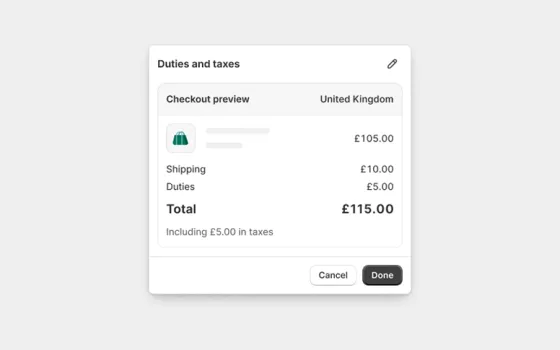
Decide whether duties and taxes are collected at checkout or left for the buyer to pay later. Show that clearly before payment. If you offer a duty-inclusive price, make sure the carrier and customs setup can support it in that market. The useful number is the landed cost: product, international transport, import charges, and unavoidable fees together.
Which International Shipping Model Fits Your Order Volume?
The shipping model should change as order patterns change. A store sending occasional parcels to many countries needs a different setup from one sending steady volume to the same region or pallet-sized wholesale orders.
Direct Parcel Shipping for Early or Scattered Demand
Postal services can keep costs lower for light, lower-value parcels when speed and tracking are less critical. Express couriers cost more but usually give faster delivery, better tracking, and stronger customs handling. Direct parcel shipping is often simplest while international demand is still spread across many destinations. Keep different service rules by country instead of forcing one cheap option everywhere.
Regional 3PLs for Proven Markets
A 3PL starts to make sense when one market produces steady enough volume that local inventory could reduce cross-border delivery time or cost. Compare storage, pick-and-pack, inbound freight, returns, system integration, cut-off times, and billing, not just the per-order fee. Run the numbers against your current direct-shipping cost before moving stock, because regional inventory ties up cash and makes stock planning harder.
Freight for Larger B2B Orders
Large cartons, pallets, or wholesale orders often belong in air or ocean freight rather than parcel networks. Compare urgency, shipment size, insurance, consolidation, customs brokerage, Incoterms, and final delivery before quoting the buyer. If B2B orders are becoming a real part of the business, you can also start selling on Alibaba to add a wholesale sales channel while keeping freight terms clear from the first inquiry.
How Can You Reduce Customs Delays and Delivery Problems?
Most customs and delivery problems are easier to prevent than fix after the parcel is stuck. The biggest wins come from cleaner order data, clearer responsibility, and faster action when tracking goes off course.
- Use specific customs descriptions. “Women’s cotton shirt” is clearer than “clothing” or “sample,” and gives customs less reason to question the item.
- Keep customs data tied to the SKU. Store the HS code, origin, value, and material with the product record instead of re-entering them for every order.
- Validate the address before dispatch. Missing apartment numbers, postal codes, or local contact details can cause failed handoffs even when the parcel clears customs.
- Make import charges clear before payment. A buyer who expects duties to be included should not discover a payment request when the parcel arrives.
- Review exceptions and invoices monthly. Repeated holds on one SKU or route should trigger a data, packaging, or service change, not another one-off support reply.
Conclusion
International shipping gets easier when you stop treating each parcel as a new problem. The real goal is to know before checkout that the product can ship, the final cost still works, and the buyer understands the delivery and import-charge terms.
Launch new markets with a setup you can measure, then use invoices, tracking exceptions, returns, and customer questions to tighten the rules. A smaller reliable network is more valuable than broad international coverage that creates losses and support work.
FAQs
What is the cheapest way to ship things internationally?
For light, compact parcels, postal services or economy consolidators are often the first options worth pricing. Express courier rates can become more competitive at higher volume or when negotiated discounts apply. Compare the final billed cost, including fuel, remote-area, and handling fees, with delivery time and tracking quality rather than choosing the lowest base rate.
What is ecommerce shipping?
Ecommerce shipping covers the work needed to move an online order from the seller to the customer: picking, packing, labeling, carrier handoff, tracking, delivery, and often returns. International ecommerce shipping adds customs data, destination rules, duties and taxes, import responsibility, and more carrier choices to that process.
How do I track international shipments for ecommerce purchases?
Use the tracking number from the seller or carrier and follow the milestone scans through export, customs, local handoff, and delivery. If the parcel shows a customs hold, failed delivery, or an unusually long gap with no movement, contact the seller first. The shipper usually has the carrier account details needed to open an investigation.
Source: Alibaba.com ·Read original
Related Learning
International Import Shipping: 2026 Tariff Guide
Update on tariffs and international trade U.S. tariffs changed on February 20, 2026. Here’s what you…

Vinted and DHL launch new parcel shipping service: 3.20 euros for parcel shop drop-off
According to reports from Chinese cross-border e-commerce news outlet Chuhaiwang, citing a German e-…

From Click to Doorstep: How Online Wholesale Marketplaces Digitize the Entire Fulfillment Chain
Table of Contents Why Going Digital Changes Fulfillment, Not Just Ordering The Core Reversal: Online…