 EN
Amazon Issues Bulk Removal Warning; A Large Number of Listings Swept Up

According to Bain’s latest forecast, U.S. retail sales during Black Friday and Cyber Monday in 2026 are expected to exceed 850 hundred million U.S. dollars, accounting for 8.5% of retail sales during the holiday shopping season from 11 to 12. In terms of growth, sales during this period are expected to increase by 8.75% year over year, twice the projected growth rate of 4.5% for the overall holiday shopping season.
It is clear that this year’syear-end peak-seasonpromotions are expected to usher in a new sales high. Today, manycross-border sellersare making intensive preparations. However, the familiar problems that crop up every peak season have once again surfaced, disrupting the preparations of many sellers.
Tap into Russia’s blue ocean of cross-border e-commerce! 10.16 Xiamen | Registration is now open for Yandex Market’s first official thousand-attendee summit in Fujian 🔥

AMZ123 learned that on 10 14, a large number ofAmazonsellers reported receiving notification emails about NWD removals.
According to the emails,the brands of the products concerned operate under a no-wholesale-distribution (NWD) model—distributing products through direct sales channels rather than selling through wholesalers, distributors, or third-party resellers,and only accounts authorized to represent the brand are permitted to sell normally.
Amazon stated in the notice that ordinary resellers who are not brand representatives must clear their inventory or create a removal order by the specified deadline (2026 10 27); otherwise, any inventory remaining in the warehouse will be disposed of by the platform.
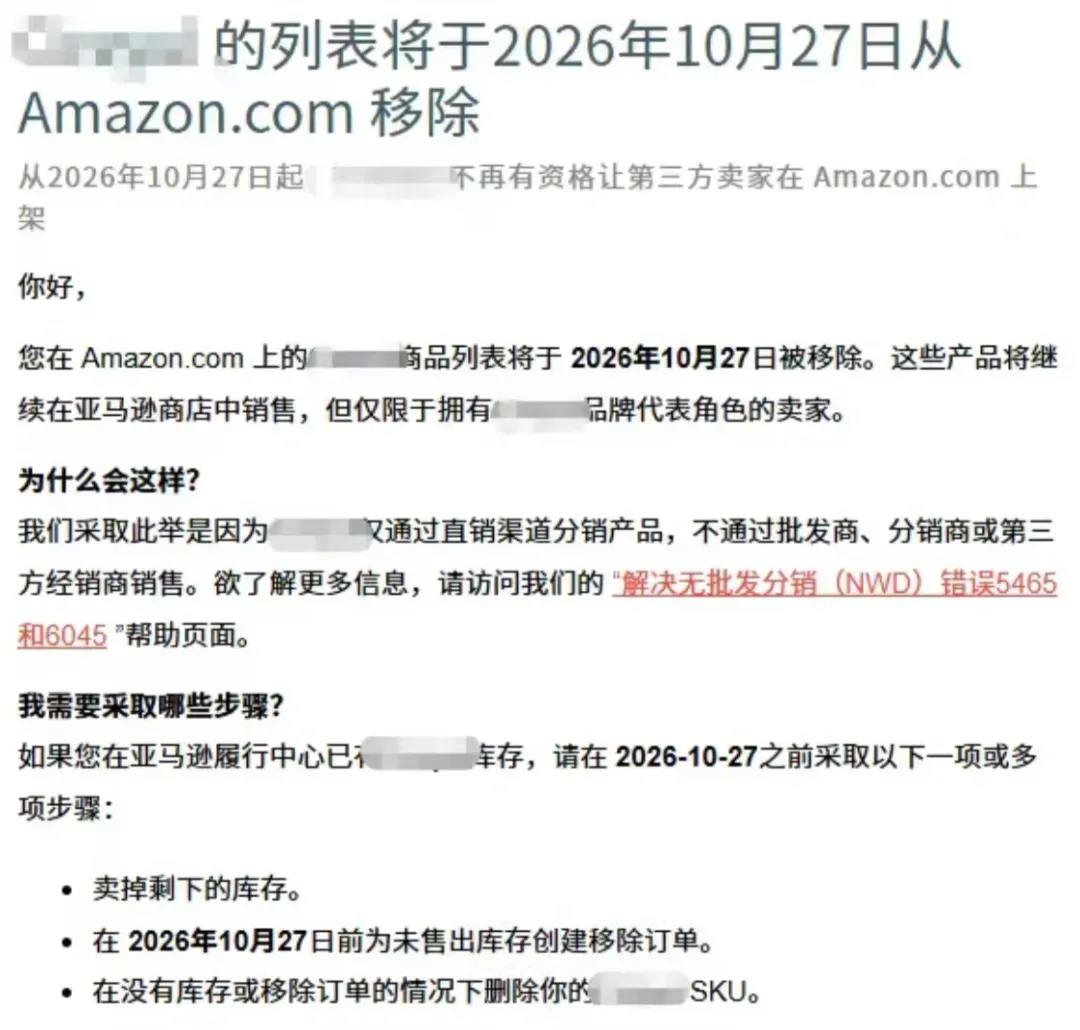
According to the notice, although Amazon says that SKUs removed due to NWD will not affect the health of sellers’ accounts, many sellers are still concerned about the potential business impact.
It is understood that many Amazon sellers have sourced products from third-party channels for years. Without official authorization from the brand to act as a “brand representative,” they have listed and sold the products on the platform. In the past, the platform’s oversight of this practice was relatively lenient. As a result, after the platform recently sent this email in bulk, many sellers believed it was trying to cut off gray-market distribution channels.
However, it is worth noting that, according to industry feedback,quite a few sellers who received the email were mistakenly affected:Some sellers said they had already obtained authorization from the brand to act as a “brand representative” but still received the notice; others were selling their own brands.
Some sellers therefore opened cases to ask about this and received the following reply:If you are a brand representative, you can ignore the notice and continue selling as normal.

In response to this NWD removal notice, AMZ123 has compiled the following response measures mentioned by industry sources for relevant sellers’ reference:
Step one: Check first:Compile and export the ASINs that received NWD warnings, then verify brand ownership and inventory quantities.
Step two: Handle inventory according to the relevant scenario:For your own brand, use the brand administrator account to grant brand representative authorization to the operating entity, then open a case in English to appeal the restriction. For a brand with which you have a stable partnership, contact the brand promptly and seek official authorization. If you cannot obtain brand authorization, make a clearance plan before the deadline by lowering prices to sell through the stock or creating a removal order, to minimize losses.
Step three: If you find a system error, submit an appeal:
If you find that an ASIN is associated with the wrong brand, submit an appeal with the ASIN, the correct associated brand, and product images that clearly show the brand name and barcode;
If you find that a brand should not be subject to NWD restrictions, provide evidence that it sells products through resellers or distributors—for example, a link to the brand’s website showing its reseller or distributor program.
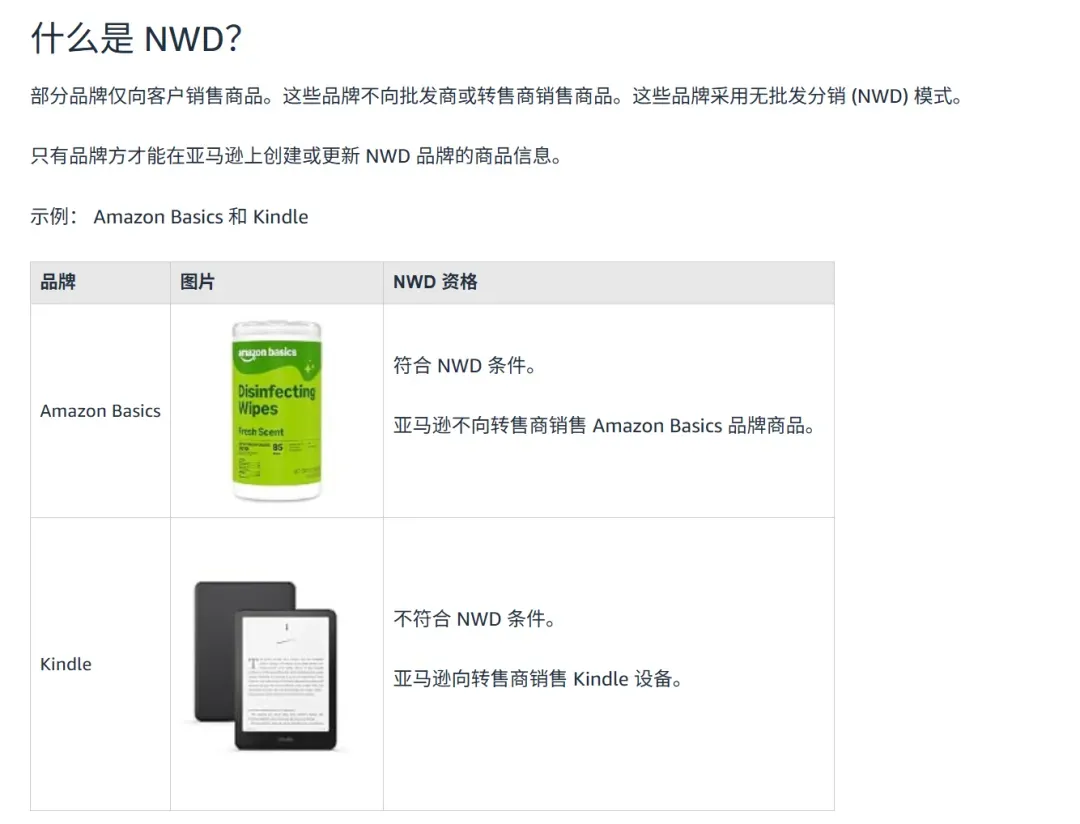
As of publication, there is still some time before the deadline mentioned in the email. It remains unclear within the industry whether ASINs that were “mistakenly affected” will be impacted later, but there is no doubt that the platform’s shift toward greater compliance is now firmly established.
It is also worth noting that the recent compliance challenges facing Amazon sellers are not limited to the NWD removal issue raised by the platform.
Tap into Russia’s blue ocean of cross-border e-commerce! 10.16 Xiamen | Registration is now open for Yandex Market’s first official thousand-attendee summit in Fujian 🔥

AMZ123 learned that recently,cross-border sellers in Guangdong, Jiangsu, Fujian, and other regions once again received tax reminder text messages from local tax authorities.
Judging from the text messages, the reminders sent again this time contained nothing unusual: the sales revenue reported by the relevant sellers for the first quarter of 2026 was lower than the revenue reported to the tax authorities by online platform enterprises. If the declaration was incorrect, it should be corrected promptly to avoid unnecessary legal risks and financial losses.
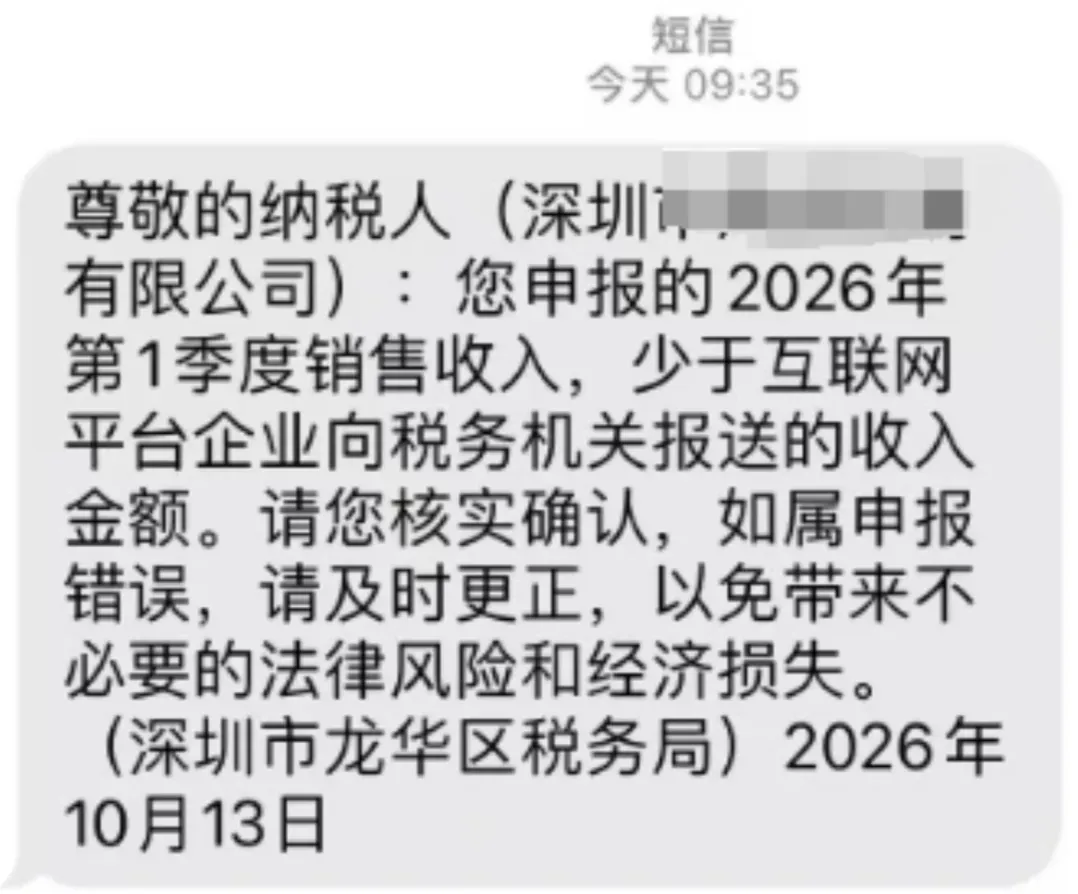
However, judging by the time the emails were sent,the day before the bulk text messages were received, Amazon had just resent Chinese sellers a tax report for Q1 of 2026 covering their tax-related information,As a result, many cross-border sellers speculated that the platform’s tax report was not only sent to sellers for reconciliation and record-keeping, but was also uploaded to the tax authority’s system, triggering the bulk text messages.
However, as of press time, there was no clear information proving a connection between the two. Most Amazon sellers were still focused on checking the tax-related information for cross-border e-commerce.
“I switched to reporting based on income, but still received one.”
“I was under 30 ten thousand and reported a lower amount, but still received one today.”
“What exactly is causing the reported figures to keep differing?”
Regarding differences in reporting methods, some sellers believe they may be due to Amazon’s accounting rules, which recognize current-period income based on the order shipment date and use the exchange rate on the date of shipment forcurrency conversion, while many cross-border sellers are accustomed to recording income based on when domestic payments arrive, using the exchange rate on the date of settlement. To some extent, this creates differences in timing and exchange rates;
After comparing the data Amazon sent this time with the figures they had originally reported, some sellers speculated that“overseas tax collected and remitted by the platform” may be the main factor behind the differences in the reported figures—although this money did not enter the sellers’ accounts, the amounts reported by the platform may include these taxes, meaning thatreporting “income + tax” yields figures closest to the platform’s reporting basis.
Based on feedback from the industry, some sellers who had already been reporting “income + tax” did not receive another text alert this time. Even so, many sellers in the industry continue to question this reporting basis.
AMZ123 recommends that relevant sellers promptly download the latest tax report from their Amazon account, break down the platform-reported total income, refunds, and various platform fees item by item, and compare them against the company’s financial records to identify the reasons for any discrepancies. If the differences stem from different accounting methods, prepare a complete set of supporting documents and explain the reasons for the discrepancies to the tax authorities in writing. If the review finds that income was omitted or incorrectly reported, sellers are advised to file an amended return voluntarily and make corrections during the warning stage to avoid the knock-on risks of late payment surcharges and fines.
What do you think? Feel free to share your thoughts in the comments~
Source: AMZ123 Cross-Border E-Commerce · Read the original article
Related Learning

Amazon Plans to Acquire AI Startup Decart for 70 Hundred Million US Dollars
AMZ123 has learned that, according to a recent report by The Wall Street Journal, Amazon is in acqui…

Asia–Europe Freight Rates Fall for 13 Consecutive Weeks as US and European Routes Weaken Across the Board
AMZ123 has learned that the latest assessment of Drewry's World Container Index shows freight r…

Financing solutions for Amazon sellers
Financing solutions for Amazon sellers Financing solutions are crucial when it comes to scaling your…