 EN
How To Start a Jewelry Business: 9-Step Guide (2026)
Learning to start a jewelry business requires understanding the industry. The worldwide jewelry market is expected to reach almost $579 billion by 2033. A huge market, but still one with exciting opportunities for newcomers to find an untapped niche or bring a fresh perspective.
If you're looking for a creative way to make money or wondering if your hobby could become a business, this guide contains expert advice on how to start your jewelry business, based on the experiences of jewelry designers who built their brands from scratch.
How to start a jewelry business in 9 steps
Follow these nine steps to start your jewelry business.
1. Find your niche in the jewelry industry
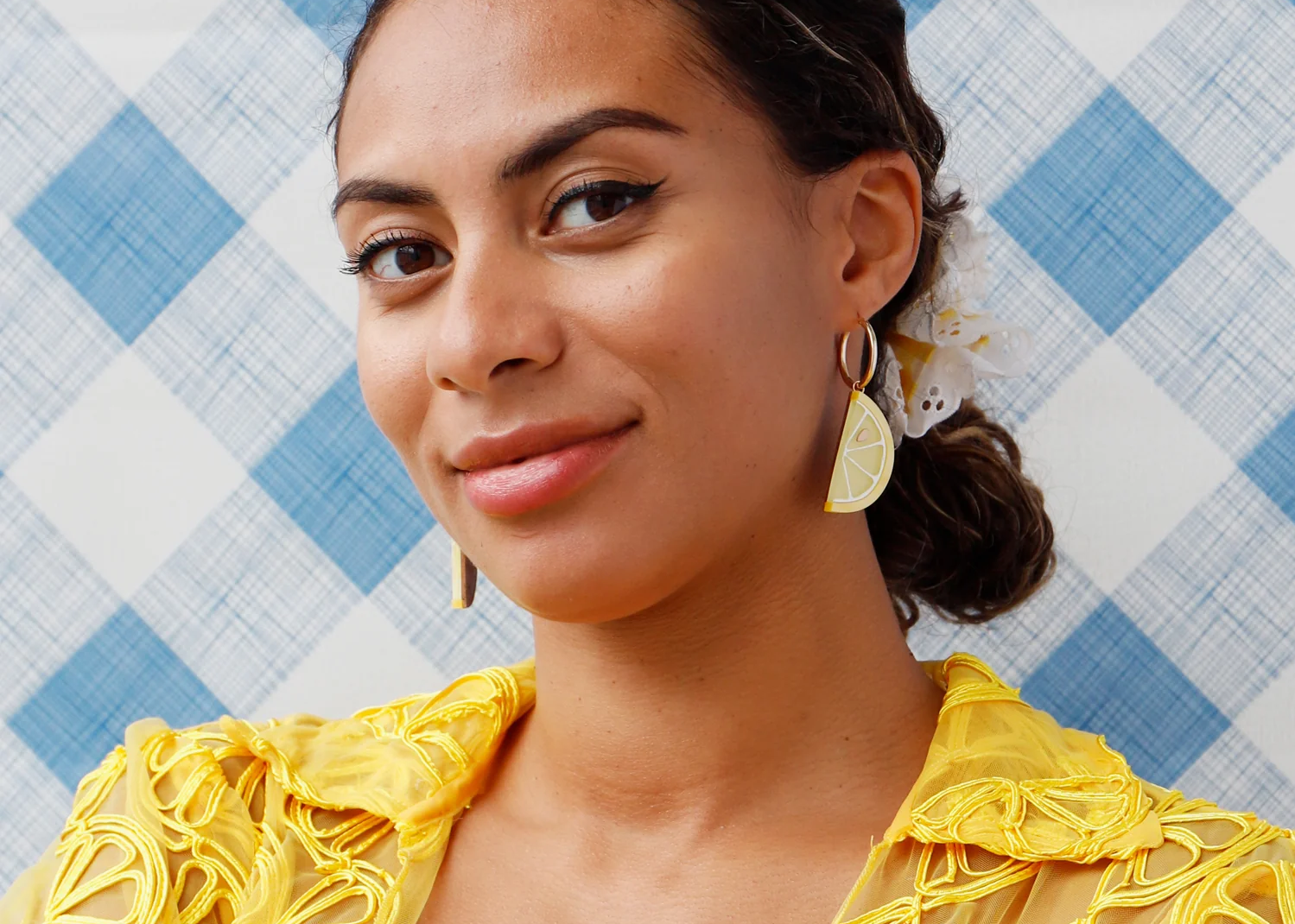 Wolf & Moon
The jewelry industry is full of niches and subcategories—everything including cheap and cheerful plastic beads or fine-art precious metals and gems. One of the first questions to ask yourself is what type of jewelry you want to sell.
Opt for fine jewelry, costume jewelry (also known as fashion jewelry), or something in between. Each category has its own materials, production process, price point, and customer profile.
Let's look at the qualities associated with the main types of jewelry.
Fine jewelry
Fine jewelry is at the top end of the market and has the following qualities:
- Made with precious metals and gems.
- Higher price points.
- Made with expert craftsmanship.
- Rarely mass-produced.
- For luxury, wedding, and special occasion customers.
Fashion or costume jewelry
Most often, you'll find costume jewelry sold at chain boutiques and online stores. You can spot it by these properties:
- Designs based on current fashion trends.
- Made of beads, wire, plated metal, plastic, and synthetic gems.
- Lower price points.
- Often mass-produced.
- For the everyday customer.
Artist-designed jewelry
This category captures everything in between, like handmade jewelry requiring specialized skill and mid-range materials. Bespoke jewelry will have the following qualities:
- Varied materials mixing inexpensive and precious (textile, metals, semi-precious gems, wood, 3D printing, etc.).
- Unique designs (collectible, made to order, one of a kind).
- Skilled craftsmanship.
- Mid-range price points correlated to a designer's popularity.
- Occasion or statement pieces for collectors and gift-giving customers.
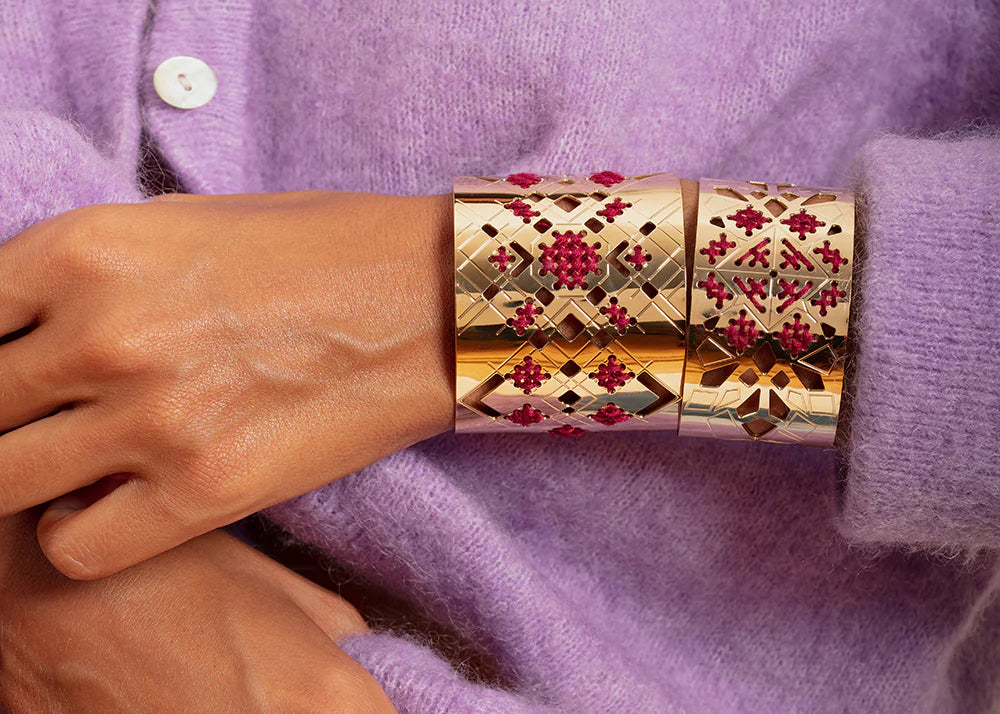 Camille Enrico jewelry is known for its unique combination of metals and textiles—giving pieces instant recognizability and cohesiveness with each other. Camille Enrico
Once you've narrowed down the broad category for your jewelry business, it's time to carve out a niche for your products.
Start by defining your ideal customer profile (budget, values, preferences, location, shopping habits, etc.) and decide if your products are occasion-specific (weddings, parties) or intended for everyday wear. This will determine how you market them to your target audience.
 Enso found its niche with an audience looking for alternatives to metal rings: active customers and those with metal allergies. Enso
Jewelry products and categories
Once you've narrowed down your market, consider whether you'll offer an entire product line or focus on a single item. For example, you may want to niche down and specialize in engagement rings, or go broad with a collection of mix-and-match fashion pieces.
Consider the following product types for your jewelry line:
- Rings (sized or adjustable)
- Necklaces (chokers, pendants)
- Bracelets (bangles, cuffs)
- Earrings (drop, clip-on, studs)
- Engagement and wedding rings
- Watches
- Toe rings, body chains, and other body jewelry
- Piercings (nose, navel)
Also consider complementary products and categories. Jewelry brand Wolf & Moon sells its signature styles in both hair accessories and bags.
 Wolf & Moon
2. Research market trends
Before you start a business, you'll need to find market fit for your products.
Following jewelry trends
Researching trends is one way to validate your chosen market. Read fashion and jewelry blogs and follow fashion influencers and popular TikTok creators in the space to stay on top of trends for the upcoming season.
Look to other jewelry designers for inspiration and don't be afraid to dig into data. With Google Trends, you'll find global search volume for different search queries.
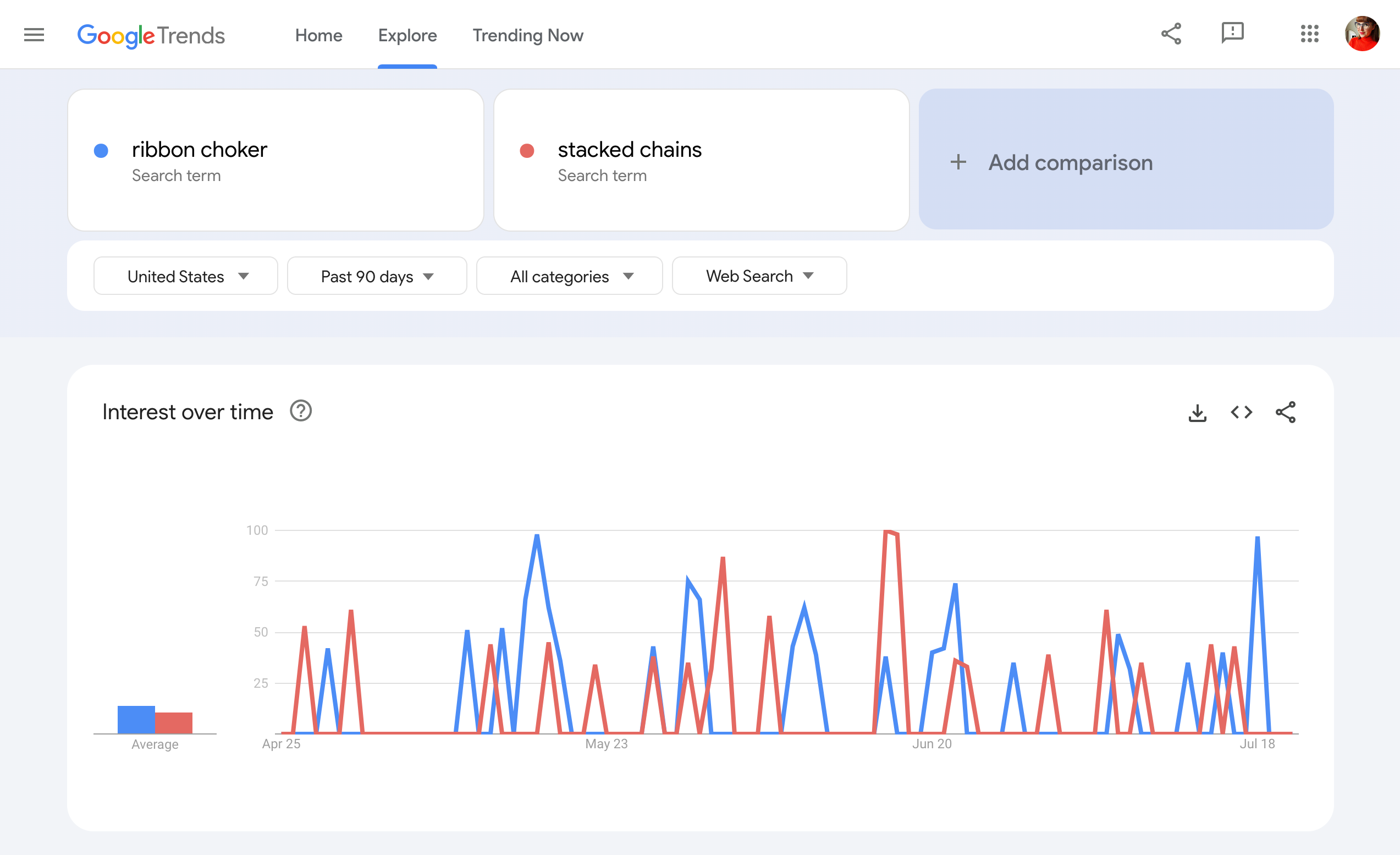 Google Trends
Another approach is to analyze adjacent consumer trends, such as the appetite for customization, like engraving. Or tap into the growing trend of sustainable shopping habits by using ethically sourced materials.
You don't have to just follow jewelry trends—you could start your own. That's what Biko founder and designer Corrine Anestopoulos did, launching a collection based on her personal style.
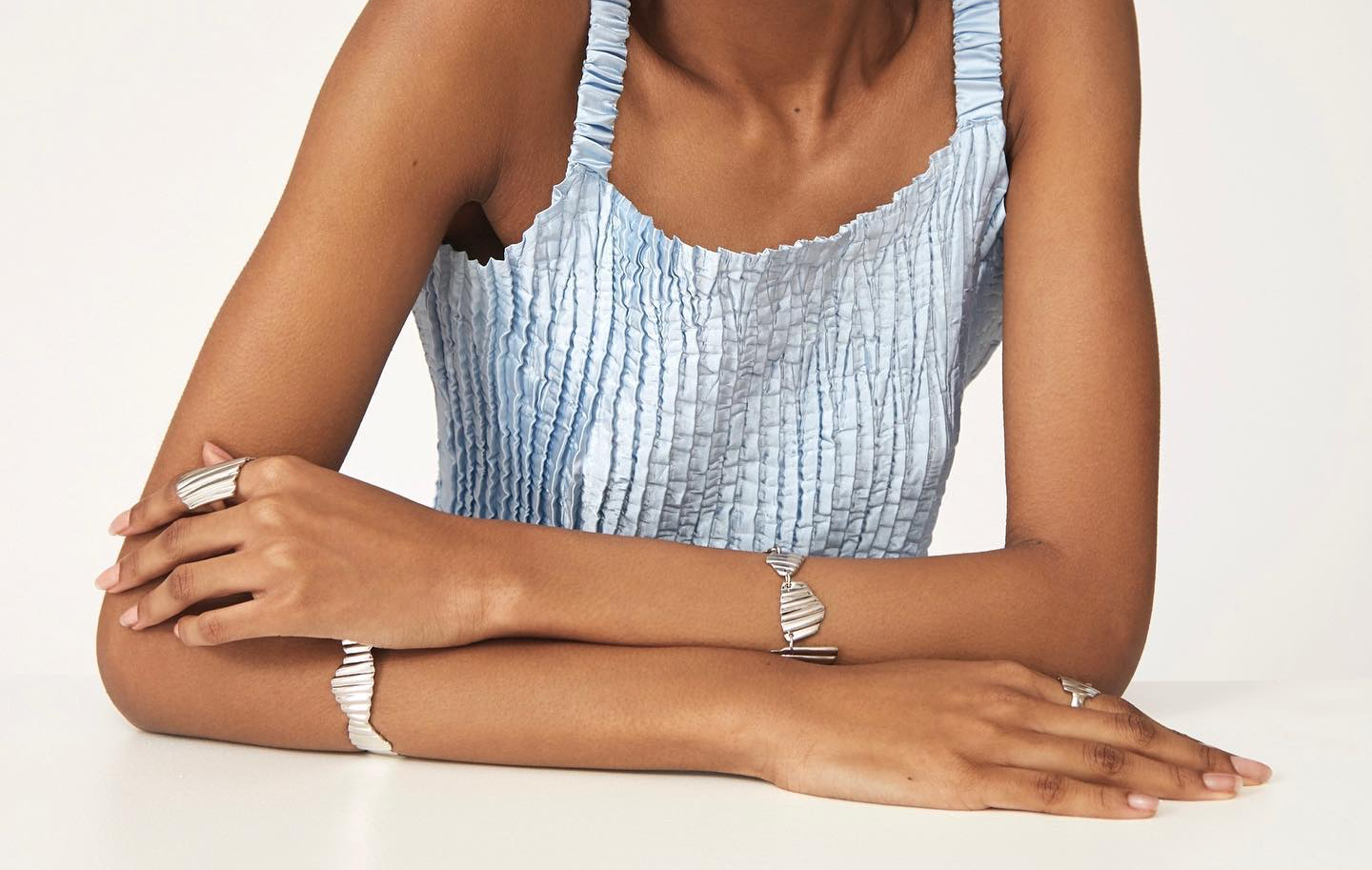 Biko jewelry sits somewhere in between costume and fine, selling high-quality designs made for everyday wear. Biko
"Somehow I felt like, just by fluke, I found a market for something new without meaning to," Corinne says. "But it was just my taste."
When she launched, Corinne was working with a brassy finish. "Nobody else was doing that," she says, noting that shiny silver was the trend at the time.
Though Biko's collections evolve with trends in the jewelry industry, the common thread is a recognizable look that defines the brand and secures repeat business.
Finding jewelry design inspiration everywhere
Success as a newbie in any facet of the fashion industry depends on a strong aesthetic, unique design, and consistent branding. Before hiring a designer to develop branding or craft individual pieces, business owners should run through a few exercises to define their overall signature style.
Depending on how you find inspiration, set up Pinterest boards, design your own digital mood boards, use a jewelry design mobile app, or even assemble inspiration physically on a bulletin board or in a sketchbook.
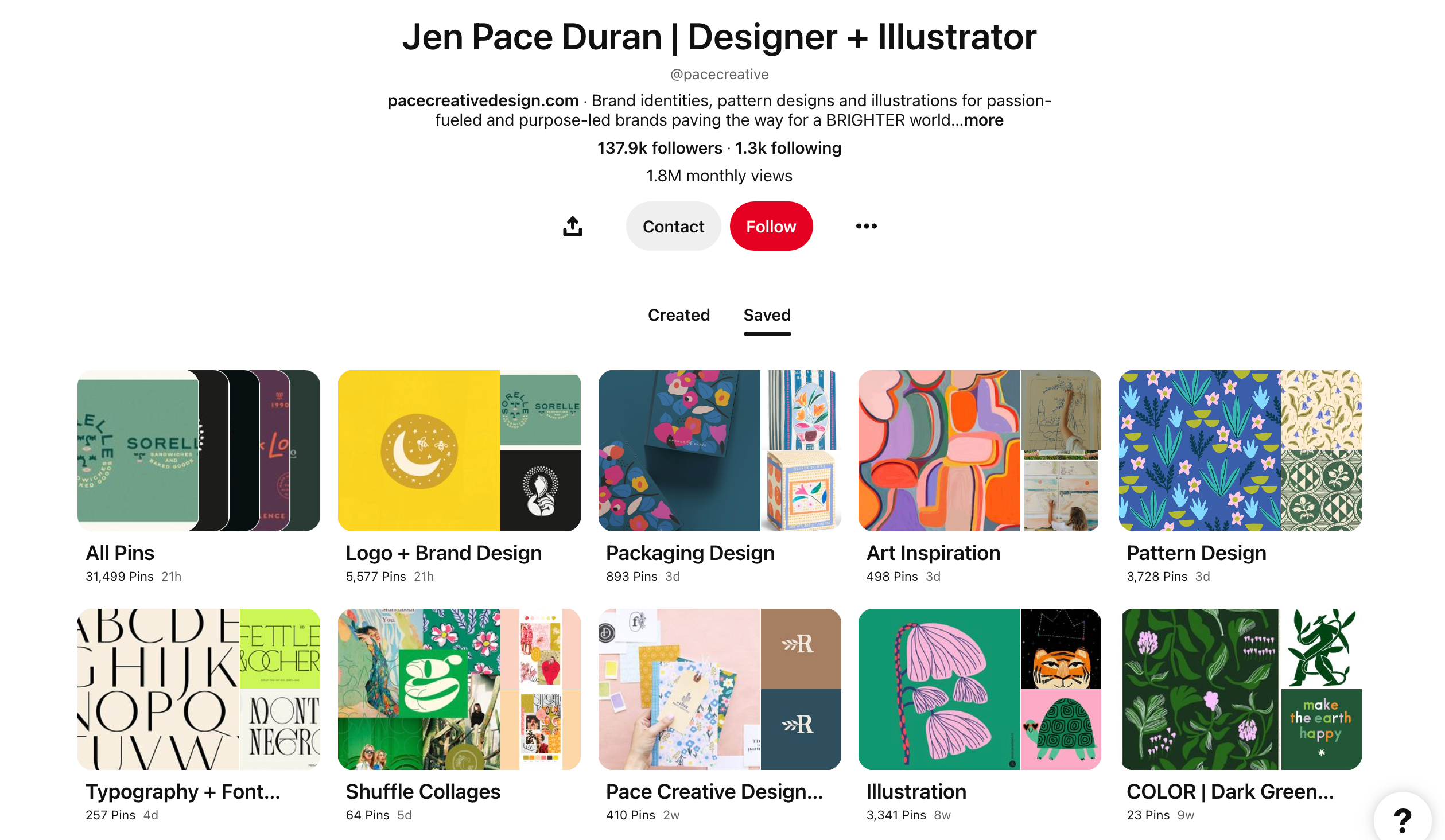 Designer Jen Pace Duran gathers inspiration into digital mood boards using Pinterest. Pace Creative
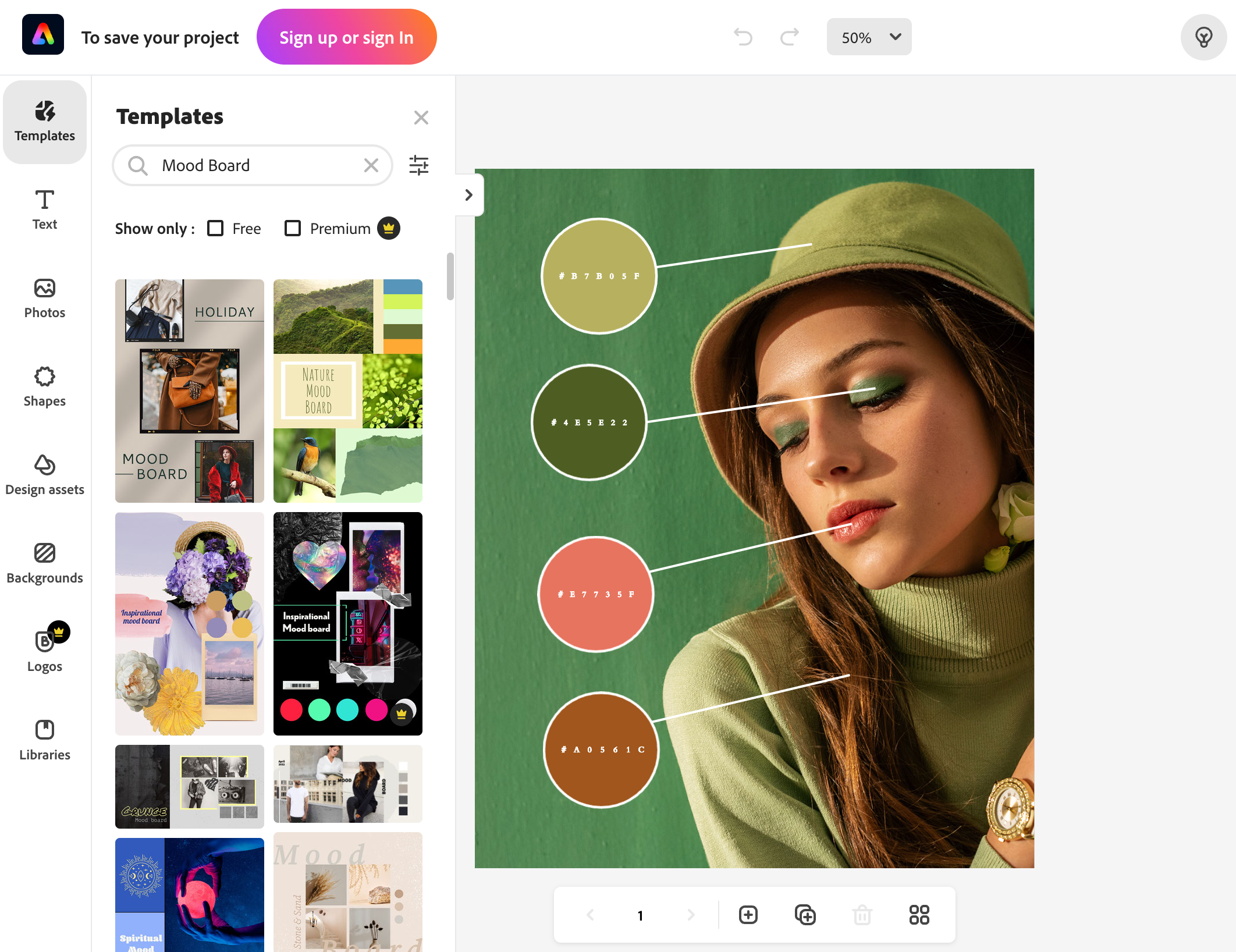 Use tools like Canva or Adobe Create to assemble inspiration in a digital mood board. Adobe Create
Collect images, colors, and textures from nature, architecture, fashion, or travel, and then identify themes that emerge. "Never stop being inspired," says Corinne. "I'm always drawing inspiration and collecting inspirational images, no matter where I am."
I'm always drawing inspiration and collecting inspirational images, no matter where I am.Corinne Anestopoulos, founder, Biko
3. Define your brand
Successful jewelry businesses have one thing in common: a rock-solid brand.
Brand goes beyond the logos and designs applied to websites or packaging. A business's brand communicates its voice, mission, vision, and brand story. It tells potential customers how to feel about your products.
Telling your brand story and finding a voice
Your brand guidelines will inform everything you do as a brand. This essential document will capture everything, including your voice and tone and mission and values. It will be useful in keeping your communications consistent, even as you scale.
Best practices for jewelry brands:
- Understand your audience. How do they speak? What tone and slang resonate with them?
- Establish a brand voice and tone guide.
- Tell a story with your About page.
- Add personality to your social media posts by sharing the process and inspiration behind your designs.
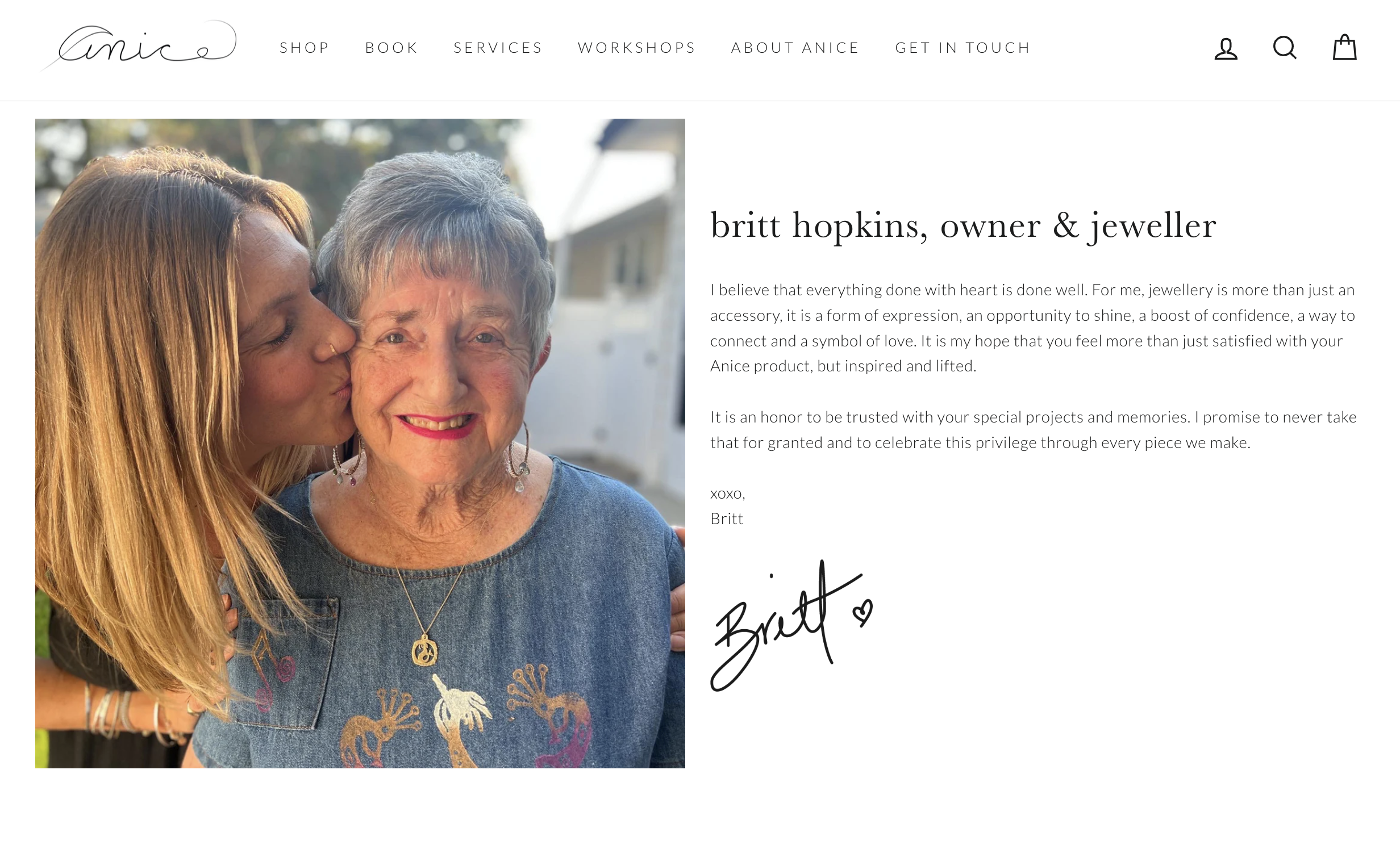 Anice Jewellery's About page tells owner Britt's personal story. Anice Jewellery
Packaging, logo, and brand identity
Branding includes the tactical elements representing your brand visually: logo, packaging, business cards, and your website design.
Once you've established your products' aesthetic, chosen a business name, and nailed your customer profile, it should be easy to identify a look to define your brand. This is an essential step, even for a small business, so don't rush it.
Branding design tasks to complete as a new jewelry business owner:
- Decide on fonts, colors, and photography aesthetic.
- Develop the logo yourself using a free online logo maker or hire a pro.
- Create a library of brand assets, including multiple versions of your logo and other design elements for packaging, social media, and your website.
- Choose a business name and a recognizable domain name to help your customers find and remember your website.
Design product packaging and creative shipping materials to match your branding.
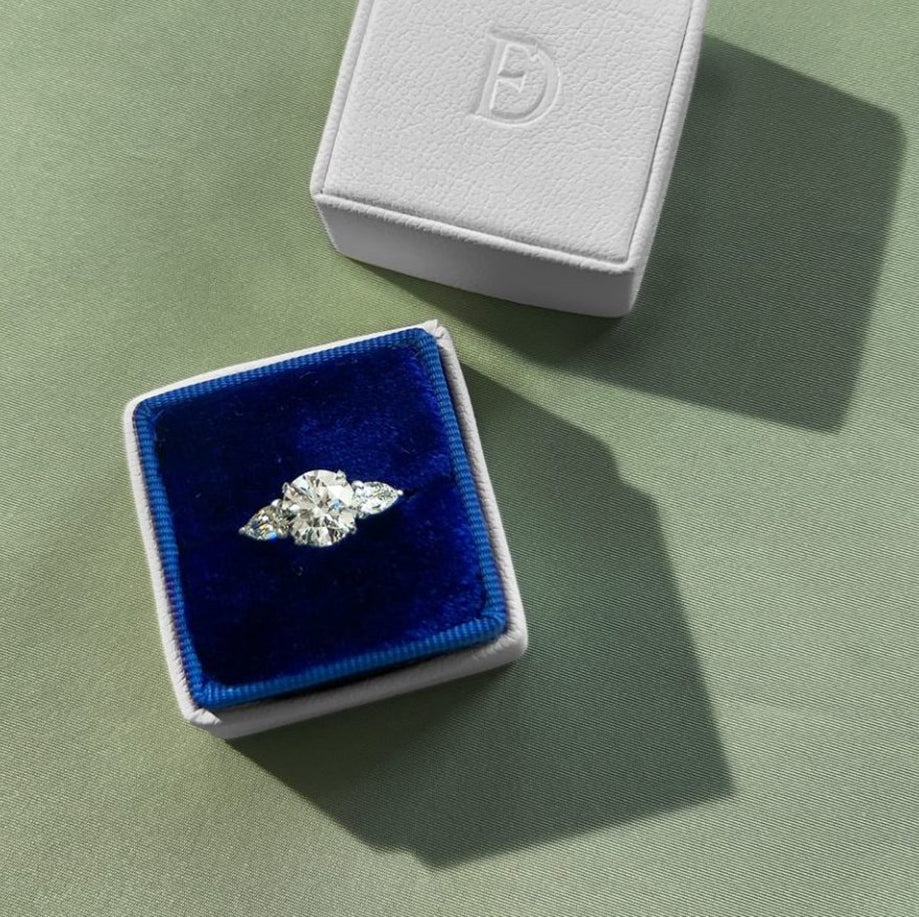 Frank Darling
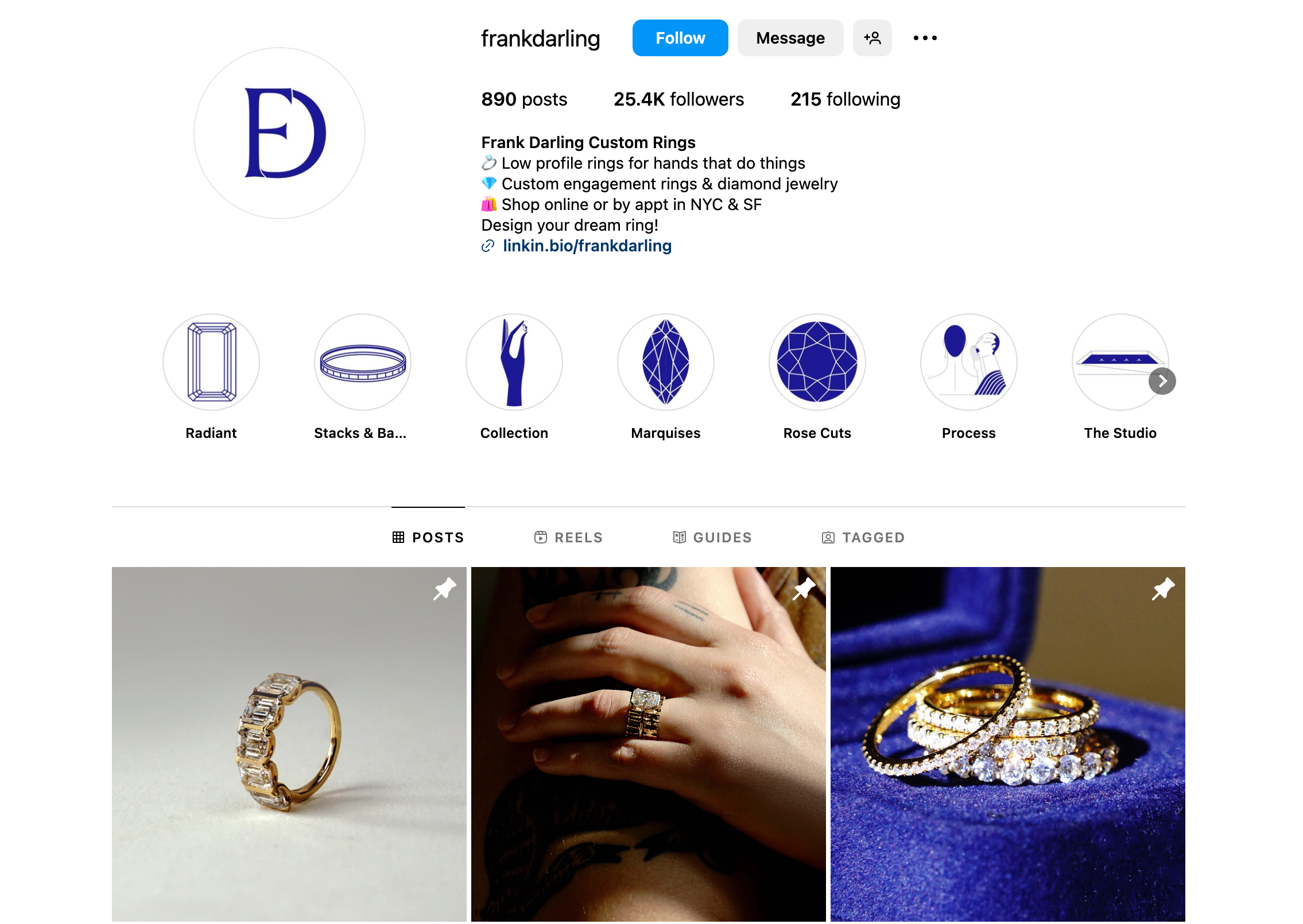 Frank Darling branding is consistent across every customer touchpoint, from packaging to social media content. Frank Darling
Writing a jewelry business plan
A formal business plan may not be necessary if you don't plan to pitch your idea to investors or seek other forms of outside funding at the start.
However, checking out a few business plan templates is a good exercise to help you understand your target audience, goals, business model, costs, and growth plan. It's also helpful as you learn how to run a jewelry business.
A business plan outlines your brand's mission and values.
Success story: A passion project became a successful DTC business
Brittany Hopkins started her business selling some of her creations on Etsy. After gaining traction, she moved her jewelry business to Shopify and opened a retail shop.
Read Brittany's Story4. Produce or source your jewelry products
How you'll develop your products—by hand or in a factory, at home or outsourced—depends on their complexity, price point, materials, and required skill level. Generally speaking, there are five ways to produce or source jewelry:
- Handcrafted jewelry production: fine and one of a kind.
- Handcrafted jewelry production: fashion and costume.
- Jewelry production: factory outsourced.
- Jewelry production: print on demand.
- Jewelry curation: dropshipping and resale.
Handcrafted jewelry production: fine and one of a kind
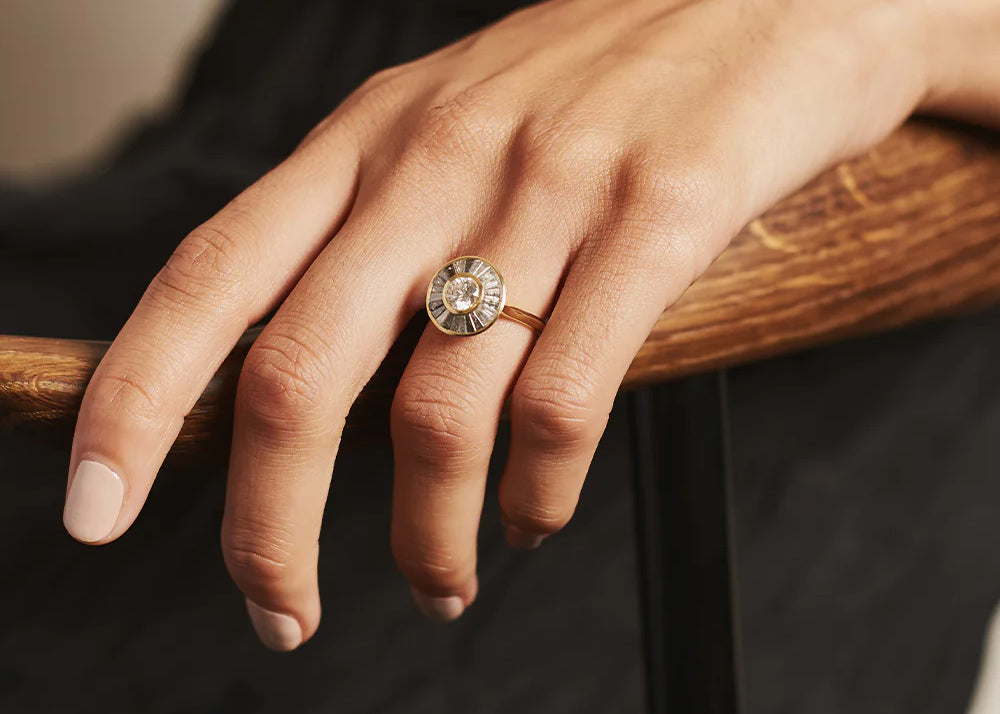 Rachel Boston
Handcrafting one-of-a-kind jewelry can be one of the most involved yet versatile of the production methods.
Depending on materials and design, some methods of bespoke jewelry production require specialized training/certification and expensive equipment. You may need to learn some of these methods, including:
- Soldering
- Silver/goldsmithing
- Casting
- 3D printing
- Laser cutting
- Leather tooling
- Weaving
- Gemstone setting
Consider starting with free online tutorials to learn how to make jewelry. You can then upgrade to paid classes or apprentice under an experienced craftsperson to expand your skill set.
2. Handcrafted jewelry production: fashion and costume
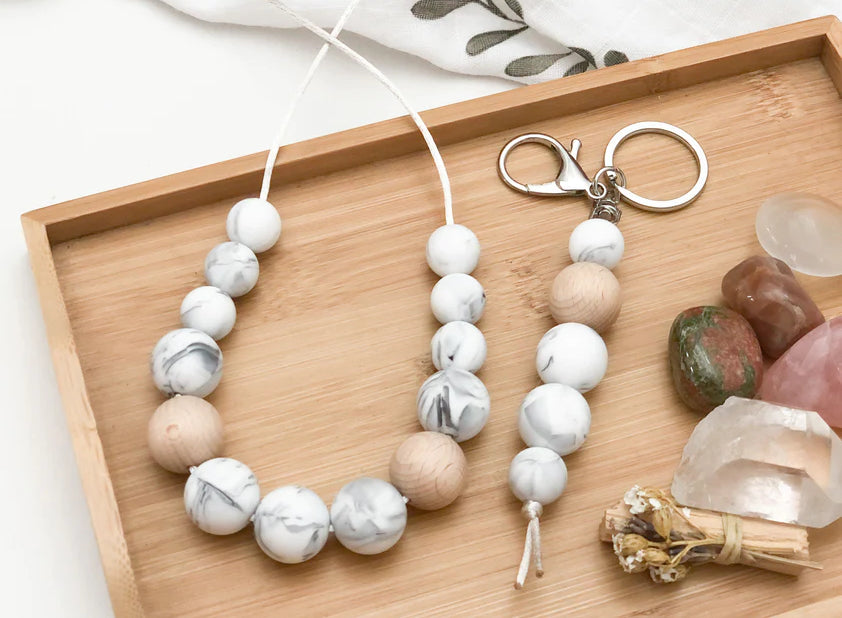 One Chew Three creates silicone fashion jewelry for moms with teething babies. One Chew Three
Handmade costume jewelry often involves the assembly of existing elements—chain, wire, beads, cast pendants—and doesn't require special training or equipment beyond basic hand tools.
This type of business is easier to scale, as you can purchase elements in bulk and create templates for assembly by hired production staff.
If design and production are the elements bringing you joy—and not the actual task of making jewelry—outsource or hire for other roles to help you scale the creative work.
Biko founder Corrine reaches out to local universities with renowned fashion communication programs to find her interns.
"I don't ever look for anyone who's interested in design," she says. "What I need is someone to help me free up my time so that I can be designing more."
Success story: How a young entrepreneur created a beaded empire
Riley Kinnane-Petersen started taking apart old jewelry and reassembling it when she was just five. Now her brand Gunner & Lux is sold in global retailers like J.Crew.
Read Her StoryJewelry production: factory outsourced
If you choose not to make jewelry with your own hands, have your designs manufactured by someone else. While not appropriate for fine or one-of-a-kind jewelry, it's a cost-effective option for fashion jewelry produced in larger quantities.
- Local manufacturing has the benefit of a "made local" appeal and creates opportunities to build relationships and have factory oversight. The downsides can include higher costs, limited choice, and production volume limitations.
- Overseas manufacturing can be a good solution if you want to keep costs low (for those doing high volumes) and have more choice in factories. Possible challenges include communication barriers, less oversight, and fulfillment issues caused by supply chain delays.
Accurate sketches or 3D renderings of your designs, along with technical specifications, may be necessary if you're outsourcing to a manufacturer.
Jewelry production: print on demand
The most hands-off jewelry production method involves uploading your designs to a print-on-demand service. With print on demand, you create a mockup of your product, which is then 3D-printed or recreated in stainless steel, wood, plastic, gold, or silver and shipped directly to your customers.
The Shopify App Store is home to print-on-demand apps that can produce and ship custom products, from jewelry to t-shirts and mugs.
Jewelry curation: dropshipping and resale
If you're not creative but still have a passion for jewelry, consider curating jewelry pieces from other designers to sell in your online store. Carry inventory and ship it yourself, or opt for a jewelry dropshipping model.
With dropshipping, there's no need to carry inventory, making it a popular way to start a business with minimal funds. Receive orders through your store, then pass them to your dropshipping supplier for fulfillment and shipping.
Jewelry entrepreneurs can also source products from verified Shopify brands using Shopify Collective—product sourcing built into Shopify—with better margins and faster domestic shipping than traditional overseas suppliers.
5. Set up a jewelry business studio or workspace
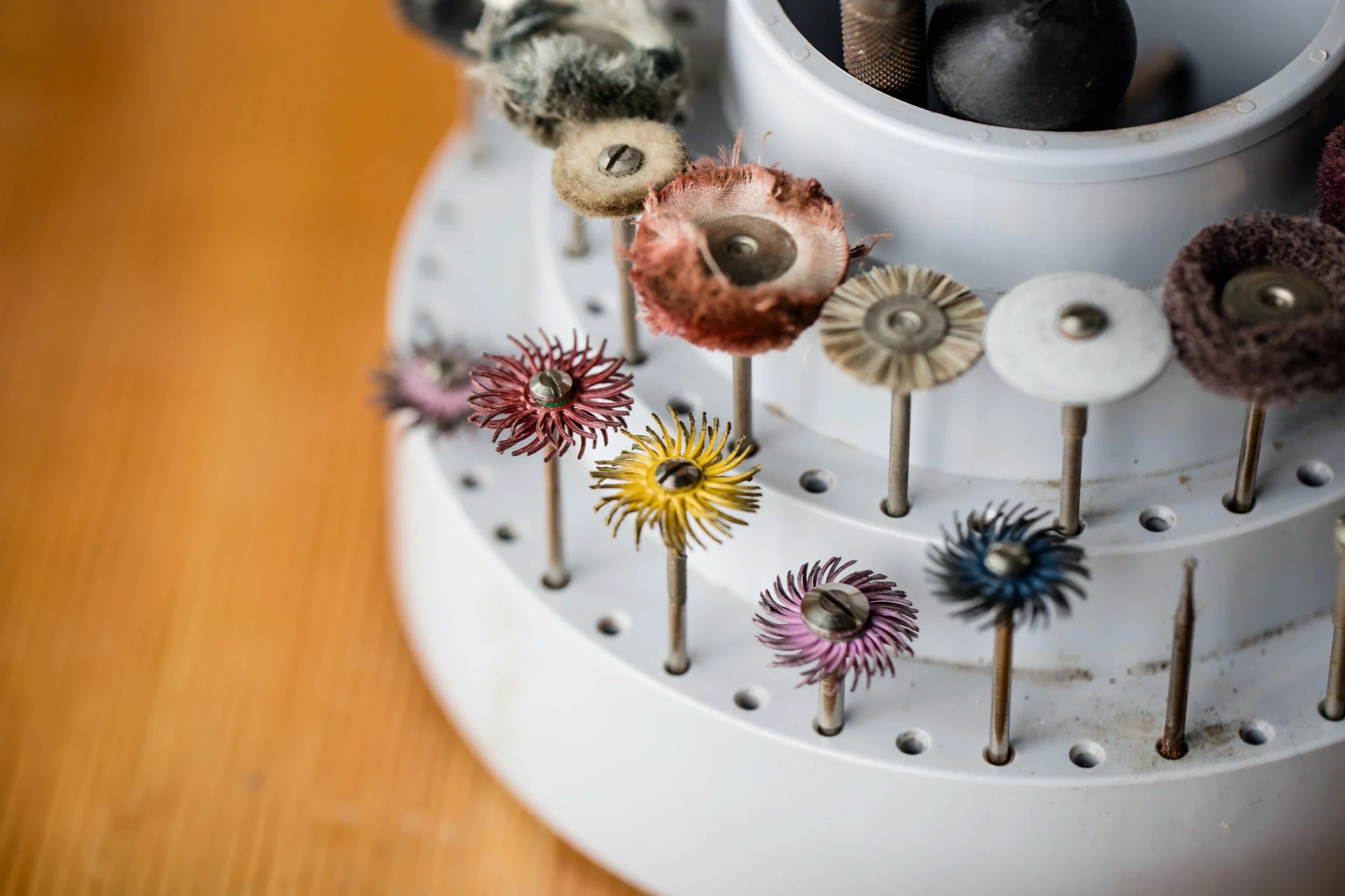
If you elect to make your jewelry in-house, you'll need a workshop space for you and your team. When setting up this space, consider the following:
- Maneuverability. Consider the flow of the space, especially if the assembly has multiple steps. For example, you might choose to move from one station to the next in a logical sequence.
- Safety. Some chemicals or tools involved in jewelry making require proper ventilation and safety precautions. Check with local laws governing the use of these substances and processes.
- Storage. Well-organized storage with multiple compartments is essential for small parts.
"A jeweler's bench, a flex shaft, and your safety would be the most important considerations," says Gillian Johnson, founder of Canadian jewelry brand Hawkly. "The flex shaft is a wonderful and versatile tool that you can use for drilling, finishing, and polishing your pieces."
She also advises using a face mask and safety goggles, and for those with long hair to pull it back so it doesn't get caught.
If your production team is larger or your requirements are complex—as with metal work or silversmithing workshops—consider using a commercial space. If it's out of your budget at launch, look into co-op studio space or share the costs of space and equipment with other creatives. Gillian splits her studio with two other businesses.
Space sharing also helps combat entrepreneur loneliness, something Corrine is familiar with.
"After doing Biko full-time for a while, I ended up working at a retail clothing store once a week just to not be lonely at home in my studio," she says.
Jewelry equipment and tools
There are several online resources for jewelry-making materials and equipment, including wholesale sellers, equipment leasers, and suppliers of precious gemstones.
Gillian Johnson, founder of Hawkly, relies heavily on word of mouth when it comes to her wholesale suppliers.
"Don't be afraid to ask other designers where they find their supplies," she says.
She also attends trade shows and industry events to continue to expand her network and discover new materials.
"My favorite place to source the newest stones and silver findings is the Tucson Gem and Jewelry Show," Gillian says. "There are thousands of vendors from all over the world."
6. Take professional photos of your products
 Hawkly
Don't underestimate the importance of presentation and marketing. It's possible to take DIY photos of your products with your smartphone and a simple lighting setup. Jewelry photography can be more challenging, due to the tiny details and reflective surfaces.
Don't skimp on photography.
Corinne Anestopoulos
"Don't skimp on photography," Corrine says, even if you're on a budget. A professional photographer is skilled at making models feel comfortable and setting up complicated lighting.
Other additions to your photoshoot team include models, stylists, makeup artists, and assistants.
"There are always people who are looking to build their book or willing to work for a product," she says. "It's not about taking advantage of people—you're all new to the game. If you get a group together and join forces, you can create magic together."
When shooting your photos, it's also important to offer several different views and angles of your products within these two categories:
- Product photos. These are clear shots of the product on a clean background to minimize distraction and highlight the details and different angles of the piece.
- Lifestyle photos. These are secondary shots, usually on a model to show scale on the body and suggest styling ideas to customers (upsell by nudging customers to combine multiple pieces into one look). Place these shots on product pages or in a lookbook.
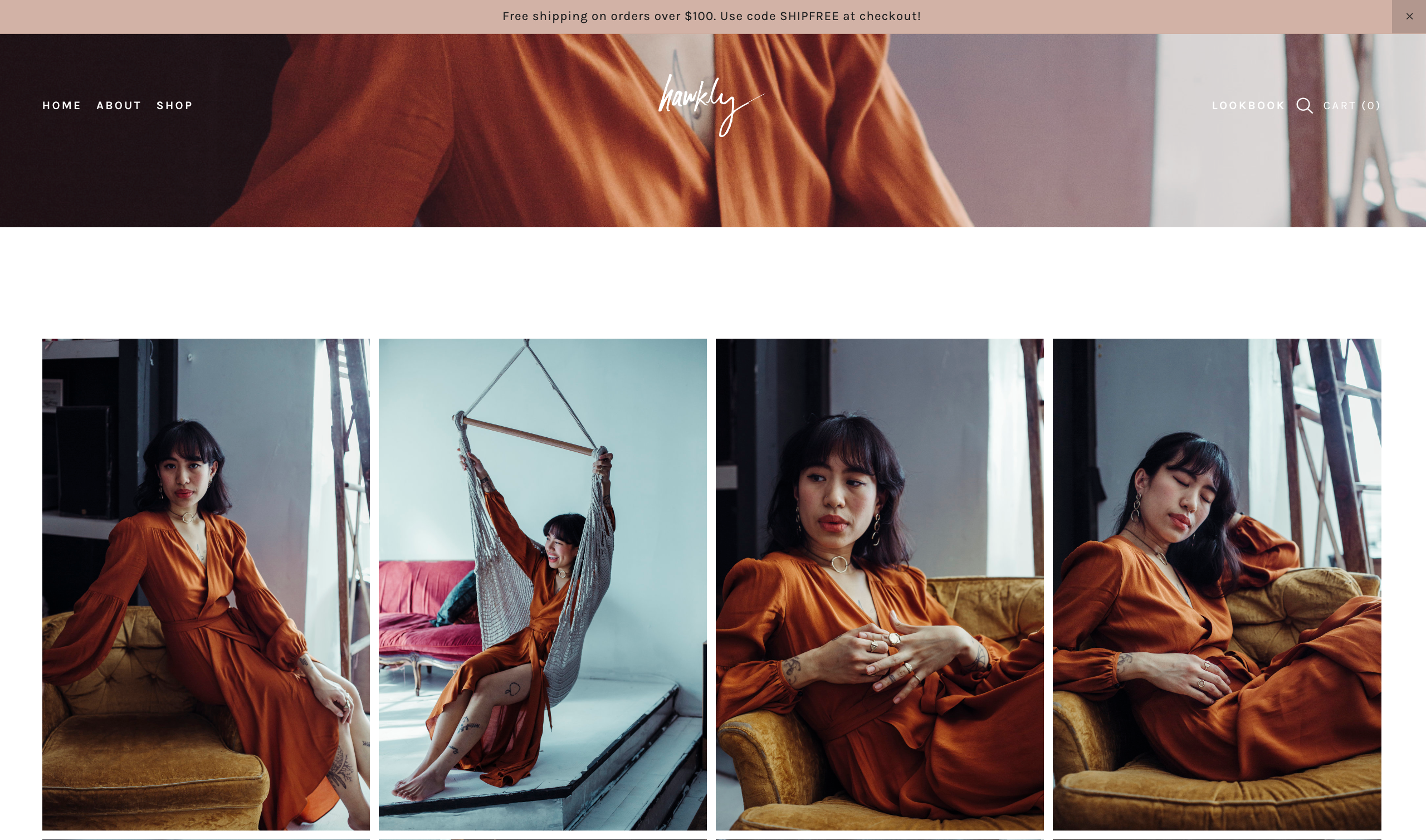 Hawkly lifestyle shoots become lookbooks to mark each season's collection. Hawkly
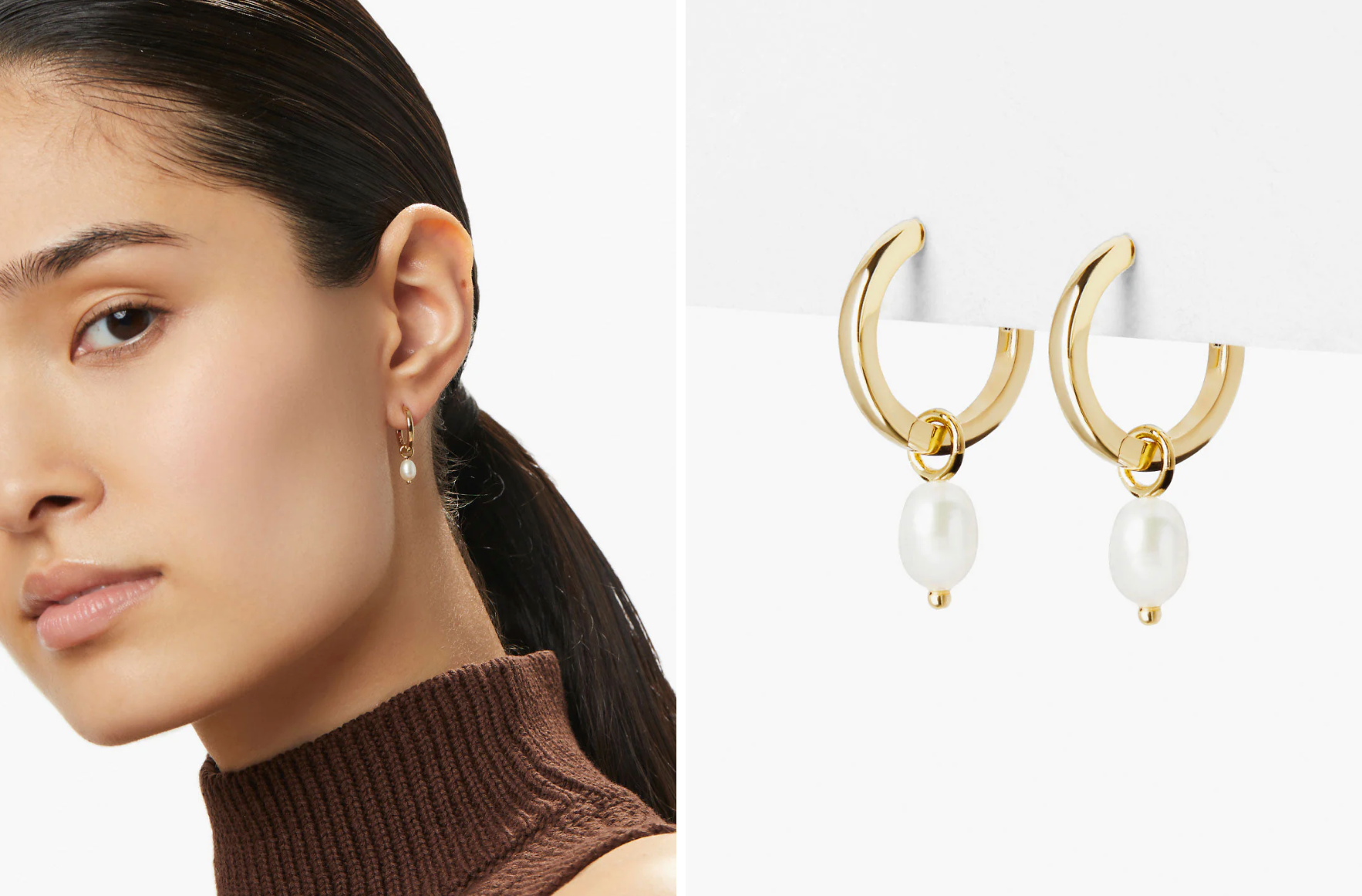 An on-the-model shot shows scale and styling, while a product shot zooms in on the details. Ana Luisa
If you're looking for ways to save on photography costs, partner with complementary apparel brands to reduce photography expenses or lend your jewelry pieces to fashion editors for photoshoots, in return for product photos and exposure.
7. Build your ecommerce store and start selling jewelry online
 Jenny Bird
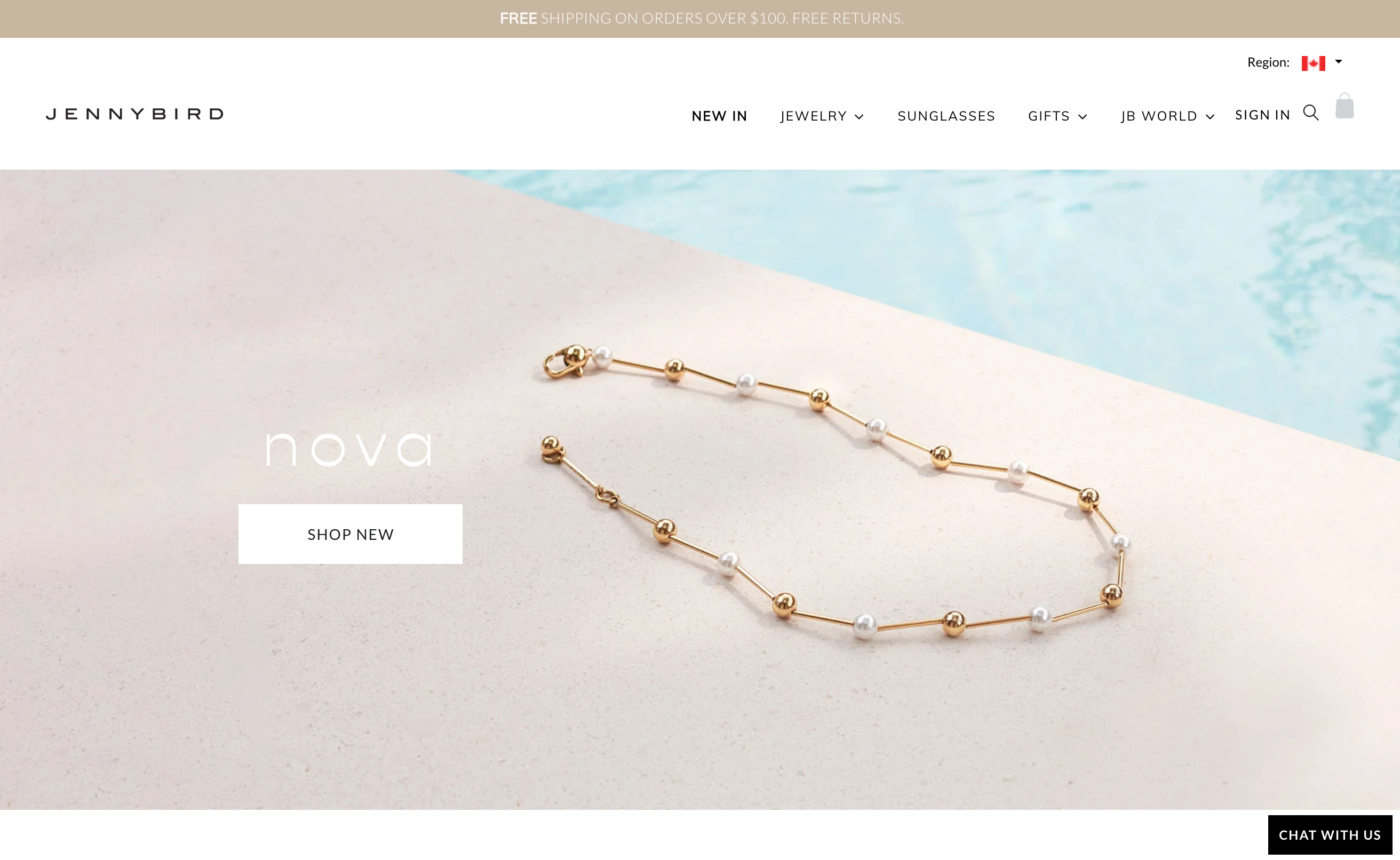
With your production, brand, and photography nailed down, you need a place to sell your jewelry. That might mean selling online.
You don't need an expensive or complicated website to be successful. Set up a Shopify store using a free theme, customized with your brand assets, fonts, and colors.
Choose a website template that complements jewelry, putting the photography first. Check out these Shopify themes for jewelry businesses. If you're building your store with an AI assistant, use mock.shop sample stores to build and test an online storefront before a real store exists.
Build an online store with AI
Create a website in minutes with the AI store builder. Describe your brand or products to generate a free custom theme that fits your idea.
Try it nowEssential pages and content
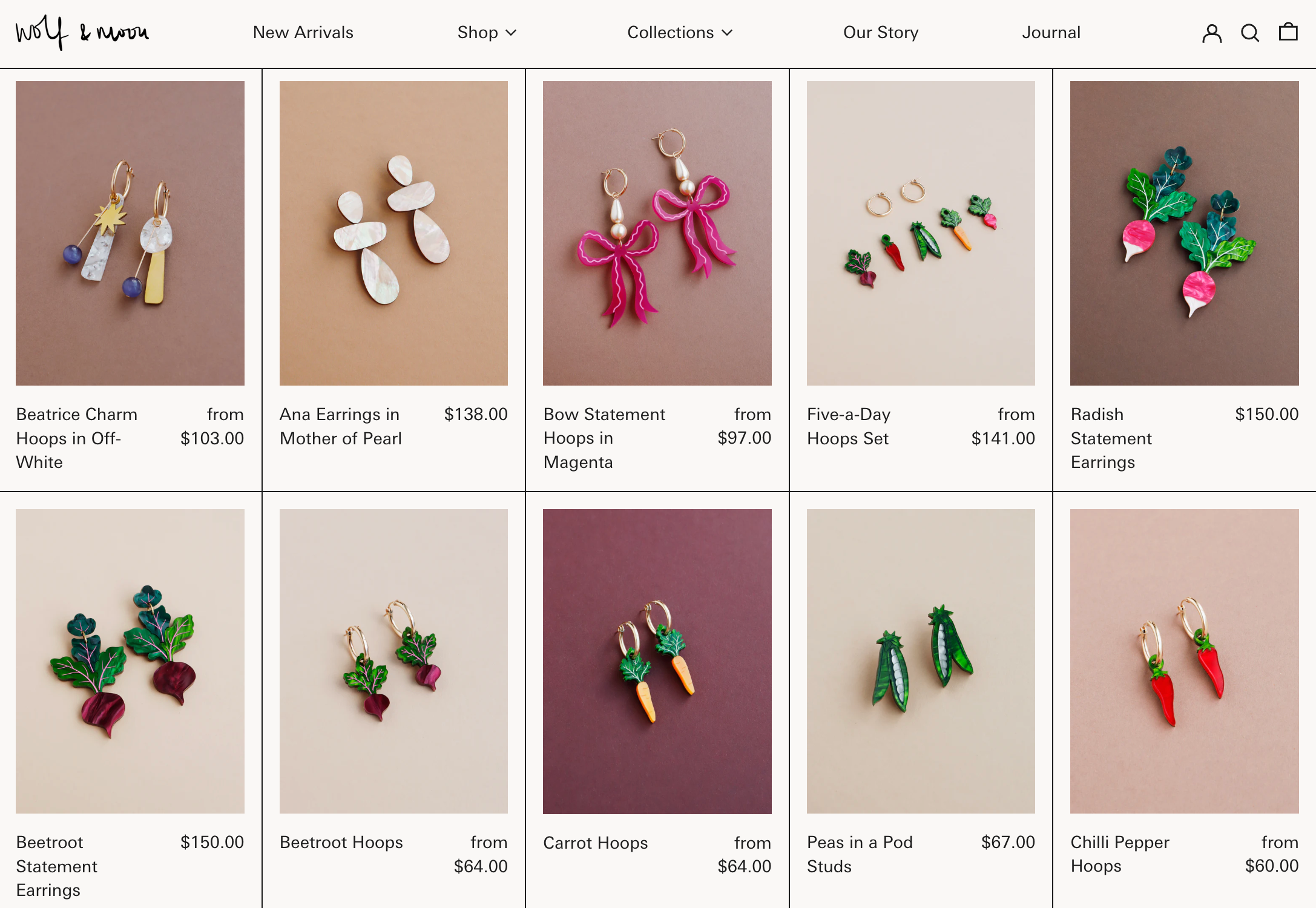 Wolf & Moon
The following pages are essential for an online jewelry business website:
- Homepage: Large lifestyle photos on your shop's homepage help hook visitors. Keep your homepage clutter-free and focused on new and trending products with a clear call to action (CTA).
- Collection pages: Organize your products into collections by type, price point, material, or occasion.
- Product pages: Product detail pages include essential information like sizing, materials, care instructions, and price.
- Contact and About pages: Focus on customer service and telling your brand story.
Across all pages, website copy should reflect your brand voice and inspire emotion, while also being detailed and helpful. Product descriptions should pull in your brand story while also providing technical information.
8. Market your ecommerce jewelry brand
Fashion and jewelry are heavily saturated industries. A good marketing strategy depends on your product, audience, and budget and may require some trial and error. Customer acquisition will be ongoing.
"The best way to stand out is to be authentic, trust your design instincts, and listen to your customers," says Gillian.
Here are a few ways to get started:
Social marketing
Making jewelry sales on social media doesn't mean bombarding your followers with sales pitches. Use social content to showcase your products indirectly through on-brand content, whether that's artistic videos, inspiring images, or entertaining posts. You'll need to grow a following to see an increase in engagement and sales.
Corinne recommends filling the gaps between product-focused posts with inspirational content.
"After a while, you'll realize that you're inspired by a similar stream of things that tells its own story."
Focus on each social network separately, testing content to see what sticks. Every platform has its own vibe—TikTok is known for authentic and quirky short videos, while Instagram is better for more polished photo and video content.
It's possible to gain traction with organic posts, but also consider paid social media campaigns to drill down on your demographic and increase reach.
Collabs and influencer marketing
Corinne has also had success with Instagram influencers, exchanging products for a dedicated post. Before reaching out, she recommends curating your profile so influencers can clearly see if your brand aligns with their own.
"Creating a lifestyle around what you do is worth more than anything," she says.
Influencer marketing offers a level of social proof you can't get with straight advertising. Younger consumers increasingly trust social media creators for product recommendations.
Another way to leverage organic marketing is to collaborate with other brands. This can be done through co-marketing a promotion, running an event with other brands, hosting a tandem giveaway, or even partnering with a compatible brand on a new product.
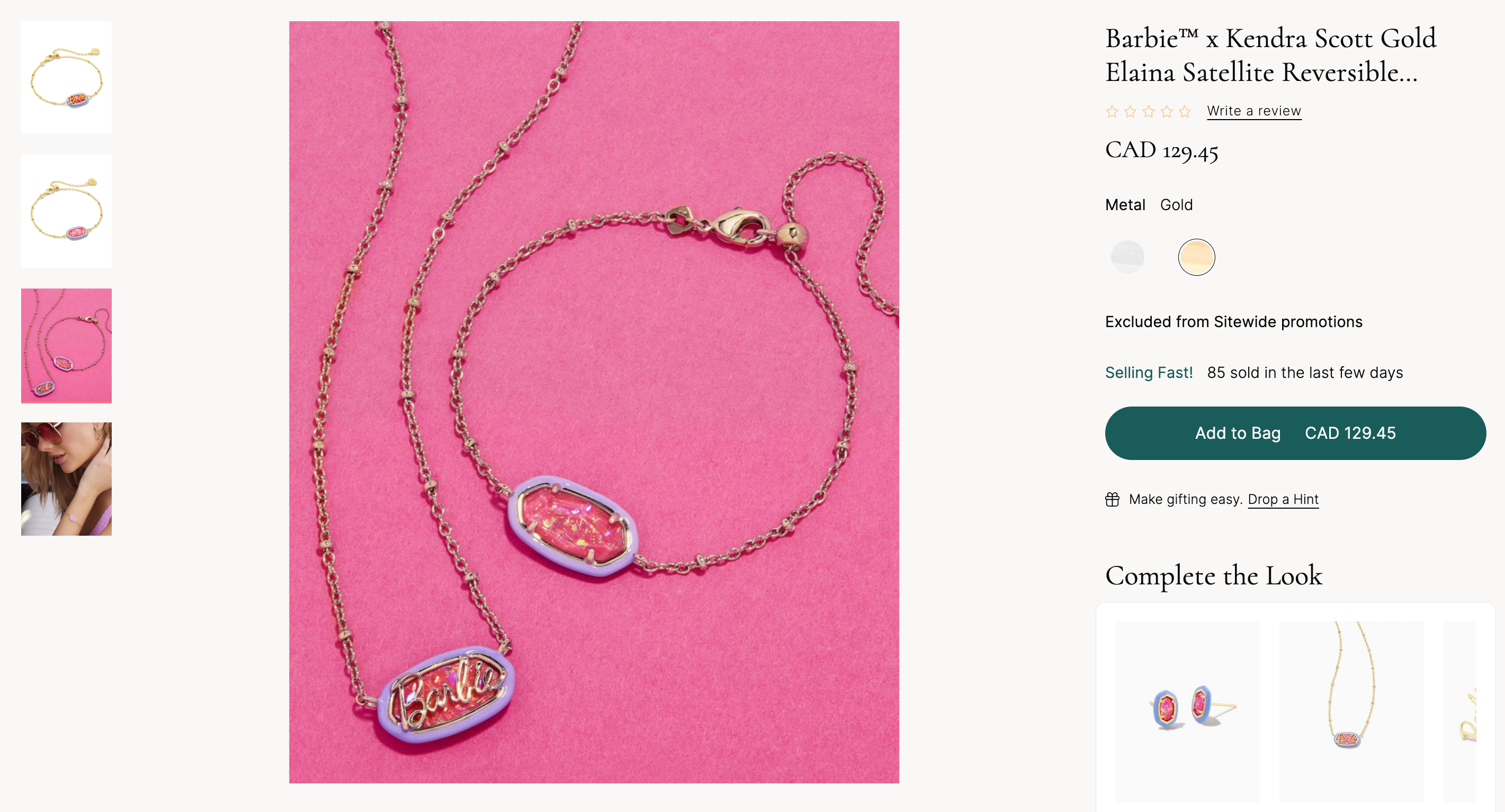 Kendra Scott partnered with Mattel ahead of the release of the Barbie film with a line of jewelry commemorating the famous toy. The brand benefited from increased search and marketing efforts around the release. Kendra Scott
Public relations for jewelry brands
Jewelry marketing can have unique challenges. With an increase in competition, Corinne invested in a rebrand of Biko and then hired a public relations (PR) firm to get the word out.
"It's expensive to work with PR but really, really valuable," she says. "It led to the best press I had to date. I sold $5,000 of one particular bracelet after it was featured."
Experiment with every marketing strategy, from ecommerce SEO to email marketing, and analyze results to see what works best for your brand.
How a celeb Instagram endorsement boosted this jewelry brand
Licia Young's toilet paper-themed earrings gained recognition when Britney Spears posted them on Instagram. While the exposure led to some sales, Licia emphasizes the importance of long-term audience cultivation over fleeting viral exposure.
Meet LiciaPop-up retail, wholesale, and artist markets
Corinne's career began when she was invited to share a booth at a local clothing show. Back then, jewelry was just a hobby. She sold out on day one of a two-day show, validating her idea and helping to turn her passion into a business.
Markets offer the opportunity to get out and see customers in person and get feedback directly.
Corinne Anestopoulos
Attending a handmade market is not only a great way for emerging brands to gain exposure to built-in audiences and validate an idea—they're also important for established online businesses.
"Markets offer the opportunity to get out and see customers in person and get feedback directly," says Corinne.
An alternative to attending markets is to host events in your own studio.
"Sample sales are a good way to liquidate older merchandise and also invite people into your space and process," Corinne says.
Or, if your own space isn't conducive to visiting, host a pop-up in another retailer's store.
Corinne also grew her business initially through consignment and wholesale agreements, which she gained by approaching local retailers in person. Cold calling can have a high rejection rate, but you just need one "yes" to get started.
While the jewelry market is competitive, don't view this as a deterrent. Competition is a sign of a healthy market with high demand. The key is to work smarter: stand out by offering unique products and experiences. Avoid generic offerings that mimic everything else on the market.
Start selling in-person with Shopify POS
Shopify POS is the easiest way to start selling in-person. Take your brand on the road and accept payments, manage inventory and payouts, and sell everywhere your customers are—farmers markets, pop-up events and meetups, craft fairs, and anywhere in between.
Discover Shopify POS9. Scale your business
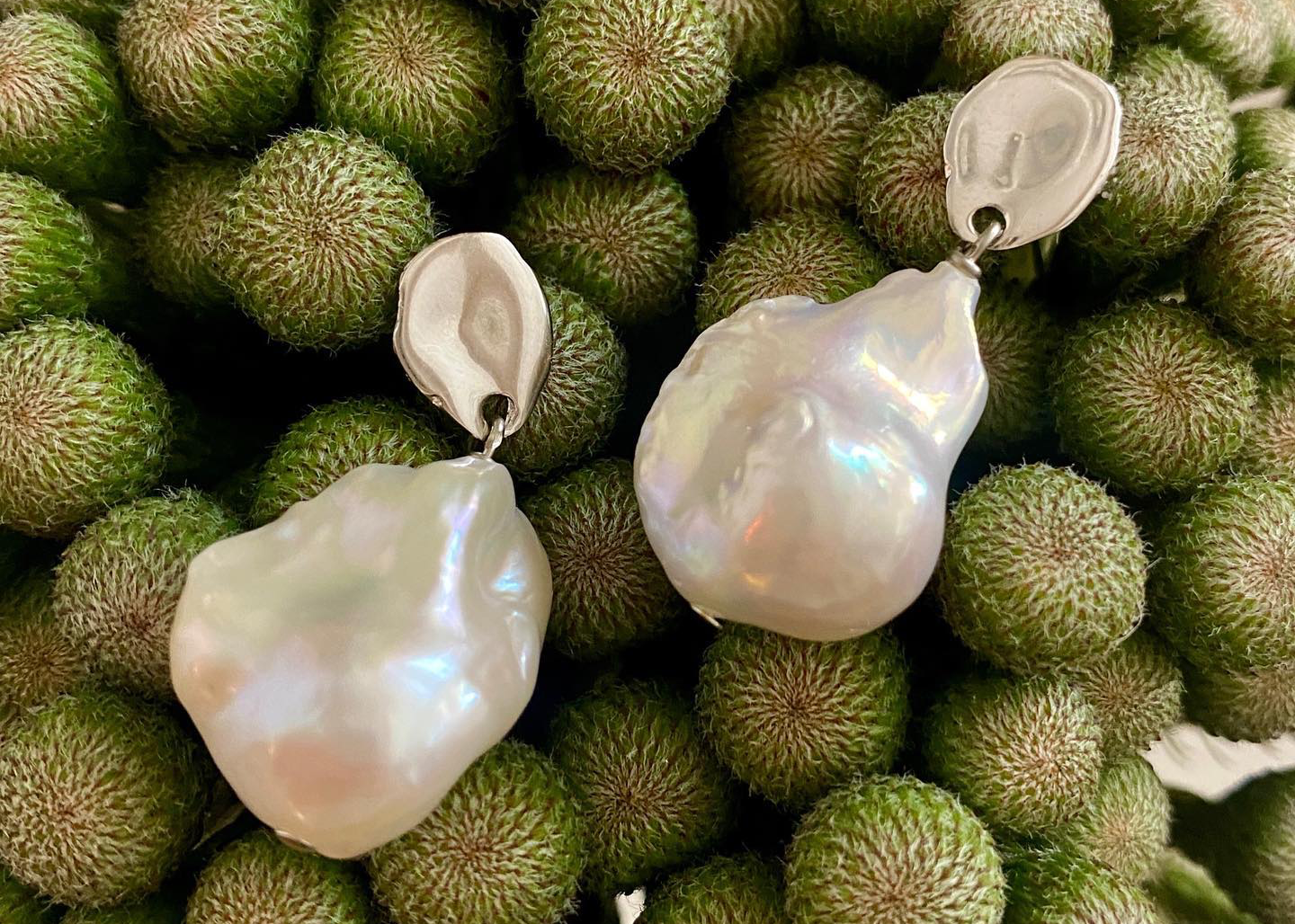 Biko
For new businesses, start small by pitching your designs to local boutiques. As you scale, you can work your way up to larger partners. Wholesale still accounts for the bulk of Biko's overall business, and Corinne has worked with large retailers like Nordstrom, Simons, and Hudson's Bay.
Marketplaces and sales channels
An online or retail store is a natural home for your business. Depending on your brand strategy, you may choose to keep your jewelry exclusively available from your store.
But a store doesn't have to be the only place you display and sell products. Today's online environment includes many accessible sales channels, each with built-in audiences.
Marketplaces and selling sites are an obvious avenue for many brands. Amazon offers the opportunity to access millions of shoppers, while Etsy is a destination for those seeking handmade crafts.
Shopify store owners can easily list products on marketplaces using the Marketplace Connect app, managing everything directly from their store dashboard.
Social media storefronts are another potentially lucrative sales channel for jewelry businesses. With a TikTok Shop or Instagram storefront, serve customers without them needing to leave the app. This reduces friction, placing your checkout closer to the content, attracting customers.
International
If your business shows signs of success locally, expanding internationally is another way to tap into new markets and increase your sales. Commerce platforms like Shopify can help you reach a global audience, accept payment in multiple currencies, and manage international shipping.
Success story: From maker to multimillion-dollar jewelry brand
After Camille Brinch showed a real knack for jewelry making, she approached her brother for help to turn it into a real business. Now, her eponymous jewelry line is a multimillion-dollar company.
Read Camille's StoryFeature illustration by Pete Ryan
Read more
- How To Source Products To Sell Online
- How to Start a Dropshipping Business- A Complete Playbook for 2024
- How to Sell Food Online (Step-by-Step Business Guide)
- The 13 Best Dropshipping Suppliers in 2024
- How to Sell Art Online- The Ultimate Guide
- The Ultimate Guide To Dropshipping (2024)
- How to Start a Candle Business (with Examples)
- AliExpress Dropshipping- How to Dropship From AliExpress
- Making Spirits Bright- Inside the Workshops of 7 Christmas Store Owners
- 12 Woodworking Projects and How to Sell Them Online
How to start a jewelry business FAQ
How do you start a jewelry business online?
To start a successful jewelry business online, follow these steps:
- Find your niche.
- Research the market and trends.
- Write a business plan.
- Define your brand.
- Produce or source jewelry products.
- Take professional photos of your products.
- Build your online store to sell jewelry.
- Market your jewelry company.
- Scale your business.
Do I need a business license to sell jewelry online?
It's important that you consult local regulations governing small businesses of any description. In many cases, though, you do not require a business license to set up an online jewelry store to sell your products. In some regions, you may need a tax number, but this also may depend on how much income you're generating. Consult an accountant and/or business lawyer while you establish your business. Remember to ask about business insurance and any other legal requirements.
What are the basic tools for jewelry making businesses?
The basic tools for a jewelry making business depend on the type of jewelry you plan to produce. You can start a jewelry company with almost no upfront cost or equipment if you take the print-on-demand approach. Fashion jewelry that involves mostly the assembly of pre-made components may require simple hand tools like pliers. However, if you plan to create fine jewelry products, you may require expensive and highly specific equipment.
How much does it cost to start a jewelry business?
The cost of starting a jewelry business is relative to the complexity of the production model you choose. You can start your own business with a couple hundred dollars to cover basic supplies and make jewelry from your kitchen table. Or, you can invest tens of thousands in equipment and expensive raw materials and start a fine jewelry-making business from a dedicated studio. A successful business relies on understanding how much money you will need upfront and an accurate picture of your cash flow.
Source: Original website ·Read original
Related Learning
How to Add External Links to an Independent Website? How to Build a Free Independent Website
In today's internet age, independent websites have become important platforms for many business…
How to Set Up Video Playback on an Independent Website? Is Video Playback Better with a Dedicated Graphics Card?
In the internet age, video content has become an important way to attract visitors and enhance a web…
How to Livestream on an Independent Website: Steps for Beginners
In the internet age, livestreaming has become a very popular form of interaction. Many independent w…