 EN
China vs US Suppliers: Overcoming Shipping Times and Fulfillment Challenges in 2026
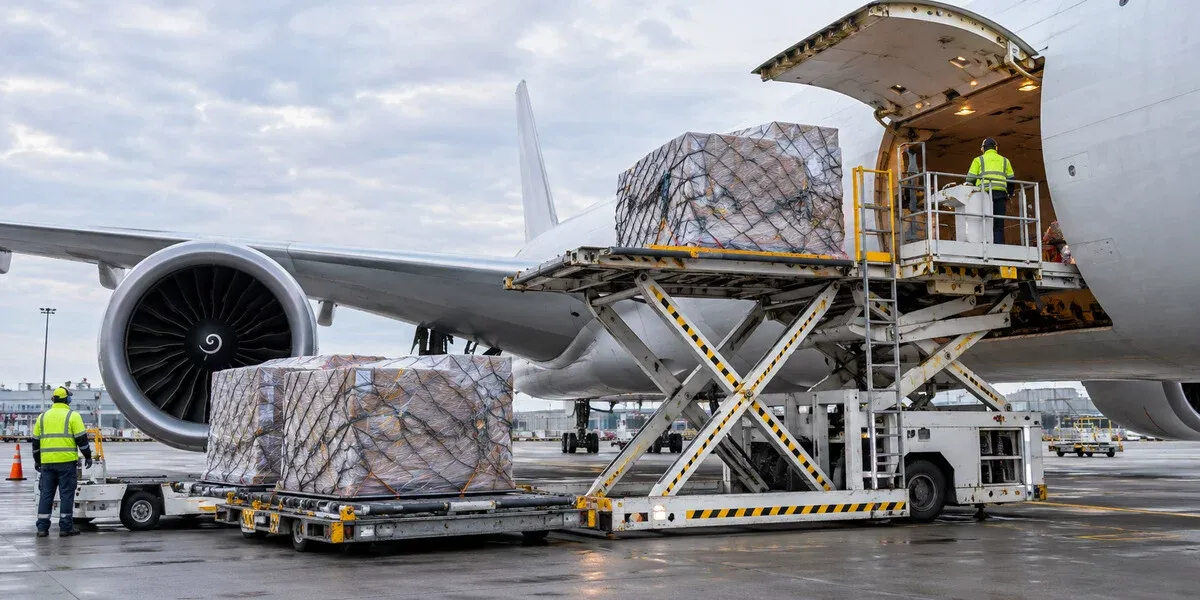
Table of Contents
- China vs US Suppliers: The Cost, Time, and Risk Trade-Off
- The 5-Mode Transport Matrix: Finding Your Break-Even
- Three Hidden Costs of Self-Arranged Freight Forwarders
- When Platform Logistics Replaces the Forwarder
- The US Overseas Warehouse Model: Safety Stock and Reorder Cycles
- Matching Product Category to Transport Mode
- Choose Transit Time on Purpose, Not by Accident
- FAQ
US buyers comparing China suppliers shipping to US warehouses confront a real three-way trade-off. Factory-gate prices look attractive, yet every transit day ties up working capital and quietly raises stockout risk. Domestic suppliers deliver within days, but they charge a higher unit price.
Realistic shipping time from China to USA varies widely by transport mode. Ocean, air, rail, and courier options differ in total landed cost and in how reliably they arrive. Each mode has lanes where it wins, and hidden fees erode the apparent savings elsewhere.
Key Takeaways:
- Ocean FCL remains the cheapest option per unit at volume, yet door-to-door transit averages about 37.6 days to the US West Coast and roughly 66 days to New York.
- Air freight moves China-to-US cargo near $5.86 per kg, which is fast but expensive, and duty now applies to every commercial entry.
- The China-Europe Railway Express introduces a mid-volume tier between sea and air, although the rail leg terminates in Europe.
- Self-arranged forwarders carry consolidation waits, peak-season surcharges, and customs dwell that stretch nominal transit estimates.
- A US overseas warehouse or an official on-time guarantee shifts delivery risk away from you and shortens final delivery.
China vs US Suppliers: The Cost, Time, and Risk Trade-Off
For a US buyer, transit time is itself a cost, not merely a matter of patience. Every day a container sits on the water, your working capital sits motionless alongside it. That inflates inventory carrying cost and lengthens the whole cash-to-cash cycle.
The honest question is which mix of total landed cost and reliability fits your SKU and your cash position, not which supplier is cheaper on paper. Chinese factories often show a real factory-gate saving on small appliances, while US wholesalers ship within days but charge more per unit.
The comparison below maps this three-way trade-off. Read it as a starting point rather than a final verdict, because your product weight, order size, and duty classification decide the winner.
| China vs US Suppliers: The Three-Way Trade-Off | |||
|---|---|---|---|
| Factor | China-Sourced | US-Domestic | Hybrid Model |
| Unit price | Lowest factory-gate cost | Highest per unit | Blended: bulk ocean plus local stock |
| Lead time | About 37.6 days to USWC, 66 days to NY door-to-door | 3 to 7 days | Days for stocked SKUs, weeks for replenishment |
| Main risk | QC distance, duty exposure, long pipeline | Thin margin buffer | Coordination and storage cost |
| Best for | High-volume, price-led SKUs | Fast, low-volume, urgent orders | Growing brands with steady demand |
The 5-Mode Transport Matrix: Finding Your Break-Even
Mode selection turns on weight and volume rather than vague fast-versus-cheap labels. The decision bands are reasonably clear. Under approximately 100 kg, an international courier usually wins. From roughly 100 to 500 kg, air freight becomes preferable. Between about 1.5 and 15 CBM, ocean LCL is appropriate, while above 15 CBM ocean FCL delivers the strongest unit economics. Within the 500 to 5,000 kg mid-volume band, rail intermodal becomes a viable option.
On ocean pricing, the Drewry World Container Index reading from 22 October 2026 put a 40ft container from Shanghai at $8,007 to Los Angeles and $10,166 to New York. The index composite sat near $4,585. For air cargo, as Xeneta reports, China-to-US rates reached approximately $5.86 per kg in mid-2026, climbing sharply year over year.
The China-Europe Railway Express, or 中欧班列, deserves an honest explanation. Trains travel from Yiwu or Suzhou to Duisburg in roughly 11 to 12 days, and the cost falls between sea and air, which suits mid-volume sellers who also serve European buyers. However, the rail leg terminates in Europe. A US-bound shipment still requires a transatlantic on-carriage that adds several days, so treat it as a combined movement that a forwarder must quote individually. The mainstream US route remains China to a West Coast seaport, then domestic rail inland. There is no direct rail connection to the United States.
| China to US Transport Mode Matrix (2026) | ||||
|---|---|---|---|---|
| Transport Mode | Pricing Unit | Indicative Rate | Transit (door-to-door) | Best Fit |
| Ocean FCL | per 40ft container | $8,007 to LA, $10,166 to NY | About 37.6 days USWC, 66 days NY | Over 15 CBM, heavy bulk |
| Ocean LCL | per CBM | $45 to $160 USWC, $65 to $180 USEC | 28 to 45 days | 1 to 15 CBM mixed pallets |
| Air freight | per kg, volumetric | About $5.86 per kg | Roughly 8 to 14 days | 100 to 500 kg, urgent, high value |
| Rail (中欧班列) | per CBM or kg, quote-based | Between sea and air, no fixed rate | 11 to 12 days to Duisburg, 22 to 35 days door-to-door | 500 to 5,000 kg mid-volume, EU plus US |
| International courier | per kg, volumetric | Varies by weight, check live rate | 2 to 7 business days | Under 100 kg samples and rush |
The cheapest tier is only cheap when you can absorb the extra transit days and handle customs clearance yourself. These modes differ on total landed cost, not on the headline freight rate alone.
Three Hidden Costs of Self-Arranged Freight Forwarders
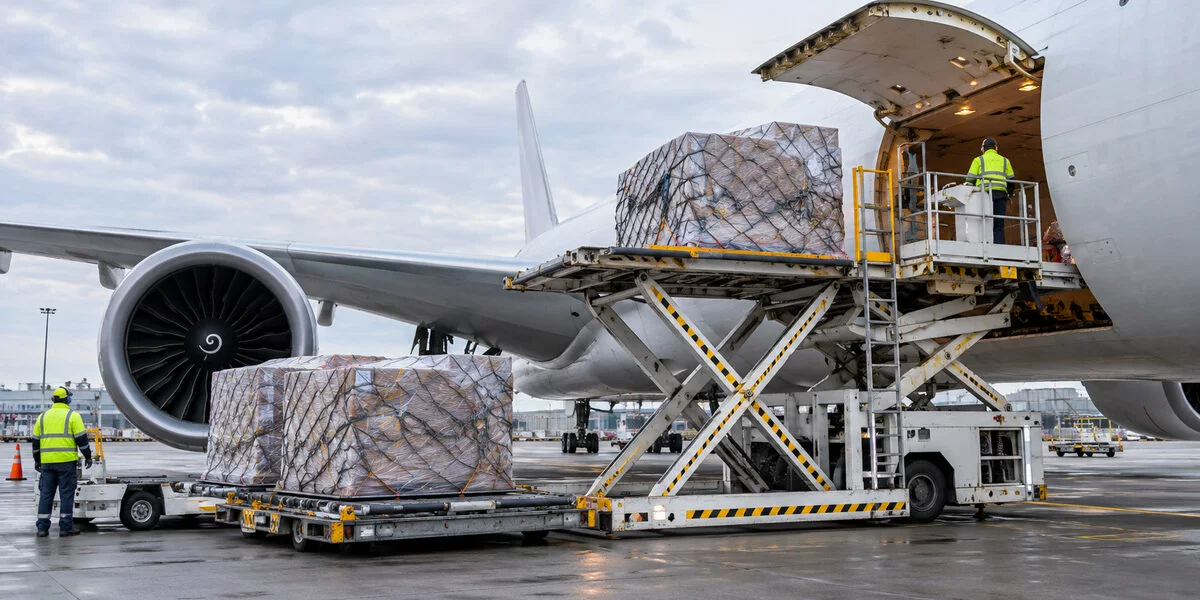
A cheap quote is rarely a cheap shipment. Three hidden costs routinely break nominal transit estimates for self-arranged forwarders, whether you source them on-platform or independently.
The first is the consolidation wait. LCL cargo lingers at the origin container freight station until a shared box fills completely. That single step adds several handling and consolidation days before the vessel has even departed.
The second is peak-season surge. During the Q3 and Q4 pre-holiday rush, general rate increases, blank sailings, and container rollover simultaneously inflate both cost and transit days. Your booked sailing may simply skip an entire week.
The third is customs dwell and the CIF trap. A deceptively low CIF freight quote can conceal substantial destination terminal and handling fees, billed afterward by the supplier's agent. This draws recurring complaints, so confirm every all-in destination charge in writing before committing.
The compliance shift compounds this exposure. A 2025 presidential action suspended duty-free de minimis treatment, first for China-origin parcels and then for all countries. The $800 threshold is now suspended and heading toward repeal. Small direct parcels no longer clear duty-free, which weakens the dropship-from-China model and attaches formal entry filing to every shipment.
When Platform Logistics Replaces the Forwarder
Once you recognize these forwarder risks, an in-platform logistics layer looks far more attractive. Alibaba Freight and Alibaba.com Logistics target three of these weak points: price opacity, customs dwell, and dispute friction.
The platform describes its own logistics network with clear, upfront pricing and real-time tracking across more than 200 countries and regions. US Local Delivery and US-stock arrangements let suppliers pre-position inventory and ship domestically, which closes the final-mile gap that ocean freight cannot reach.
The strongest component is the guarantee. According to the official Alibaba.com shipping and logistics page, the On-time Delivery Guarantee promises delivery by the scheduled date or delay compensation of 5% up to USD 100. You file through My orders, and higher buyer tiers receive compensation automatically. Alibaba reviews the claim directly, which saves time negotiating with the supplier.
This mechanism ties directly into Trade Assurance escrow. When delivery terms are satisfied, funds are released. When they are not, a structured refund path exists. That does not eliminate ocean transit, but it transfers timing risk and dispute burden away from you, which is precisely the objective.
The US Overseas Warehouse Model: Safety Stock and Reorder Cycles
Speed carries a price you can plan for in advance. Pre-stocking a US warehouse trades a lengthy inbound lead time for rapid domestic delivery, so the decision balances carrying cost against stockout exposure.
The required buffer expands quickly as lead time lengthens. Using the standard dual-variance safety-stock formula, SS = Z × √(L × σD² + D² × σL²), you can visualize the gap directly. These inputs are illustrative rather than a citation.
Consider a SKU with daily demand of 100 units and a demand spread of 20, at a 95% service level where Z equals 1.65. A US-domestic lead of 5 days with spread of 1 requires approximately 181 units of safety stock. A China ocean lead of 35 days with spread of 8 requires roughly 1,334 units. The overseas route therefore demands a buffer nearly seven times larger unless you compress lead-time variance through a guaranteed or US-stock channel.
Storage is the other lever. Typical US third-party logistics storage runs about $20.17 per pallet each month, with pick-and-pack charges assessed per order. Given a 37 to 40 day ocean cycle, your reorder point must cover lead time plus review-period demand. The arithmetic favors pre-stocking for dependable sellers and direct air replenishment for volatile ones.
Matching Product Category to Transport Mode
Mode selection becomes concrete once you map it against product category. Heavy home goods and appliances, such as microwaves and cookware, rarely justify air freight, because their mass makes ocean FCL plus a US warehouse buffer the sensible route.
Small, high value-to-weight electronics, such as smart plugs and kitchen-gadget accessories, suit air freight or a guaranteed delivery line. Within the mid-volume band, rail intermodal can outperform both alternatives on cost and speed for the appropriate lane.
Fast-moving or trending merchandise carries added demand risk. A hybrid approach works well here: move about 80% by ocean bulk into US stock, then reserve 20% air capacity for flexible replenishment. Size that buffer with the safety-stock model described above.
One caution for aspiring dropshippers. Because the $800 exemption is suspended, sub-$800 parcels from China no longer clear duty-free. That change erodes the direct-parcel model and pushes sellers toward consolidated ocean or LCL shipments into a US warehouse.
Choose Transit Time on Purpose, Not by Accident
Choose transit time deliberately rather than by accident. The correct answer depends on your SKU weight, order size, and cash position, not on the headline freight rate that first catches your eye.
Ocean FCL wins on unit cost and loses on days. Air freight wins on days and loses on cost. Rail intermodal fills a real mid-volume gap, provided you accept a European terminus and a separately quoted on-carriage. Couriers handle samples and urgent replacements.
Two disciplines protect your margin. Confirm all-in destination charges before booking, since de minimis relief has disappeared and duty now applies to every entry. Then decide which SKUs deserve a US-stock buffer and which can safely ride direct air.
Treat transit days as a cost line, not an afterthought. Price them, and the China-versus-US sourcing decision stops being a guess.
FAQ
Should I source from China or a US supplier for small appliances?
China typically wins on factory-gate price, but ocean delivery averages about 37.6 days to the West Coast and roughly 66 days to New York, compared with 3 to 7 days domestically. Weigh carrying cost, duty exposure, and stockout risk rather than unit price alone. For dependable sellers, a US-stock hybrid frequently outperforms both pure options.
How long does shipping from China to the US take by mode?
Ocean FCL averages about 37.6 days to the US West Coast and roughly 66 days to New York door-to-door. LCL requires 28 to 45 days. Air freight reaches the door in approximately 8 to 14 days. Courier services land within 2 to 7 business days. Rail to Duisburg takes 11 to 12 days, followed by a longer combined movement to the US.
How do I know a China supplier will ship on time?
Look for a verifiable on-time record and platform protection. An official On-time Delivery Guarantee provides 5% delay compensation up to USD 100, and Trade Assurance escrow adds a defined refund path. These protections shift timing risk away from you compared with an unvetted third-party forwarder.
Can I still dropship from China duty-free under $800?
No. The de minimis exemption for China ended in May 2025 and was suspended for all countries in August 2025, and it is heading toward repeal. Every commercial parcel now files a formal entry and pays duty, so consolidate shipments through ocean or LCL into a US warehouse instead.
Source: Alibaba.com ·Read original
Related Learning
International Import Shipping: 2026 Tariff Guide
Update on tariffs and international trade U.S. tariffs changed on February 20, 2026. Here’s what you…
Top B2B Marketplaces with the Fastest US Shipping & Domestic Fulfillment Options
Table of Contents Why shipping speed matters more than unit price in B2B purchasing Which B2B market…
Ecommerce International Shipping: Costs, Customs, Carriers, and Workflow
Table of Contents What Should You Check Before Shipping Ecommerce Orders Internationally? How Do You…