 EN
Can Businesses Offshore Without Losing Connection to Their Teams?

Can Businesses Offshore Without Losing Connection to Their Teams?
How Christopher Fellas changed Insight Management Partners’ offshoring model by removing management layers, owning staff relationships and using AI well.

Table of contents

Payoneer Team
Traditional offshoring gave Insight Management Partners access to staff outside its onshore team, but Christopher Fellas says the model also created a problem: good offshore employees sometimes disappeared from the business without Insight understanding why. When the firm investigated, Christopher says it found a management layer between Insight and those employees that was making decisions without communicating with Insight.
Christopher Fellas of Insight Management Partners [GAP: Christopher’s exact current title and Insight Management Partners’ primary market are not stated in the transcript] describes a shift from relying on that intermediary model toward managing offshore staff more directly. The change also required the business to think differently about remuneration, legal compliance, payments, employee administration and the systems supporting a distributed team.
The same focus on reducing friction later extended into AI. Christopher says Insight has used AI for compliance checks and has offshore developers in the Philippines working on its AI solutions.
Key takeaways
- Insight Management Partners grew from two people in 2009 to close to 35, with Christopher saying 24 were offshore.
- Christopher says Insight moved away from a model in which an intermediary managed offshore staff after employees the firm wanted to retain were let go without its involvement.
- He says Insight now treats offshore staff as employees and manages their workflow directly.
- Christopher says AI reduced one advice-document review process from around four hours to around four minutes.
Watch the full podcast here:
What made Insight question the traditional offshoring model?
Insight first encountered a people-retention problem before Christopher began questioning the outsourcing structure itself. He says the firm initially hired young university graduates, trained them and then repeatedly lost them after they received higher offers elsewhere.
Christopher says Insight later moved to an outsourced offshoring provider that handled the process and placed staff into the business.
“They just dropped a person into your team. But not really into your team.” — Christopher, 00:07:45
By the time of the conversation, Christopher says Insight Management Partners had close to 35 people, including 24 offshore staff. He also says the accounting practice served more than 300 clients and about 960 entities.
As Insight continued working with outsourced staff, another problem appeared. Christopher says good offshore employees would sometimes leave unexpectedly. Insight considered those people colleagues and says it had not treated its offshore staff as contractors, so their departures prompted the firm to investigate.
Christopher says that investigation identified a managerial hierarchy between Insight and the offshore employees. According to him, managers could decide that employees were not working hard enough or were not meeting expectations without discussing those concerns with Insight.
That disconnect became the issue Insight wanted to remove.
What changed when Insight removed the intermediary layer?
Insight’s change started after it lost an offshore employee Christopher says the firm valued. Rather than accepting the replacement offered by the offshoring company, the team found the former employee on LinkedIn and contacted her directly.
Christopher says the employee told Insight that a manager had decided she was not performing to an acceptable standard and had let her go without making Insight aware of the decision. Insight then asked whether she would like to work directly for the firm.
“There’s got to be a better way of managing this staff than having a middle manager, of which we don’t know what they’re telling them.” — Christopher, 00:14:37
Removing that middle layer did not remove the work involved in running an offshore team. Vanessa describes the shift as requiring Insight to take greater ownership of managing people directly, while Christopher says the immediate questions included how to remunerate the employee and remain legally compliant in the country where that person was employed and from Insight’s side. [See FLAG LIST: 00:16:47.]
The objective was therefore not simply direct recruitment. Christopher wanted Insight to manage how people worked inside the business without recreating the administrative problems that had prompted the search for another model.
What systems did Insight need to manage offshore staff directly?
Christopher says the solution Insight works with today with Payoneer enabled the firm to manage staff workflow directly while separating that management from backend administration. He describes areas including employee payment, leave and holidays as responsibilities that could be handled without an external provider controlling how the employee operated inside Insight. [See FLAG LIST: 00:16:47–00:18:01.]
Vanessa describes the arrangement as handling elements including money movement and salaries across jurisdictions, which Christopher confirms.
Christopher says finding that model was the point at which Insight accelerated its offshoring. He says the firm could recruit its own staff and treat them as employees while relying on backend compliance support. [See FLAG LIST: 00:18:01.]
He also discusses an Australian payroll-tax outcome associated with employing people offshore, describing it as a benefit of the structure Insight used. [See FLAG LIST: 00:18:01. This is a tax-related claim requiring review before publication.]
The operational system mattered to Christopher for another reason: ensuring employees were paid. He says one provider Insight used early on failed to pay staff despite Insight having paid that supplier, and that the provider later folded.
That experience changed how Insight assessed providers.
“Our offshore staff are our employees.” — Christopher, 00:20:26
Christopher says Insight did not want backend administration around payments, leave entitlements and sick leave to become a burden on the firm. He says this approach gave Insight confidence to outsource more than it previously had.
Where has AI changed Insight’s operating processes?
Christopher’s use of AI follows the same principle he applies to offshoring: examine a process, identify friction and look for a better way to operate. He says he has been an early adopter of technology and continually reviews the business’s processes and friction points.
Before moving into AI, Christopher says he and his business partner had already been hard-coding processes from 2014 through to 2023. He says that when ChatGPT arrived, the firm began deploying AI for compliance checks on written advice documents. [See FLAG LIST: 00:23:07.]
One result was a significant reduction in review time. Christopher says a process that would normally take four hours to review an advice document was reduced to about four minutes with AI.
He says the approach then expanded into other processes within the wealth management practice. At the time of the conversation, Christopher says Insight had three developers, all offshore in the Philippines, working to accelerate its AI solutions.
Christopher does not agree with the view that AI means everyone will lose their jobs. He says he expects productivity gains and some small job losses rather than what he calls “doomsday predictions.”
What does Christopher think leaders get wrong about global teams?
Christopher points first to communication and working arrangements. He says businesses can either require offshore employees to work in the business’s time zone or take a more flexible approach, which is the model he describes Insight using.
He says Insight does not want employees getting up at four in the morning and finishing at midday. Instead, he says staff should start and finish at reasonable times while remaining flexible enough to help when needed.
His wider principle is that offshore staff should be treated as though they were sitting alongside the rest of the team.
When Vanessa asks for the biggest myth about offshore teams, Christopher gives a concise answer:
“The biggest myth about offshore teams is that you think they’re in a silo. They’re not.” — Christopher, 00:26:39
That perspective connects the people and technology sides of Insight’s experience. Christopher’s final advice is to keep examining business processes, identify friction points and determine how to fix them.
“You must always be looking at your business processes and the friction points you have and how you’re going to fix them.” — Christopher, 00:27:38
For Insight Management Partners, the changes Christopher describes were not simply about adding offshore staff or introducing AI. They involved changing who managed employees, how supporting administration was handled and how the business examined its own operating processes.
Related resources

Why Do Corporate Service Providers Need More Than Incorporation?
Why CSP networks matter: CSPN co-founders discuss trust, referrals, compliance, AI adoption and how service providers can support business growth today.

Payoneer Team

Digital Payment Solutions in Pakistan: Apps, Use Cases and Choosing the Right One
Discover digital payment solutions in Pakistan, including popular apps, use cases, and how to choose the right option for local and international payments.
Payoneer Team

Can AI Help Businesses Scale Without Scaling Complexity?
Ben Stein of Staple discusses AI, automation, compliance, ROI, and how businesses can scale operations without adding complexity at the same pace today.
Payoneer Team

What Has to Be Ready Before Cross-Border Growth Gets Complicated?
Nagesh Devata and Eldred Wee discuss how SMEs can prepare financial infrastructure, payments and corporate services for cross-border growth from day one.
Payoneer Team

The Growth Ceiling Is Usually Cash Flow — Here’s How to Raise It
Cash flow can become a growth ceiling for ecommerce sellers. Learn how working capital and payment infrastructure can help businesses manage inventory, seize opportunities, and scale.
Payoneer Team

5 International Payment Gateways for Global Businesses
Compare five leading international payment gateways and learn what to look for when choosing a provider for global online sales.
Payoneer Team

Multi-Currency Payments: Best Practices for Global Business
Managing multiple currencies is one of the biggest cost and complexity challenges in global operations. Here's how to reduce conversion fees, navigate exchange rate fluctuations, and make your multi-currency payment…
Payoneer Team

Resource item – REVAMP
Payoneer Team

One Wallet for Every Marketplace: How Lean Sellers Handle Global Money
Learn how a single multi-currency account can help simplify global payment operations and reduce the admin work that slows growth.
Payoneer Team
Latest articles
-

PEO vs HRO: What’s the Difference and Which Should You Choose?
Compare PEO vs HRO services, costs, liability, benefits, and use cases. Learn which HR outsourcing model is right for your business.
-

What Is Co-Employment? A Complete Guide for Employer
Learn what co-employment is, how it works, the role of a PEO, key benefits, common risks, and how it compares with EOR and joint employment.
-

EU Pay Transparency Directive: What Employers Need to Know in 2026
Learn the EU Pay Transparency Directive requirements, reporting deadlines, France and Germany updates, and key compliance steps.
-
The Employee Termination Process, Step by Step (With a Checklist)
A US-style at-will exit can trigger penalties abroad. Get the 5-step termination process, plus notice and severance rules by country.
-
Onboarding Remote Employees: A Practical Step-by-Step Guide
Onboarding remote employees doesn’t have to stall on paperwork. Get a step-by-step process, stage checklists, and a clean path to hiring across borders.
-
Shadow Payroll: A Practical Guide for Global Teams
A practical guide to global payroll compliance in 2026: what it covers, where it breaks, a country-by-country table, and how to manage it with or without an entity.
Disclaimer
The information in this article/on this page is intended for marketing and informational purposes only and does not constitute legal, financial, tax, or professional advice in any context. Payoneer and Payoneer Workforce Management are not liable for the accuracy, completeness or reliability of the information provided herein. Any opinions expressed are those of the individual author and may not reflect the views of Payoneer or Payoneer Workforce Management. All representations and warranties regarding the information presented are disclaimed. The information in this article/on this page reflects the details available at the time of publication. For the most up-to-date information, please consult a Payoneer and/or Payoneer Workforce Management representative or account executive.
Availability of cards and other products is subject to customer’s eligibility. Not all products are available in all jurisdictions in the same manner. Nothing herein should be understood as solicitation outside the jurisdiction where Payoneer Inc. or its affiliates is licensed to engage in payment services, unless permitted by applicable laws. Depending on or your eligibility, you may be offered the Corporate Purchasing Mastercard, issued by First Century Bank, N.A., under a license by Mastercard® and provided to you by Payoneer Inc., or the Payoneer Business Premium Debit Mastercard®, issued and provided from Ireland by Payoneer Europe Limited under a license by Mastercard®.
Skuad Pte Limited (a Payoneer group company) and its affiliates & subsidiaries provide EOR, AOR, and contractor management services.
Source: Payoneer Team ·Read original
Related Learning

Taxable Invoice Guide: How to Create a Compliant Tax Invoice for International Clients
Taxable Invoice Guide: How to Create a Compliant Tax Invoice for International Clients From taxable …

How to Confirm Requirements When a Customer Sends Drawings and Technical Requirements
After receiving customer drawings, foreign trade staff need to check file revisions, dimensions, mat…
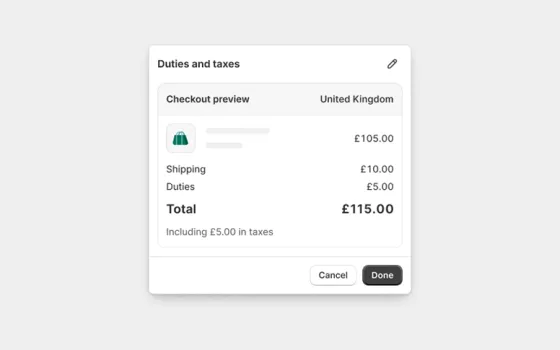
International Import Shipping: 2026 Tariff Guide
Update on tariffs and international trade U.S. tariffs changed on February 20, 2026. Here’s what you…