 EN
The Marketplace Swing: Why Retailers Are Going 3P and What It Takes to Win Ready to scale your marketplace?

The Marketplace Swing: Why Retailers Are Going 3P and What It Takes to Win
Retailers are shifting from 1P to 3P marketplaces to expand assortment, improve margins, and unlock new revenue. Here’s what’s driving the marketplace swing and what it takes to scale.

Table of contents

Payoneer Team
Best Buy is making a renewed investment in the U.S. marketplace model for the first time in nearly a decade. Target has publicly stated an ambition to increase its marketplace GMV, and Walmart has reported adding more third‑party sellers in early 2025 compared to the prior year. The 1P-to-3P pivot is no longer just a trend, but an increasingly adopted new operating model for retail growth.
Enterprise retailers across omnichannel and digital-first landscapes are rebalancing from first-party (1P) wholesale inventory models to third-party (3P) marketplaces. This shift — the “marketplace swing” — is reshaping retail strategy, unlocking cross-border opportunities, and creating infrastructure demands that redefine global commerce.
What is the marketplace swing?
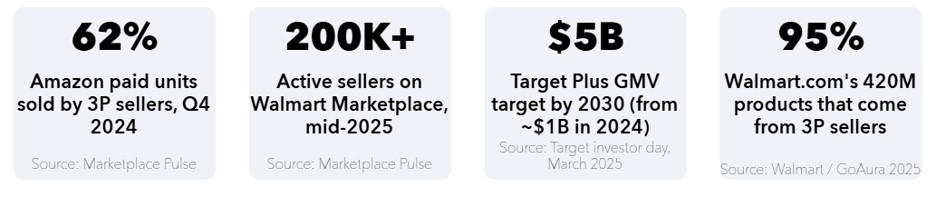
The marketplace swing refers to the structural rebalancing happening as retailers move from 1P to 3P business models. While some enterprises maintain hybrid models, the direction of travel is clear: 3P share is climbing on every major platform.
“Retailers are realizing they don’t need to own inventory to own the customer.”
— Ya Wen, SVP Global Marketplace, Payoneer
According to third‑party analyst estimates, Amazon’s 3P share is projected to reach approximately 75% of ecommerce sales by 2028 (up from ~67% in 2023), while Walmart’s 3P share is projected to rise from 26% to 36% in the same period, per Flywheel Retail Insights. Third-party ecommerce is forecast to grow at an 11.7% CAGR from 2023–2028 versus 6.6% for 1P. These figures are based on external forecasts and are subject to change.
This shows that 3P isn’t just a feature, it’s a growth engine.
Three retailers, three models — one direction
The clearest proof that the marketplace swing is structural, not cyclical, comes from watching how three very different retailers are executing it simultaneously.
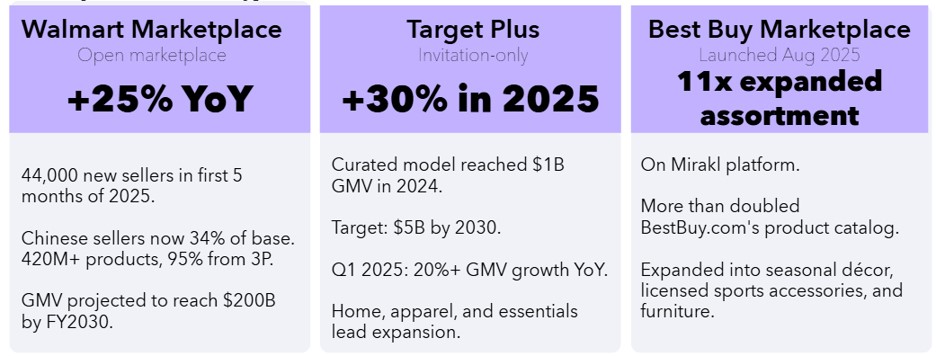
Sources: Walmart:44,000 new sellers / Chinese sellers 34% of base → Marketplace Pulse, mid-2025; 420M+ products, 95% from 3P → Walmart / GoAura, 2025; $200B GMV by FY2030 → Flywheel Retail Insights. Target Plus: $1B GMV in 2024, $5B target by 2030 → Target; investor day, March 2025; Q1 2025 20%+ GMV growth YoY → Target Q1 2025 earnings report. Best Buy: August 2025 launch on Mirakl → Best Buy press release, August 19, 2025; 2× SKU count / new categories → Best Buy / Mirakl launch announcement, August 2025.
Mirakl, the operating system for intelligent commerce, is a leading B2B SaaS platform and a Payoneer partner, and enables enterprise businesses, sellers and brands with an AI-driven platform that helps in launching a marketplace, scaling dropship, connecting to new channels and turning traffic into ad revenue while unlocking agentic commerce growth. Mirakl sits at the center of this movement. In 2025, Mirakl has seen 45 global enterprises join its customer base by implementing marketplace, dropship, payments or catalog management solutions powered by Mirakl which solidified Mirakl’s core product profitability. Annual Contract Value (ACV) bookings grew close to 20% year-over-year, reflecting sustained commercial momentum and strong demand across the business.
Mirakl achieved a record $14.6 billion in annual GMV on marketplace and dropship through Mirakl Platform, a 31% year-over-year growth reinforcing its market leading position as an enabler of long-term growth for enterprises. In 2025, over 35 customers surpassed the $100 million GMV threshold. In 2025, 36 enterprises launched their marketplaces or dropship activities, including Bauhaus, Bunzl, JCB, John Lewis & Partners, Limango (Otto Group), Tesco and Ulta Beauty. That growth has since accelerated and its GMV grew by 50% in H1 2026 compared to the first half of 2025. Best Buy, Lowe’s and Macy’s, among others also operate their marketplaces on the Mirakl platform
“We are seeing large incumbents really buy into this model and start to realize the profound operating and economic leverage of this model play out. We have seen high growth and it still feels like we are in the early innings of this movement. There is a lot more scope for participants to transform, accelerate and grow – of course catalog management, order orchestration and payments are all key elements of the equation which we aim to simplify for our clients”.
— Haanee Monem, Director of Client Success and Financial Services
Why retailers are making the switch
1. Economics: The margin profile is structurally superior
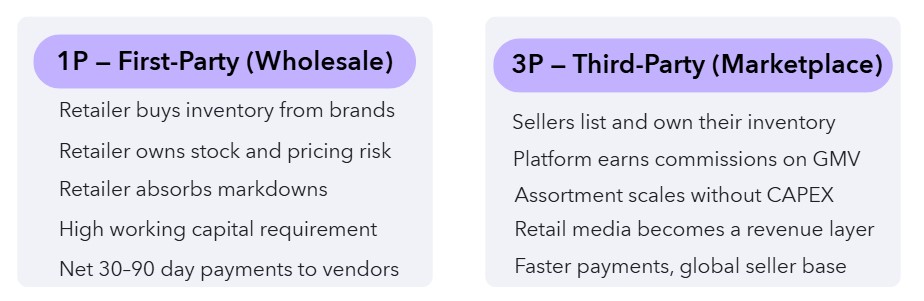
In the 1P model, retailers carry inventory risk, markdown exposure, and working capital requirements. When a product doesn’t sell, the retailer absorbs the loss. In the 3P model, platforms earn commission fees, advertising revenue, and fulfillment income on gross merchandise value (GMV), without owning all the inventory. Amazon’s third-party seller services generated over $140B in revenue in 2024. Many brands switching from 1P to 3P report improvements in net margin, once operations are optimized.
Rather than eliminating warehouse investments, leading marketplaces are transforming them from cost centers into profit engines, monetizing fulfillment through seller-paid services and turning logistics into a scalable revenue asset instead of a balance sheet burden.
2. Assortment without inventory risk
3P marketplaces allow retailers to test categories, absorb demand spikes, and serve long-tail niches without the risk of owning unsold goods. In its Q1 2025 earnings call, Target cited home and apparel as categories where 3P provides assortment it couldn’t justify buying wholesale. Broader assortment also improves search relevance and conversion rates, as with greater variety, shoppers can find exactly what they need, more often.
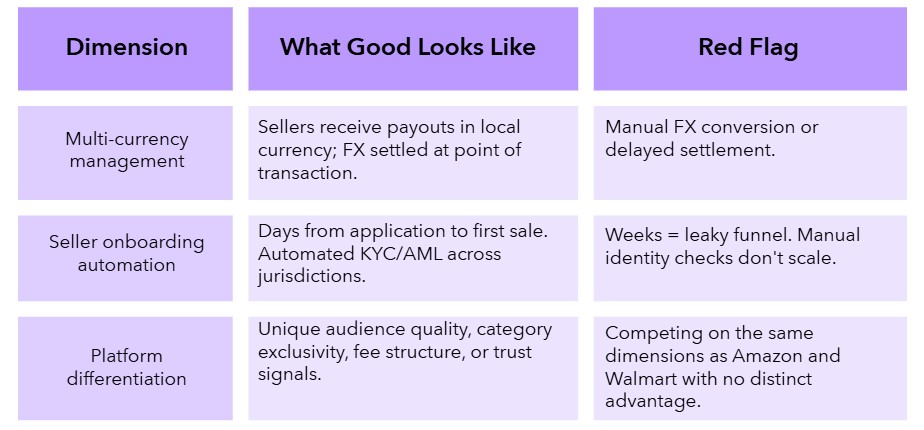
3. Differentiating in an expanding marketplace landscape
Retailers are increasingly using 3P marketplaces to deepen customer engagement, expand assortment, and remain competitive in categories where shoppers expect marketplace-style selection and fulfillment. As Best Buy’s leadership noted in its Q4 FY2025 earnings call: customers are already completing consumer electronics transactions through marketplaces, and Best Buy needed to be where they were, not just where they used to shop.
4. Retail media: The revenue layer 1P can’t unlock
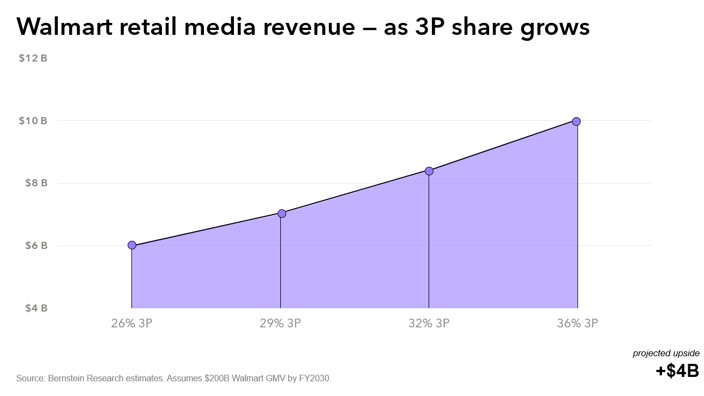
Retail media is advertising sold by a retailer on its own platform, where brands and sellers pay for placement within the shopping environment, right where a shopper is already in buying mode. 3P platforms unlock an advertising revenue layer that simply doesn’t exist in a 1P model. Bernstein estimates Walmart’s retail media could grow from 3% to 5% of GMV, a potential multibillion-dollar annual revenue opportunity, directly tied to 3P inventory depth. For retailers building marketplace infrastructure, retail media is not a side benefit: it’s a primary financial justification.
Global forces accelerating the shift
Three distinct motions are converging to accelerate the marketplace swing:
- Cross-border supply expansion: Sellers from regions like China are actively expanding into Western and emerging markets. Chinese sellers now represent 34% of Walmart Marketplace’s seller base. Retailers building 3P capabilities gain direct access to this supply, especially in consumer electronics, home goods, and apparel.
- Seller diversification: Sellers in the US, Europe, and other markets are reducing dependence on any single marketplace. This creates demand for new marketplace relationships and compliant infrastructure that can handle global complexity.
- Improved enablement technology: Marketplace software and payment orchestration platforms have dramatically lowered the cost and complexity of launching a competitive 3P platform. Automated onboarding, compliance tooling, and payout infrastructure that once required years to build can now be deployed in months. Platforms like Mirakl have helped accelerate marketplace adoption by enabling retailers to launch and scale 3P ecosystems faster with integrated seller onboarding, catalog management, and marketplace operations infrastructure.
What retailers need to get right
The marketplace swing is an operational revolution. Retailers who unlock 3P growth at scale need four things working in parallel:
1. Seller onboarding and KYC automation
Manual identity verification doesn’t scale. Third-party compliance tools enable automated KYC, AML checks, and multi-jurisdictional eligibility, dramatically shortening seller time-to-first-sale. Enterprise marketplace platforms like Mirakl can help retailers operationalize seller onboarding, product catalog expansion, and marketplace governance at scale.
2. Multi-currency payout infrastructure
With cross-border sellers making up 34%+ of Walmart’s base and accelerating at other platforms, local currency settlement with real-time FX is no longer a premium feature — it’s table stakes. But for modern marketplace sellers, the need extends beyond simply receiving payouts. Sellers operating across multiple marketplaces increasingly require wallet-based financial infrastructure that helps them consolidate receivables across channels while managing broader business operations in one place. Solutions like the Payoneer Account enable sellers to hold multi-currency balances, withdraw in local currency, pay suppliers, manage VAT obligations, cover card and software expenses, and access working capital solutions — transforming payouts from a transaction endpoint into a centralized operating layer for global commerce.
3. Assortment curation and quality control
Bigger isn’t always better. The retailers winning at 3P are those that define a curation thesis and enforce it. Invitation-only models trade raw scale for trust, higher conversion rates, and stronger brand alignment.
4. Retail media integration
Build retail media into your marketplace architecture from day one. The advertising revenue layer is directly tied to the depth and quality of your 3P inventory. Treating it as an afterthought means leaving your most scalable revenue stream on the table.
“To scale effectively, marketplaces must invest in technology and infrastructure that makes cross-border commerce feel local, seamless, and compliant. Tools that simplify seller onboarding and payouts are no longer optional — they’re essential.”
— Ya Wen, SVP Global Marketplace, Payoneer
Action plan: Evaluate your marketplace readiness
Track your readiness across these three operational dimensions — and be honest about where you fall short:
The marketplace swing is reshaping retail economics
The pivot from 1P to 3P is becoming an important growth consideration for many retailers. The retailers that succeed won’t necessarily be those with the largest product catalogs. Victory will go to those who prioritize curated supply, frictionless seller onboarding, localized payment capabilities, and trusted customer experiences.
By focusing on seller empowerment, cross-border scalability, and compliance-ready infrastructure, enterprise retailers will not only capture new GMV — they will redefine what excellence looks like in the marketplace economy.
Don’t wait for the swing to pass — become the driving force of its acceleration.
Ready to scale your marketplace?
Payoneer partners with global marketplace operators to help support compliant, seamless payout infrastructure built for cross-border commerce — from seller KYC to multi-currency payouts.
Frequently asked questions (FAQs)
In a 1P (first-party) model, a retailer buys inventory wholesale from brands, owns the stock, and controls pricing. In a 3P (third-party) model, independent sellers list products on the retailer’s platform, retain ownership, and pay a commission on sales. The retailer never owns the inventory — it earns fees on gross merchandise value (GMV) instead.
Three forces are driving the shift: (1) better unit economics — 3P platforms earn commission revenue without inventory risk; (2) assortment scale — sellers can list millions of SKUs the retailer could never buy wholesale; and (3) competitive pressure — Amazon’s 62% 3P share of paid units in Q4 2024 has influenced many major retailers to explore or expand marketplace models.
The “marketplace swing” refers to the structural shift in retail where enterprise retailers move their ecommerce strategy from first-party (wholesale) inventory models to third-party (seller-driven) marketplace models. Walmart added 44,000 third-party sellers in the first five months of 2025 alone, and Target plans to grow its marketplace GMV fivefold to $5 billion by 2030.
Target Plus is Target’s invitation-only third-party marketplace, launched in 2019. Target carefully selects sellers that align with its brand and complement its in-store assortment. The platform reached approximately $1 billion in GMV in 2024, and Target has set a target of $5 billion by 2030, with Q1 2025 already showing 20%+ GMV growth year over year.
Best Buy officially launched its U.S. third-party marketplace on August 19, 2025, powered by Mirakl’s enterprise marketplace platform. The launch more than doubled the number of products available on BestBuy.com, expanding into, seasonal décor, licensed sports apparel, and furniture.
When a customer purchases from a 3P seller, the platform collects payment, deducts its commission fee (typically 8–20% depending on category), and disburses the remainder to the seller. For cross-border sellers, this involves currency conversion and compliance with local financial regulations. Payoneer provides the infrastructure for multi-currency settlement, enabling sellers to receive payouts in their local currency quickly and compliantly.
An open marketplace (like Amazon or Walmart Marketplace) allows any seller meeting basic requirements to list products. An invitation-only marketplace (like Target Plus) selects sellers based on brand fit and product quality. Open models scale faster in seller count; invitation-only models prioritize curation and customer trust.
Related resources

Can Businesses Offshore Without Losing Connection to Their Teams?
How Christopher Fellas changed Insight Management Partners’ offshoring model by removing management layers, owning staff relationships and using AI well.

Payoneer Team

Why Do Corporate Service Providers Need More Than Incorporation?
Why CSP networks matter: CSPN co-founders discuss trust, referrals, compliance, AI adoption and how service providers can support business growth today.
Payoneer Team

Digital Payment Solutions in Pakistan: Apps, Use Cases and Choosing the Right One
Discover digital payment solutions in Pakistan, including popular apps, use cases, and how to choose the right option for local and international payments.
Payoneer Team

Can AI Help Businesses Scale Without Scaling Complexity?
Ben Stein of Staple discusses AI, automation, compliance, ROI, and how businesses can scale operations without adding complexity at the same pace today.
Payoneer Team

What Has to Be Ready Before Cross-Border Growth Gets Complicated?
Nagesh Devata and Eldred Wee discuss how SMEs can prepare financial infrastructure, payments and corporate services for cross-border growth from day one.
Payoneer Team

The Growth Ceiling Is Usually Cash Flow — Here’s How to Raise It
Cash flow can become a growth ceiling for ecommerce sellers. Learn how working capital and payment infrastructure can help businesses manage inventory, seize opportunities, and scale.
Payoneer Team

5 International Payment Gateways for Global Businesses
Compare five leading international payment gateways and learn what to look for when choosing a provider for global online sales.
Payoneer Team

Multi-Currency Payments: Best Practices for Global Business
Managing multiple currencies is one of the biggest cost and complexity challenges in global operations. Here's how to reduce conversion fees, navigate exchange rate fluctuations, and make your multi-currency payment…
Payoneer Team

Resource item – REVAMP
Payoneer Team
Latest articles
-

Best Employer of Record in the Philippines | Updated 2026
Here is a comparison of the best EOR services in the Philippines, including pricing and key features. Payoneer helps handle payroll, taxation, and benefits.
-

Best EOR services in Canada for 2026: Pricing, coverage, and local fit compared
Compare six of the best EOR services in Canada for 2026 on pricing, provincial compliance, coverage, and onboarding speed to find the right fit.
-

Best EOR in the United States | Updated 2026
Find a comprehensive list of the best EOR in the United States. Engage, pay, and manage employees compliantly across all 50 states in the country with Payoneer.
-

Best Employer of Record in India | Updated 2026
Compare the best EOR companies in India, pricing, and features. Engage employees without a local entity with Payoneer Workforce Management.
-

10 Best EOR service providers in Romania for 2026
Compared ten EOR service providers for Romania, from its inverted payroll tax structure to the mid-year minimum wage reset and mandatory REGES registration.
-

Best Employer of Record Service Providers in China for 2026
Compared six EOR service providers for hiring in China, from city-by-city contribution rates to the severance formula and the 2025 reform that reshaped it.
Disclaimer
The information in this article/on this page is intended for marketing and informational purposes only and does not constitute legal, financial, tax, or professional advice in any context. Payoneer and Payoneer Workforce Management are not liable for the accuracy, completeness or reliability of the information provided herein. Any opinions expressed are those of the individual author and may not reflect the views of Payoneer or Payoneer Workforce Management. All representations and warranties regarding the information presented are disclaimed. The information in this article/on this page reflects the details available at the time of publication. For the most up-to-date information, please consult a Payoneer and/or Payoneer Workforce Management representative or account executive.
Availability of cards and other products is subject to customer’s eligibility. Not all products are available in all jurisdictions in the same manner. Nothing herein should be understood as solicitation outside the jurisdiction where Payoneer Inc. or its affiliates is licensed to engage in payment services, unless permitted by applicable laws. Depending on or your eligibility, you may be offered the Corporate Purchasing Mastercard, issued by First Century Bank, N.A., under a license by Mastercard® and provided to you by Payoneer Inc., or the Payoneer Business Premium Debit Mastercard®, issued and provided from Ireland by Payoneer Europe Limited under a license by Mastercard®.
Skuad Pte Limited (a Payoneer group company) and its affiliates & subsidiaries provide EOR, AOR, and contractor management services.
Source: Payoneer Team ·Read original
Related Learning
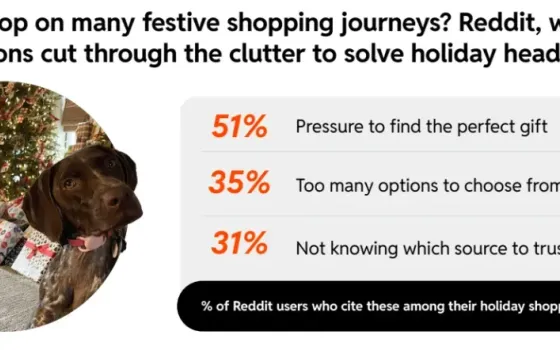
Q4 Holiday Marketing: How Can You Get Consumers to Choose You? | A Breakdown of Reddit’s Latest Report on Four Reasons to Buy
As Black Friday, Cyber Monday, and the year-end holiday season approach, products, ads, and promotio…

The Cross-Border E-Commerce Landscape Has Shifted Again—The Old Playbook No Longer Works
The overseas shopping season 11 is just around the corner. Have you started stocking up? When prepar…

What is SKU in Products? Key Tips for Optimizing Inventory
Table of Contents What is SKU in Products? Benefits of Using SKUs How to Create Effective SKUs Real-…