 EN
Alternative to opening a business bank account in the US

Alternative to opening a business bank account in the US
The USA is home to 325 million people, making up the world’s largest single consumer market, with a GDP of $20 trillion, which is very attractive for businesses around the world. Plus, many business owners and entrepreneurs want to work with American suppliers, freelancers, consultants, artisans, and other US small businesses. If you’re doing business…

Table of Contents

Payoneer Team
The USA is home to 325 million people, making up the world’s largest single consumer market, with a GDP of $20 trillion, which is very attractive for businesses around the world. Plus, many business owners and entrepreneurs want to work with American suppliers, freelancers, consultants, artisans, and other US small businesses.
If you’re doing business with partners or suppliers who are based in the USA, or you have a sizable addressable market in that country, you’ve probably already found that it can be awkward to manage cross-border payments. You need to pay for products you’ve ordered, request payments from customers, and pay tax and other official obligations.
A local business bank account could make life much simpler, but it’s not always that easy to get it.
How do you open a business bank account in the US?
You don’t have to be a US citizen or permanent resident to open a US business bank account. But it is a complicated, and often long and expensive, process. First, you need to register your business in the US as an LLC and get an Employer Identification Number (EIN) from the Inland Revenue Service (IRS).
Once you have an EIN, you can open an account. Although there are some new online banks which let you open a business account online, you mostly have to visit the bank in person to open an account. You also need to choose a bank in the same state where your business is registered.
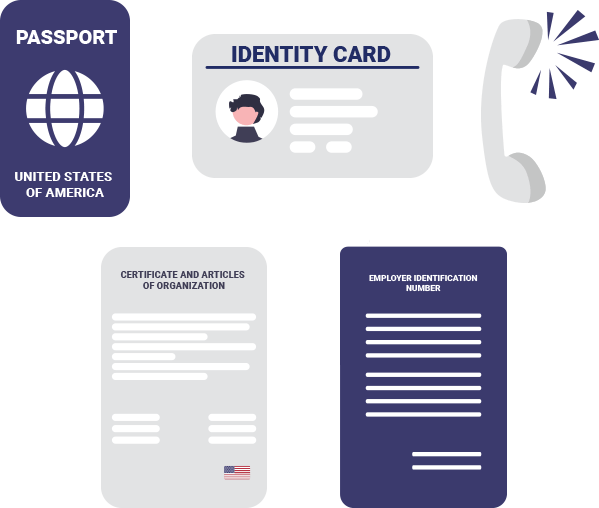
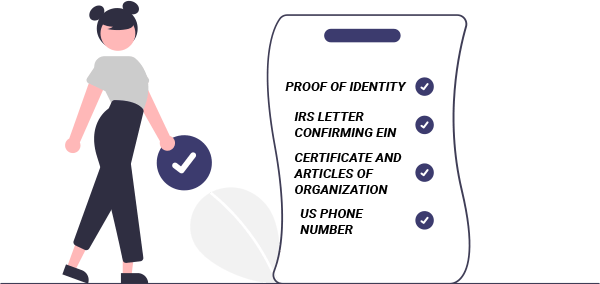
These are the documents that you’ll probably have to bring with you to open the account, but it’s best to check with the bank first just in case they request something more:
- Your business’ Certificate and Articles of Organization, proof of address, and LLC operating Agreement
- A letter from the IRS confirming your EIN
- 2 types of ID
- A US phone number
However, it can be difficult to register a business in the US if you aren’t already a citizen or permanent resident.
The Alternative: A Payoneer local USD receiving account
Payoneer helps you receive payments from US customers and clients, manage currencies, and pay contractors, suppliers, or remote employees in the US. Instead of jumping through hoops to open a business account in a local US bank, you could use Payoneer receiving account instead.
Payoneer offers a local receiving account, so you can accept payments in USD. Anyone with a US bank account can use the same domestic ACH network to make a convenient local bank transfer to your Payoneer USD receiving account.
It’s easy to set up your USD business account with Payoneer. Just register with Payoneer and choose which local receiving accounts you need — in GBP, EUR, CAD, HKD, SGD, or USD. You’ll soon be able to view your account details and share them with clients on your invoices, through email, or over WhatsApp.
You can withdraw funds in over 150 different countries and currencies for a low, transparent fee, or you can hold them in your Payoneer account in USD and use the funds to pay local taxes or global contractors to their US receiving bank accounts.
Enjoy the benefits of having a business bank account in the US
There are a lot of good reasons to open a US receiving business bank account. For a start, you’ll be able to save money on foreign currency conversions. Instead of converting USD into your local currency and paying fees every time, you’ll be able to receive payments in USD and either use the funds to pay local expenses or wait until you have a larger amount and make fewer, bigger currency conversions.
Having a local receiving business bank account in USD also makes it much easier to manage payments if you’re getting paid through a US-based platform like Amazon, eBay, Upwork, or Fiverr. You’ll save on currency conversion bills but also save yourself the hassle of linking an account that’s in a different currency.
What’s more, a US receiving bank account can help you close deals and build trust. American clients naturally prefer to work with a partner or vendor who has a local receiving bank account. People often worry that payments might get lost if they send them through a foreign bank transfer like SWIFT, and they don’t want to have to pay high fees for making a cross-border credit cards payment.
An easier way to get a local US business bank account
Payoneer’s low cost, fast international payments platforms, transparent and inexpensive foreign currency conversions, and convenient local receiving bank account in USD makes it much easier to manage payments between your company and contractors, employees, suppliers, and customers in the US, no matter where you or your business are located.
Related resources

Can Businesses Offshore Without Losing Connection to Their Teams?
How Christopher Fellas changed Insight Management Partners’ offshoring model by removing management layers, owning staff relationships and using AI well.

Payoneer Team

Why Do Corporate Service Providers Need More Than Incorporation?
Why CSP networks matter: CSPN co-founders discuss trust, referrals, compliance, AI adoption and how service providers can support business growth today.
Payoneer Team

The new infrastructure of global growth: How Singapore businesses should prepare for the next era of digital finance
We look at five shifts shaping the next era of digital finance and what each one means for Singapore businesses preparing for international growth.
Payoneer Team

Accounts receivable management: Guide to processes and best practices
Learn how Filipino freelancers and businesses can link Payoneer with GCash and transfer international earnings to their digital wallet.
Payoneer Team

Digital Payment Solutions in Pakistan: Apps, Use Cases and Choosing the Right One
Discover digital payment solutions in Pakistan, including popular apps, use cases, and how to choose the right option for local and international payments.
Payoneer Team

Cross-Border Payments Are Getting More Complex: What ASEAN’s New Trade Corridors Mean for Businesses
As trade expands across ASEAN, businesses are navigating more currencies, payment corridors and settlement challenges. Here’s how cross-border payment infrastructure can keep pace with growth.
Payoneer Team

Can AI Help Businesses Scale Without Scaling Complexity?
Ben Stein of Staple discusses AI, automation, compliance, ROI, and how businesses can scale operations without adding complexity at the same pace today.
Payoneer Team

What Has to Be Ready Before Cross-Border Growth Gets Complicated?
Nagesh Devata and Eldred Wee discuss how SMEs can prepare financial infrastructure, payments and corporate services for cross-border growth from day one.
Payoneer Team

The Growth Ceiling Is Usually Cash Flow — Here’s How to Raise It
Cash flow can become a growth ceiling for ecommerce sellers. Learn how working capital and payment infrastructure can help businesses manage inventory, seize opportunities, and scale.
Payoneer Team
Latest articles
-

Can Businesses Offshore Without Losing Connection to Their Teams?
How Christopher Fellas changed Insight Management Partners’ offshoring model by removing management layers, owning staff relationships and using AI well.
-

PEO vs HRO: What’s the Difference and Which Should You Choose?
Compare PEO vs HRO services, costs, liability, benefits, and use cases. Learn which HR outsourcing model is right for your business.
-

What Is Co-Employment? A Complete Guide for Employer
Learn what co-employment is, how it works, the role of a PEO, key benefits, common risks, and how it compares with EOR and joint employment.
-

EU Pay Transparency Directive: What Employers Need to Know in 2026
Learn the EU Pay Transparency Directive requirements, reporting deadlines, France and Germany updates, and key compliance steps.
-

The Employee Termination Process, Step by Step (With a Checklist)
A US-style at-will exit can trigger penalties abroad. Get the 5-step termination process, plus notice and severance rules by country.
-

Onboarding Remote Employees: A Practical Step-by-Step Guide
Onboarding remote employees doesn’t have to stall on paperwork. Get a step-by-step process, stage checklists, and a clean path to hiring across borders.
Disclaimer
The information in this article/on this page is intended for marketing and informational purposes only and does not constitute legal, financial, tax, or professional advice in any context. Payoneer and Payoneer Workforce Management are not liable for the accuracy, completeness or reliability of the information provided herein. Any opinions expressed are those of the individual author and may not reflect the views of Payoneer or Payoneer Workforce Management. All representations and warranties regarding the information presented are disclaimed. The information in this article/on this page reflects the details available at the time of publication. For the most up-to-date information, please consult a Payoneer and/or Payoneer Workforce Management representative or account executive.
Availability of cards and other products is subject to customer’s eligibility. Not all products are available in all jurisdictions in the same manner. Nothing herein should be understood as solicitation outside the jurisdiction where Payoneer Inc. or its affiliates is licensed to engage in payment services, unless permitted by applicable laws. Depending on or your eligibility, you may be offered the Corporate Purchasing Mastercard, issued by First Century Bank, N.A., under a license by Mastercard® and provided to you by Payoneer Inc., or the Payoneer Business Premium Debit Mastercard®, issued and provided from Ireland by Payoneer Europe Limited under a license by Mastercard®.
Skuad Pte Limited (a Payoneer group company) and its affiliates & subsidiaries provide EOR, AOR, and contractor management services.
Source: Payoneer Team ·Read original
Related Learning

Taxable Invoice Guide: How to Create a Compliant Tax Invoice for International Clients
Taxable Invoice Guide: How to Create a Compliant Tax Invoice for International Clients From taxable …
International Import Shipping: 2026 Tariff Guide
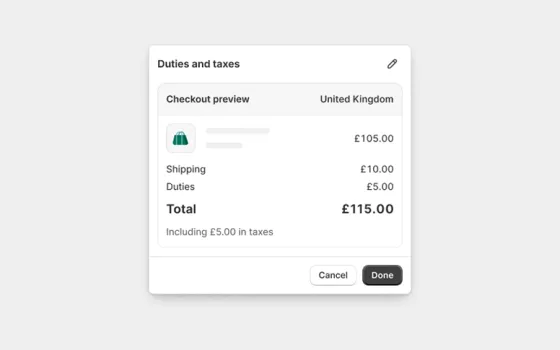
Update on tariffs and international trade U.S. tariffs changed on February 20, 2026. Here’s what you…

How Should You Follow Up When a Customer Does Not Reply to a Quotation?
A customer’s temporary lack of response after receiving a quotation does not necessarily mean they h…