 EN
TikTok Shop U.S. Trend Report Released; Top Sellers Account for 59% of Sales
AMZ123 learned that recently, Marketplace Pulse released the “2026 TikTok Shop U.S. Trend Report.”
The report noted that TikTok Shop has operated in the U.S. market for only three years, yet already shows some characteristics of a mature e-commerce platform: best-selling products are concentrated in a small number of categories; top sellers account for as much as 59% of sales; U.S.-registered sellers rank near the top of the sales rankings, while China-registered sellers occupy an important position across the broader seller base.
However, compared with Amazon, TikTok Shop’s top rankings are still unstable. Sellers may rise rapidly up the rankings in a short time, then quickly fall as traffic from content recommendations changes.
The report is based on Marketplace Pulse tracking data through 2026 9, covering 15 ten thousand TikTok Shop U.S. sellers, as well as 10 ten thousand best-selling products among approximately 450 ten thousand tracked products.
The report identifies seven trends in TikTok Shop’s development, covering product categories, content production, seller competition and concentration, seller verification, seller registration locations, changes in top rankings, and differences between sellers on TikTok Shop and Amazon.
I. Category Sales Trends
1. Products with clearly demonstrable effects sell well
The report found that TikTok Shop sales are highly concentrated in products that can be applied directly to the body and whose effects are easy to demonstrate in videos.
Among the top 10 ten thousand best-selling products in the U.S. market tracked by Marketplace Pulse, beauty and personal care, health and wellness, and apparel together accounted for 52% of estimated sales. Among the top 1,000 products, this share rose further to 66%. Meanwhile, the median product price was 23 dollars, and 84% of products were priced below 50 dollars.
This means that although TikTok Shop can sell a wide range of products, the products that generate substantial sales are relatively concentrated. Short videos can show, in just over ten seconds, skincare results before and after use, how shapewear looks when worn, or the usage scenarios promoted for wellness products, making consumers more likely to feel an impulse to buy while watching content.
By contrast, even if an ordinary replacement HDMI cable appears in many videos, it is difficult to generate the same level of consumer appeal through a straightforward demonstration.
Health and wellness products particularly illustrate this difference. This category accounted for about 5% of tracked products but generated 11% of sales, substantially outperforming its share of product volume. By comparison, footwear, bags, and accessories performed less strongly.
The report attributes this to differences in how products are presented: content about wellness products can usually focus on a particular benefit or need, while products such as bags rely more on images to show their appearance and may not create an equally strong purchase incentive in a short time.
Therefore, before entering TikTok Shop, brands need to assess whether their products have selling points that can be shown clearly in videos. Category is not the only factor determining success; for example, massage guns can also be demonstrated in videos through their usage scenarios and effects. But if a product lacks features that can be shown clearly, even a substantial Amazon business may not translate into similar sales performance on TikTok Shop.
2. Sales performance varies across categories
By share of category sales, beauty and personal care accounted for 20.7%, apparel for 19.6%, health and wellness for 11.4%, and electronics and mobile phones for 11.0%.
In addition, uncategorized products accounted for 7.7%, home and kitchen products for 6.9%, footwear, bags, and accessories for 6.2%, food and beverages for 5.2%, toys, collectibles, and hobby products for 3.7%, sports and outdoor products for 3.6%, pet supplies for 1.5%, baby, maternity, and children's products for 1.4%, and tools, automotive, and garden products for 1.3%.
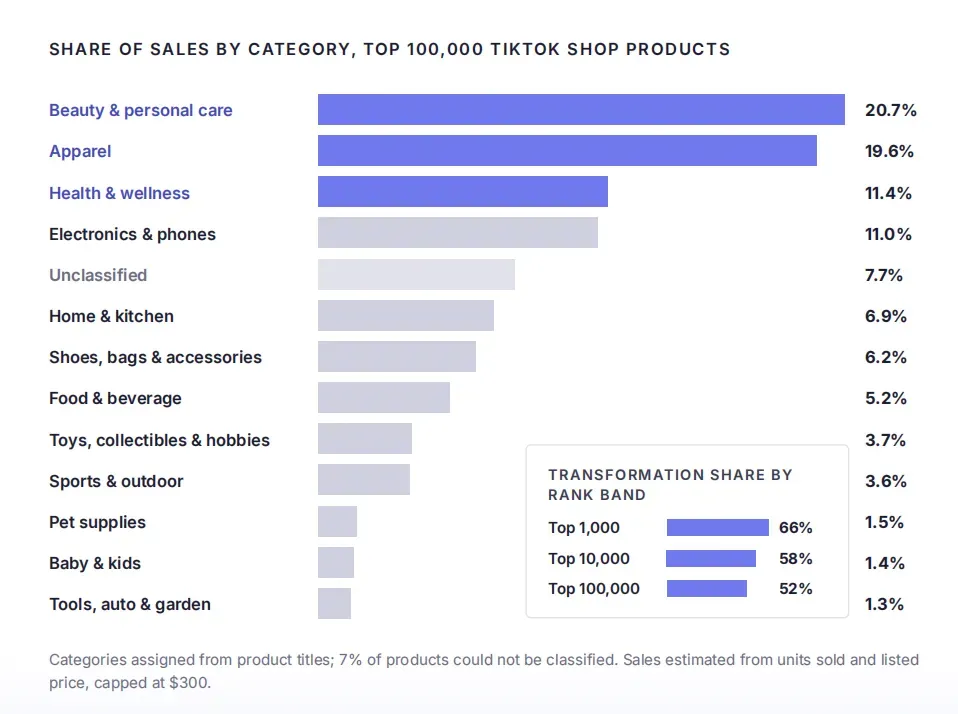
These figures show that TikTok Shop is not a general marketplace where all categories receive an equal share of traffic. Although the platform can accommodate a wide range of products, including electronics, pet supplies, and home goods, their sales remain far below those of beauty, apparel, and health products.
The report therefore suggests that TikTok Shop’s sales ceiling depends to some extent on how many categories can be demonstrated clearly in videos, rather than on how many products the platform can list.
3. Best-selling products are inexpensive, with clear signs of impulse buying
TikTok Shop's best-selling products are not concentrated in just a few categories, and their prices are generally low. The report notes that half of the products are priced between $ 10 and $ 30, while products priced above $ 100 account for only 3% of total sales. This means consumers face a relatively low price barrier between seeing a product and deciding to buy it.
Among the ten best-selling products, nine are products worn on or ingested into the body, and all are priced below $ 50. Ranked first is Milamiamor's 15-day gut and colon cleanse product, priced at $ 22, with approximately 280 ten-thousand units sold. In second place is SACHEU Beauty's STAY-N peel-off lip stain, priced at $ 18, with approximately 220 ten-thousand units sold.
The products ranked third and fifth are both from Caffeine, Candles & Chaos: Loaded Tea caffeinated hydration powder, priced at $ 7, and Loaded Water sugar-free caffeinated powder, priced at $ 7. Their cumulative sales were approximately 210 and 200 ten-thousand units, respectively.
Toplux Nutrition's eight-form magnesium complex supplement is priced at $ 30, with approximately 210 ten-thousand units sold; GuruNanda's peppermint oil mouthwash is priced at $ 26, with approximately 190 ten-thousand units sold.
In addition, CANDECRAFTCO's car fragrance product is priced at $ 10, claims to last for more than 60 days, and has sold approximately 160 ten-thousand units. GuruNanda's seven-day teeth-whitening strips are priced at $ 19, with approximately 150 ten-thousand units sold. Micro Ingredients' multi-collagen peptide powder is priced at $ 45, with approximately 140 ten-thousand units sold. Goli Nutrition's ashwagandha and vitamin D gummies are priced at $ 19, with approximately 130 ten-thousand units sold.
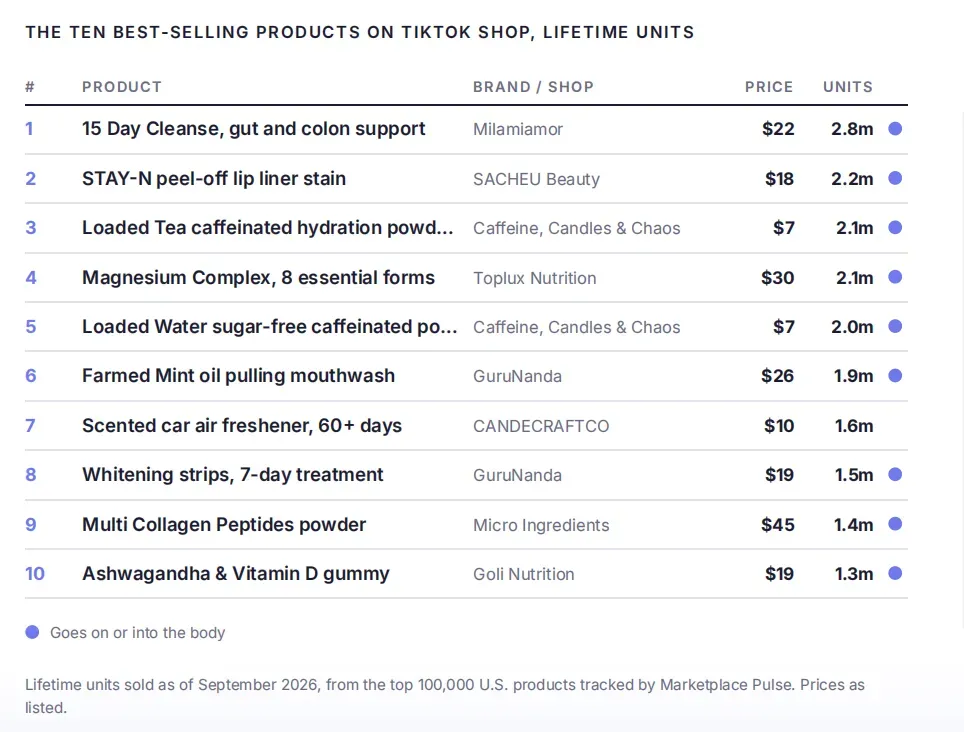
These sales figures are cumulative through 2026 9, and the product prices are the listed prices on the pages. Overall, low-priced products can make the consumer decision process shorter, but a low price does not mean every product will succeed. Products still need sufficiently clear use cases, presentation, and content-sharing potential to turn video views into actual orders.
II. Content Becomes a Competitive Advantage for Sellers
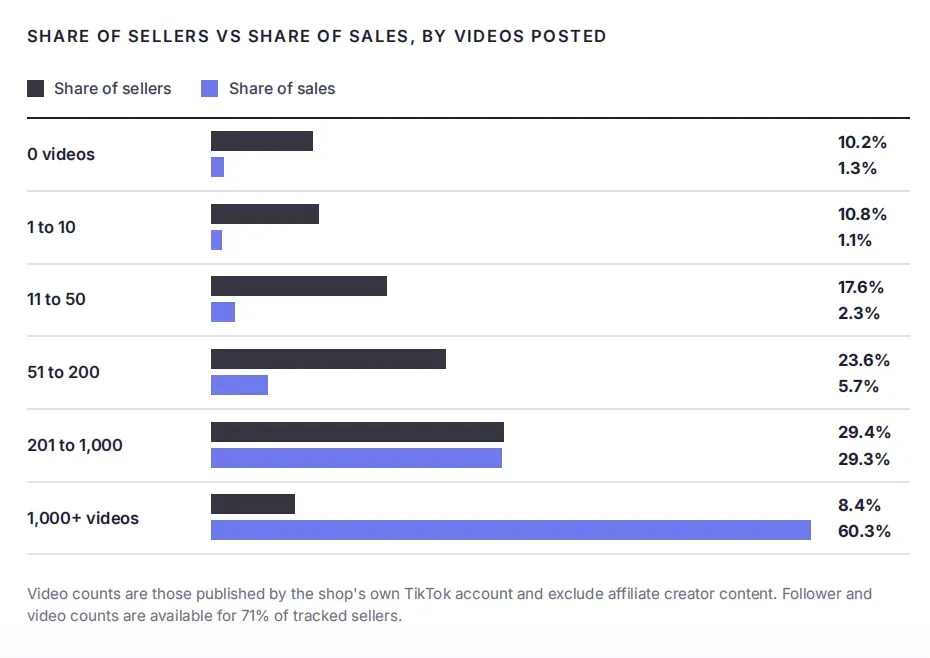
The report's second key finding is that content-production capability is clearly associated with sellers' sales performance. Among the sellers tracked, stores that posted more than 1,000 videos accounted for only 8%, yet contributed approximately 60% of estimated sales. By contrast, stores that posted no more than 50 videos accounted for 39%, but their share of sales was just 5%.
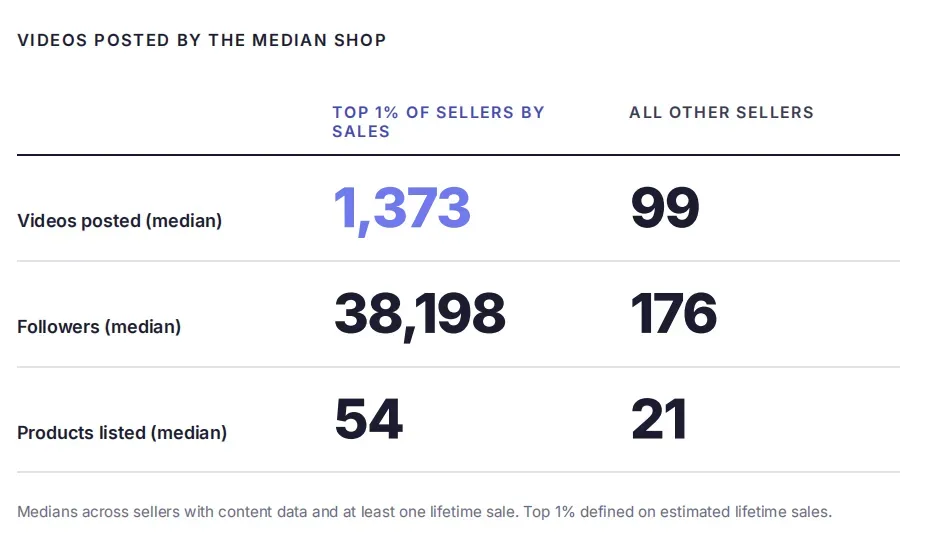
Looking further, stores that posted 201 to 1,000 videos accounted for 17% of all sellers and contributed 22% of sales. Stores that posted 51 to 200 videos accounted for 36% and contributed 13% of sales. These figures indicate that stores with greater video output tend to capture a larger share of sales.
The content-production gap is even more pronounced among top sellers. Among sellers in the top 1% by sales, only 0.7% of stores had not posted videos, and only 3% had posted fewer than 50 videos. In other words, the vast majority of top sellers have already built up a substantial body of content. The report therefore notes that on TikTok Shop, there is almost no path to becoming a top seller by skipping content production entirely and simply listing products.
However, the report does not claim that video quantity alone guarantees sales success. Content production still depends on products having demonstrable value. If a product's selling points cannot be clearly conveyed through video, simply increasing the number of videos may not deliver a corresponding return.
Product selection and content production are therefore interrelated: the former determines whether a product is suited to generating demand through short-form video, while the latter determines whether a brand can continually compete for platform recommendations and consumer attention.
For TikTok Shop sellers, however, video production needs to become part of day-to-day operations, including choosing topics, filming, showcasing products, publishing content, and continually testing different ways of presenting them. Brands need to allocate staff, budgets, and production processes to this work, rather than hastily making a few videos only when products are listed or during major sales promotions.
The report specifically notes that the relationship between sales performance and the volume of content published is a better indicator of a store's competitive position than its follower count. Having a large following does not necessarily mean a productcan continue to sell well; consistently publishing content and continually vying for recommendation traffic are important aspects of competing on the platform.
For brands, this means considering content-production capabilities before investing in advertising. For service providers, it means treating video production and ongoing operations as core services, rather than optional creative add-ons. Only when both products and content are competitive does a store have a better chance of building a stable source of sales on the platform.
III. Seller Competition Intensifies
Although TikTok Shop has lowered the barrier for sellers to join the platform, it has not distributed sales opportunities evenly. The report shows that just 748 sellers account for half of the platform's sales. Among the 126,828 sellers with pricing data, the top 1%—1,268 sellers—contributed 59% of sales.
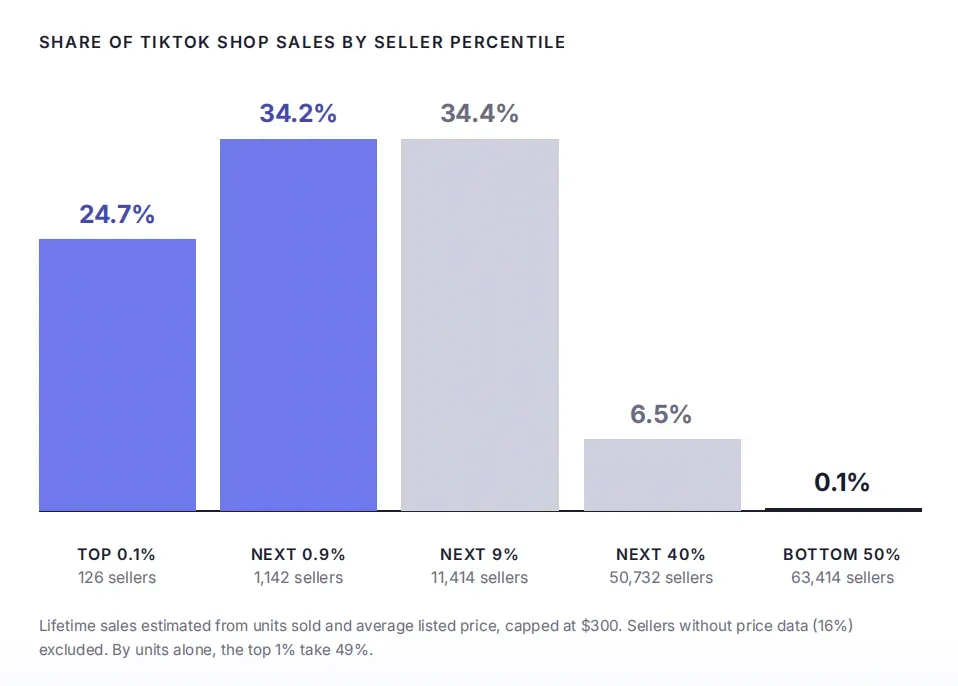
By comparison, the top 1.6% of Amazon sellers contribute about half of sales. Using the report's statistical methodology, sales are more concentrated on TikTok Shop, meaning that a greater share of the platform's growth is captured by a small number of high-performing sellers.
This phenomenon is related to the platform’s content recommendation mechanism. When a product or store attracts attention in the recommended feed, greater exposure may lead to more orders, and the increase in orders in turn provides the algorithm with new performance signals, further increasing exposure. This positive feedback loop can make it easier for sellers who have already achieved initial success to further extend their advantage.
At the same time, weaker-performing sellers find it difficult to maintain baseline sales through steady organic search traffic. Compared with search-driven platforms, TikTok Shop’s long-tail sellers depend more on their performance in content recommendations and lack an independent channel that can provide stable traffic over the long term.
The report’s analysis points out that brands need to be prepared for most sellers to have limited sales, and should not assess market opportunities solely on the basis of how open the platform is or how many sellers have joined.
For investors, the platform may quickly develop a landscape dominated by a small number of leading sellers, with a relatively weak mid-sized seller segment. For industry researchers, high sales concentration does not necessarily mean that the platform has lost its vitality; it may instead be a market structure inherent to feed-driven social commerce.
Therefore, sellers need to focus their competitive efforts on entering the recommendation traffic loop rather than on the number of products they offer. Platform service providers also need to reassess sellers’ growth potential: having a large product catalog does not equate to a sales advantage. Sellers that can consistently produce content, manage store operations, and meet platform requirements are more likely to compete among the leaders.
IV. Platform Verification Affects Seller Exposure
1. 9% of Sellers Earn Platform Badges, Accounting for 75% of Sales
Under TikTok Shop’s previous badge system, only 9% of sellers held a platform badge, yet they accounted for 75% of sales. The report tracked three mutually exclusive badges: Official Store, Gold Star, and Silver Star.
Among them, sellers holding the Official Store badge accounted for 2% and contributed 34% of sales; sellers holding the Gold Star badge accounted for 3% and contributed 28% of sales; and sellers holding the Silver Star badge accounted for 4% and contributed 13% of sales. Sellers without badges accounted for 91%, while their contribution to sales was 25%.
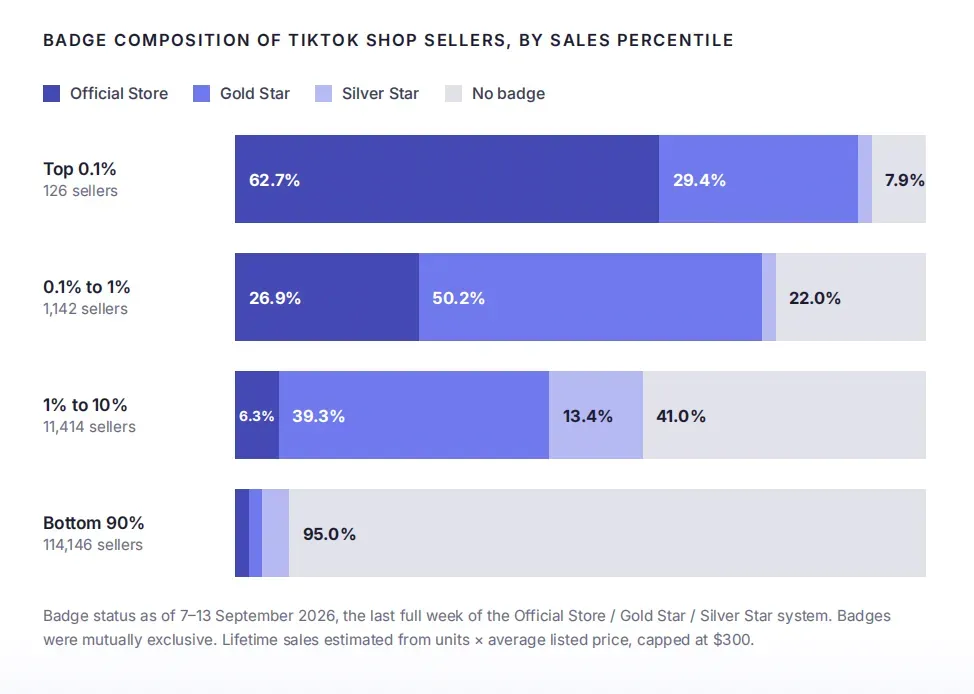
These figures show a clear association between platform verification status and sales performance. Badges can help consumers identify stores and may also affect how the platform recommends and ranks sellers. The report notes that eligibility for the previous badges was related to operational metrics such as sales volume, on-time shipping, low return rates, customer service response times, and content activity.
This means sellers should not view platform verification as simply a mark displayed on a store page. The operational requirements behind verification may affect both consumer trust and opportunities for platform exposure. Even if a brand’s products are appealing, poor performance in shipping, customer service, or returns management may make it difficult to gain the same competitive advantage.
2. Badge System Adjusted in 2026 9
After Marketplace Pulse collected data from 2026 9 7 to 13, TikTok Shop gradually phased out the previous Gold Star and Silver Star badges between 9 14 and 21, replacing them with new seller eligibility tiers. The report treats data from the old system as the final record of that program and describes the new system based on the standards announced by TikTok.
Therefore, the badge-related sales shares in the report reflect the old system and should not be taken as a direct representation of sales distribution after the new system was implemented. However, the report argues that the new system retains the core logic of the previous mechanism: distinguishing sellers with different performance levels through screening, preferential display, and eligibility requirements.
For brands, it is important to keep up with the platform’s latest eligibility standards. Meeting the platform’s operational requirements may bring advantages in both consumer trust and competition for traffic. For service providers, operational management should not be regarded as support work separate from content marketing; it is a foundation for sellers to gain platform exposure. For industry researchers, the platform’s active management of seller tiers is also an important factor influencing sales distribution in social commerce.
V. Distribution of Leading Sellers by Place of Registration
1. Most of the Top 100 Sellers Are Registered in the United States
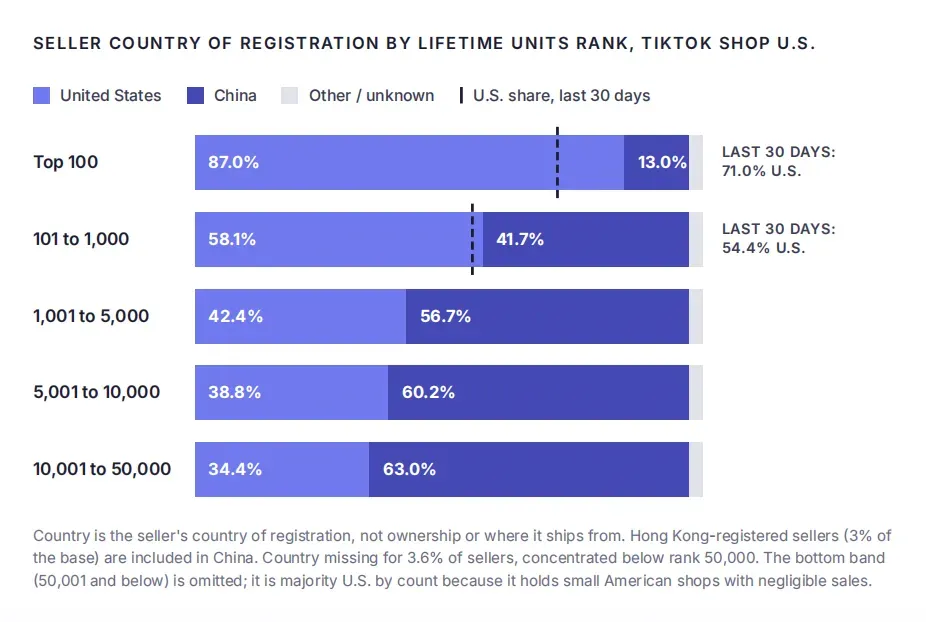
The report shows that among the top 100 sellers on TikTok Shop by sales, 87 are registered in the United States and 13 in China, including sellers registered in Hong Kong. Sellers registered in the United States therefore have a clear advantage in the platform’s highest-ranking segment.
However, the geographic distribution changes significantly as the scope expands to include more sellers. Among the top 10,000 sellers, sellers registered in China account for 57%, while those registered in the United States account for 33%. In other words, U.S. sellers are concentrated mainly at the very top of the sales rankings, while China-registered sellers make up the majority of the broader seller population.
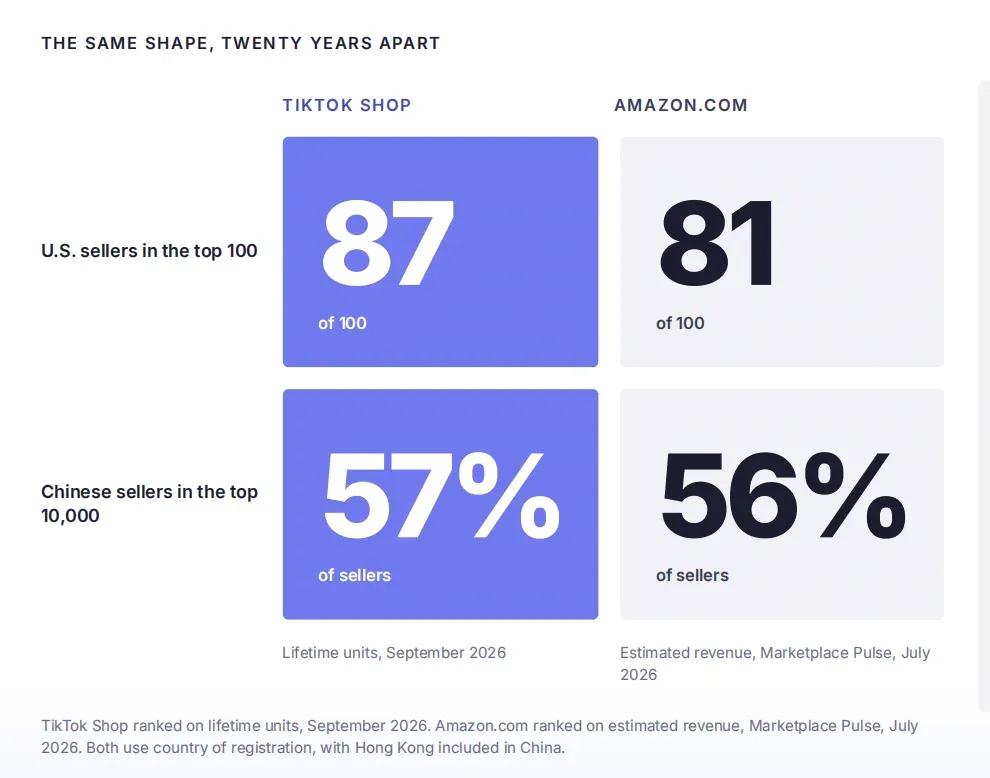
The report notes that this geographic distribution is similar to that ofAmazon’s U.S. marketplaceAmong Amazon’s top 10,000 sellers, sellers registered in China account for 56%, close to TikTok Shop’s 57%. However, TikTok Shop developed a similar geographic distribution of sellers in just three years, while Amazon took about 20 years.
It is important to note that the countries and regions mentioned in the report refer to the seller registration locations shown on TikTok Shop pages, not the locations of the companies’ ultimate owners, and do not indicate the countries from which products are shipped. Under Marketplace Pulse’s methodology, sellers registered in Hong Kong are counted as Chinese; another 3.6% of sellers have no registration country data.
2. Local operations help sellers compete for top positions
The report finds that top-ranked sellers are more likely to be influenced by factors such as local-market registration, resonant content, and consumer trust, while long-tail markets with more intense price competition have many Chinese cross-border sellers. This is similar to the seller structure that has long existed on Amazon.
For brands seeking to compete for top positions in the US TikTok Shop market, the ability to operate in the local market, a registered entity that meets platform requirements, and operating methods tailored to local consumers may be important advantages. At the same time, Chinese cross-border sellers can still participate through a wide range of products and price competition, but they should recognize that relying solely on low prices or the number of listings is not enough to ensure a place on the bestseller rankings.
From an industry perspective, TikTok Shop’s seller geography has moved closer to Amazon’s in a relatively short time. This suggests that although social commerce uses a different approach to traffic distribution, as platforms grow, they may still develop a cross-border seller mix similar to that of mature e-commerce markets.
Six. Top-seller rankings change frequently
Another notable feature of TikTok Shop is how quickly its bestseller rankings change. The report shows that around 50% of the sellers ranked in the platform’s top 100 change each month. Most ranking changes come from a fluctuating group of about 300 stores, which continually move in and out of the rankings as sales rise or fall in response to feed recommendations.
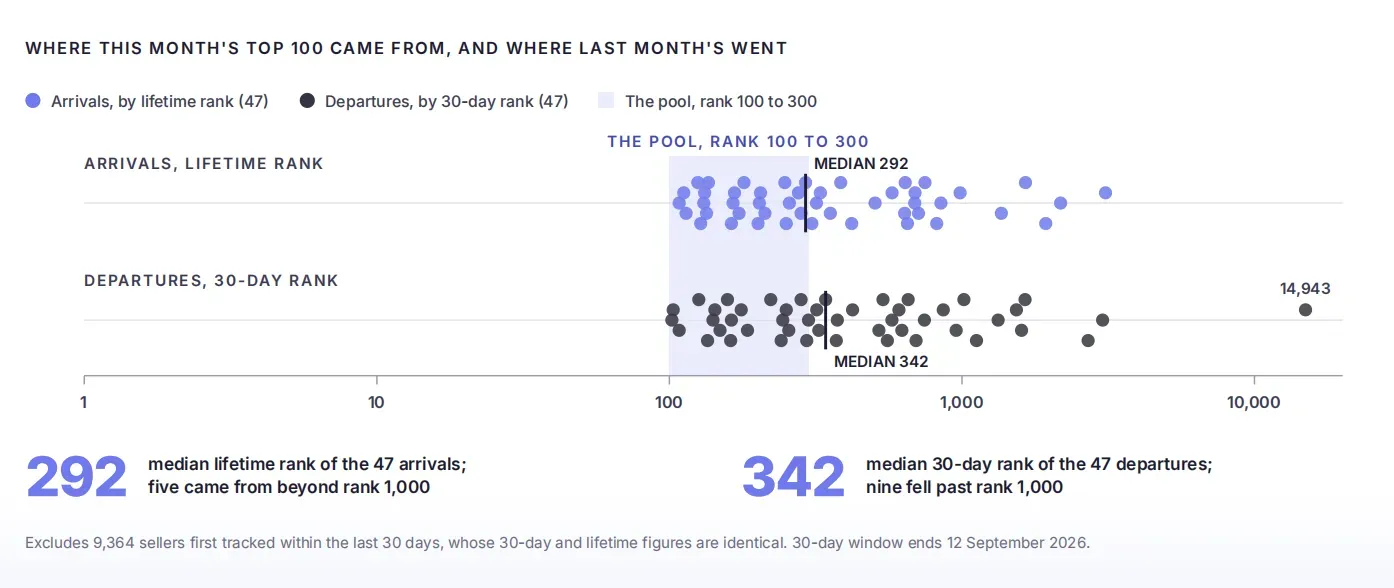
This means that although sellers may have an opportunity to enter TikTok Shop’s top rankings quickly, maintaining their position over the long term is not easy. By comparison, the sellers in Amazon’s top 100 remain relatively stable from year to year. Sellers can gradually build a more lasting position by accumulating search rankings, product reviews, and product page history.
The difference between the two lies in their traffic mechanisms. Sales on TikTok Shop depend more heavily on video content and algorithmic recommendations. When content receives extensive exposure, a product may quickly see an increase in orders; once recommendation traffic declines, sales may also fall. Because the platform lacks a comparable level of stable search traffic to act as a buffer, stores are more susceptible tofluctuations in content performance.
For brands, short-term popularity does not mean that they have built a sustainable business model. Even if a brand reaches the top of the bestseller rankings in a given month, this does not mean it has established a stable market position. More importantly, brands need to build a content production process that can operate continuously and prepare for major fluctuations in sales.
When evaluating seller performance, investors should pay more attention to performance over the past 12 months rather than looking only at sales rankings for a particular month. For industry researchers, a single month’s bestseller rankings have limited predictive value; it is more useful to track whether sellers can maintain high rankings across multiple periods.
Therefore, competition on TikTok Shop is not just about capturing a one-time surge in traffic. It requires continuously producing content, maintaining product performance, and adapting to changes in platform recommendations. Only by building stable operational capabilities can sellers improve their chances of turning short-term traffic into long-term business.
Seven. TikTok Shop and Amazon have little overlap among their top sellers
Marketplace Pulse compared top sellers on TikTok Shop US and Amazon US and found that, among the top 10,000 sellers on each platform, only 498 appeared on both lists. Of these, 470 were exact matches based on company name, while another 28 were near matches. TikTok Shop rankings are based on sales over 30 days.
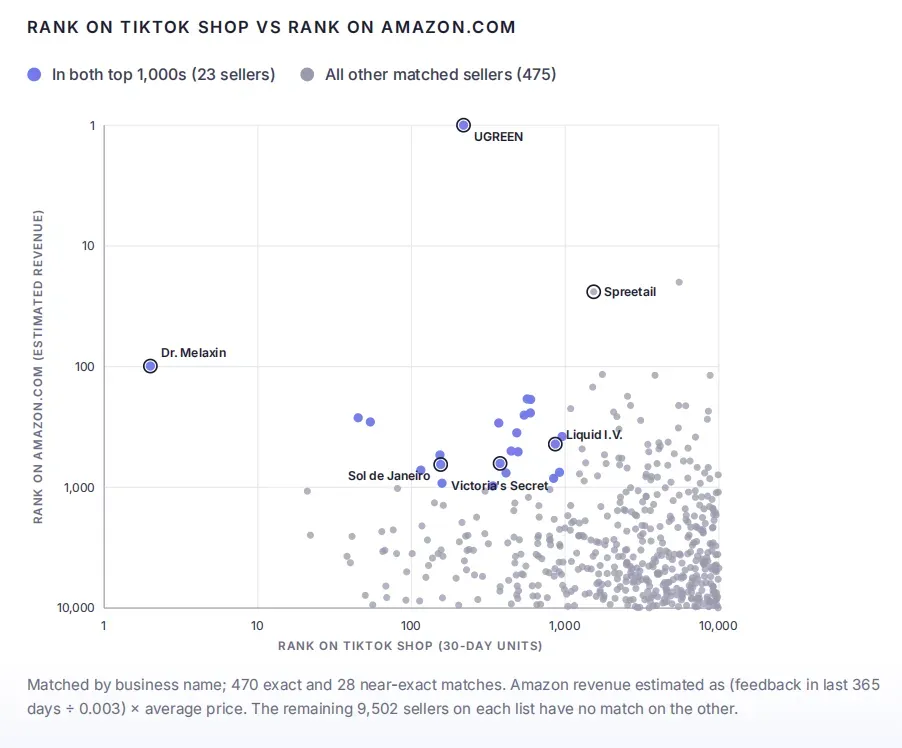
Among the top 100 sellers on TikTok Shop, 20 are also large-scale sellers on Amazon; among the top 100 sellers on Amazon, only 4 perform strongly on TikTok Shop. This shows that even if sellers have succeeded on one platform, it does not mean they can replicate the same sales performance on another.
The report suggests that products on TikTok Shop can often first attract attention through short-form video content and then gradually move to search-based platforms such as Amazon to capture subsequent demand. Conversely, sellers who originally excel at Amazon search optimization may not necessarily have the capabilities needed to quickly gain content recommendations on TikTok Shop.
Amazon primarily serves consumers who already have search intent, so sellers need to focus on keyword optimization, product pages, review accumulation, and search rankings. TikTok Shop, on the other hand, creates demand through video: consumers may have had no plans to buy, but decide to place an order after watching a product demonstration.
This means that even Amazon sellers with extensive experience in search optimization and product operations may lack the ability to produce media-oriented content and may be unable to gain sustained exposure in the TikTok Shop feed. Conversely, brands that build awareness through TikTok Shop can use Amazon to capture demand once consumers begin actively searching.
Brands should not assume that operating methods used on Amazon can be transferred directly to TikTok Shop. Content production capabilities are an important foundation for the latter. TikTok Shop can also serve as a channel for brands to get started and build awareness, while Amazon can drive further sales conversions after a brand has gained attention.
The two platforms require separate strategies. Simply mastering Amazon optimization techniques is not enough to ensure success on TikTok Shop.
Eight. Conclusion
Taken together, the seven major trends show that TikTok Shop’s development in the U.S. market is giving rise to a competitive logic that differs from that of traditional search-based e-commerce.
For brands and service providers, the key going forward is not simply to join TikTok Shop, but to choose products suited to short-video presentation, establish a sustainable content production system, maintain the operational standards required by the platform, and use data over a longer time span to assess whether growth is sustainable.
As the platform continues to expand, data on long-tail sellers and specific sales proportions may change. However, the core direction revealed by the report is already quite clear: TikTok Shop rewards sellers who can continuously generate demand, rather than merely those who have products in stock.
Author ✎ Summer/AMZ123
Statement: The copyright of this article belongs to AMZ123. Reproduction without permission is prohibited. For authorization, please contact: amz123happy
Source: Cross-border Data Center · Read the original
Related Learning

Vietnam TikTok Shop GMV grows 38% in the first 9 months, share rises to 45%, closing in on Shopee
According to Chuhaiwang, a report for the third quarter of 2026 released by Vietnamese e-commerce co…

U.S. TikTok Shop Beauty and Personal Care GMV Reached 20.8 Billion in the First Half, Surpassing Womenswear by 5 Billion
According to Chuhaiwang, data from market research firm Circana shows that in the first half of 2026…
Plant Business: How TikTok Helped One Founder Grow
Five minutes into our conversation, greenery proprietor Sonja Detrinidad has already discussed menop…