 EN
Bulk Sourcing from China: Transparent Pricing, QC, and Warranty Guide for US Buyers in 2026

Table of Contents
- Landed-Cost Breakdown and the Hidden-Fee Trap
- The Tiered Price-Break Curve: 100 to 1K to 5K to 10K
- QC in Three Stages and the AQL Sampling Plan
- Common Defect Scenarios by Category
- A Warranty Terms Template You Can Draft
- Trade Assurance and Inspection as a Combined Gate
- Five-Category Cost, AQL, and Warranty Table
- Write the Numbers Into the Order, Not the Invoice
- Frequently Asked Questions
Bulk sourcing from China looks cheapest on the pro forma invoice. The real total arrives later, buried in freight, duty, brokerage fees, and one rejected lot. This guide covers pricing, quality control, and warranty terms for US buyers placing orders of 1,000 to 10,000 units in 2026.
The objective is not the lowest unit price but the lowest landed cost per conforming unit, backed by a remedy you can enforce whenever a lot fails. Each section converts a cost or quality concept into a specific clause you can write into the order.
Key Takeaways:
- Landed cost adds freight, duty, brokerage, inspection, inland, and storage on top of FOB. Fixed minimums can lift it by roughly 20 percent at mid-volumes.
- Unit price falls from MOQ to the 10K tier. Fixed port and inspection fees can flip per-unit cost upward, so model both curves before you commit.
- Sample size follows lot size under ISO 2859-1 Level II: a 501 to 1,200 lot takes 80 samples, and a 3,201 to 10,000 lot takes 200.
- Critical defects run at AQL 0. Apparel uses Major 2.5 and Minor 4.0, while toys and battery electronics tighten Major to 1.5.
- Put the AQL gate and the payment hold into the same purchase order so escrow can enforce the pass or failure.
Landed-Cost Breakdown and the Hidden-Fee Trap

Start with the FOB or EXW product cost. Then add ocean freight for a consolidated or full container, or air freight for faster delivery. US customs duty follows, plus any Section 301 surcharge, the brokerage fee, third-party inspection, terminal handling at destination, inland trucking, and storage or demurrage.
Two tariff realities hold through 2026. As China Briefing reports, Section 301 duties on Chinese goods run from 7.5 percent to 100 percent depending on the product. The same source notes the $800 de minimis exemption ended for China in April 2025 and was suspended for all countries from August 2025. Never model an order as duty-free under $800.
Brokerage, container destuffing, terminal handling, and inspection charges carry fixed minimums that never shrink as your order grows. At small volumes you absorb them easily. At mid-volumes a 1,000 unit order can absorb them badly, so per-unit landed cost rises instead of falling. That inversion is the roughly 20 percent hidden-fee trap.
Measure the lot against conforming units rather than gross units, because a defect-heavy shipment appears inexpensive at FOB until rework, delay, and rejected cartons accumulate on your side of the ledger.
The Tiered Price-Break Curve: 100 to 1K to 5K to 10K
Suppliers publish tiered prices because tooling and setup amortize, raw materials cost less at volume, and assembly labor speeds up. A commonly reported pattern is a 25 to 40 percent unit price drop between MOQ and the 5K or 10K tier. Treat that figure as a rule of thumb, not a guarantee, and confirm it category by category.
Net the fixed fees back into every tier. A single one-man-day inspection at $319 adds roughly $0.64 per unit on a 500 unit order, yet the same visit on a 5,000 unit order contributes only about $0.06. Fixed costs disperse rapidly, so the discount curve and the fee curve intersect at a cliff rather than a gradual slope.
Press the discount too hard and quality can fade, since suppliers under margin pressure may substitute inferior components. Freeze the bill of materials, approve a golden sample, and verify both before shipment.
QC in Three Stages and the AQL Sampling Plan
Run quality control through three gates in sequence. Incoming inspection checks materials, component certificates, and workmanship at receipt. During-production checks catch line drift and run functional tests mid-batch, before defects multiply. Pre-shipment inspection is the money gate: it combines AQL sampling with workmanship, packing, markings, and on-site function.
AQL comes from ISO 2859-1, whose American counterpart is ANSI/ASQ Z1.4, as InTouch notes. Pick General Inspection Level II, single sampling, and normal inspection. Find your lot size, read the sample-size code letter, then read the accept and reject numbers for each AQL column. Ac is the most defects you can accept. Re is Ac plus one, and it triggers rejection.
The defect class sets the threshold. Per QIMA, critical defects are safety or compliance failures at AQL 0, so one of them rejects the whole lot. Major defects hurt function or appearance and would likely cause a return, commonly at AQL 2.5. Minor defects are cosmetic and never affect function, commonly at AQL 4.0.
| ISO 2859-1 Level II Single-Sampling Plan: Lot Size to Sample and Accept or Reject Numbers | |||||
|---|---|---|---|---|---|
| Lot Size (units) | Level II Code | Sample Size (n) | Critical, AQL 0 (Ac/Re) | Major, AQL 2.5 (Ac/Re) | Minor, AQL 4.0 (Ac/Re) |
| 51 to 90 | E | 13 | 0 / 1 | 1 / 2 | 2 / 3 |
| 501 to 1,200 | J | 80 | 0 / 1 | 5 / 6 | 7 / 8 |
| 3,201 to 10,000 | L | 200 | 0 / 1 | 10 / 11 | 14 / 15 |
The n=80 and n=200 rows will drive most decisions. QIMA confirms a 4,000 unit lot at Level II yields code L and a 200 sample, where 10 or fewer failures pass and 11 or more reject. The InTouch example covers a 1,000 unit lot that needs 80 samples, where 6 major defects fail the lot, so Ac is 5 and Re is 6. Critical AQL 0 is a working convention, not a printed column, since any critical defect rejects the lot.
Category profiles set Major and Minor. Apparel and home textiles run at 0, 2.5, and 4.0, and non-powered consumer electronics follow the same profile. Battery-powered electronics and small appliances tighten Major to 1.5, safety and regulated merchandise can drop Major to 1.0, and toys plus children's products run 0, 1.5, and 4.0.
Level II is the default. Level III enlarges the sample when a supplier has a problem history. Special levels shrink it for destructive testing. Normal, tightened, and reduced inspection shift with the supplier's recent record, so steady passes move to reduced and repeat rejections move to tightened.
A failed lot presents three dispositions. On-site rework combined with re-inspection corrects adjustable faults, and the buyer frequently funds the second visit. Full rejection withholds the balance, while a commercial concession accepts the lot at a negotiated discount. Tie each outcome to responsibility for payment and to a defined rework window in the purchase order.
Common Defect Scenarios by Category
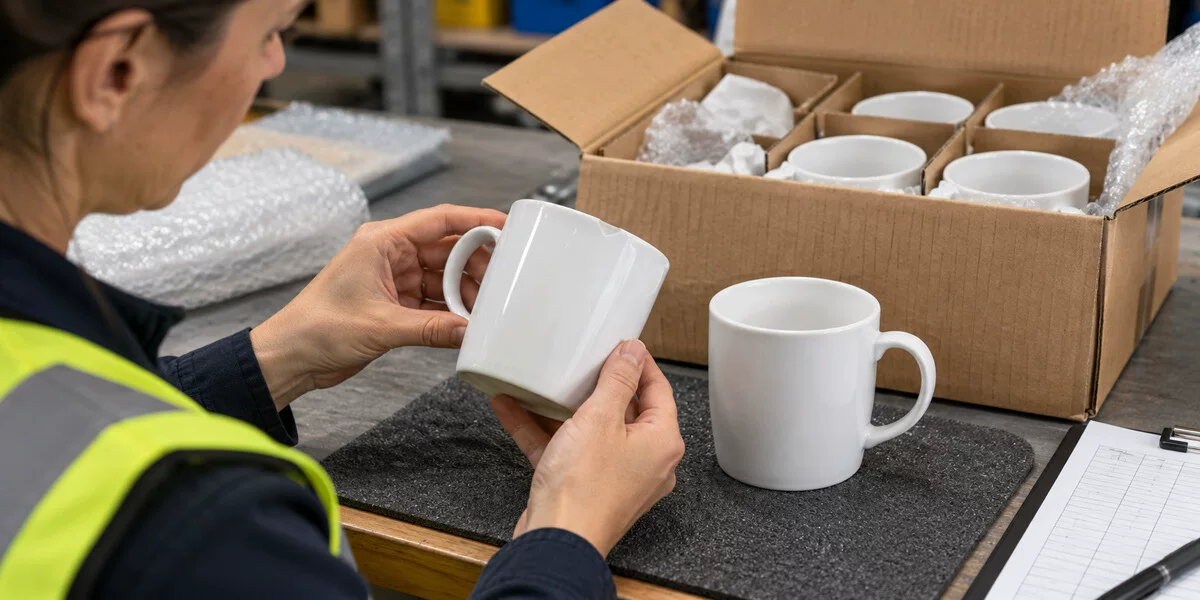
Match the defect class to the category so the inspector knows what rejects a lot. In apparel, measurement beyond tolerance and broken stitching are Major. Loose threads and shade variance are Minor. A broken needle or metal fragment is Critical. In electronics, a dead unit or a Hi-Pot safety failure is Critical or Major, while a cosmetic molding blemish is Minor. In toys, a small-part choking hazard or a restricted substance is Critical, and paint or assembly defects are Major or Minor.
Remediation follows one continuous loop: fail, notify the supplier, rework inside the agreed window, re-inspect, then decide the disposition. Precise defect rates fluctuate across factories and production runs, so avoid assuming a category average. Write the pass-or-fail logic into the order rather than a speculative percentage.
A Warranty Terms Template You Can Draft
Returning goods to China is rarely practical for a small importer, so draft remedies that work without shipping merchandise back. This drafting checklist is not legal advice. It covers a set warranty period, a free spare-part buffer, an RMA turnaround promise, and an epidemic-failure trigger. That trigger forces batch replacement or indemnity when field failure clears a preset rate. Frequently negotiated terms run a spare buffer of 1 to 2 percent extra units and an epidemic threshold near 3 percent within 90 days. Treat both as typical ranges, and have counsel confirm them.
Shape the remedy as replacement parts, credit against the next order, or release of a holdback. Add a bilingual agreement, a governing law, and an arbitration seat. Insist on the factory contract chop, not a sales rep's signature, since a chop legally binds the company.
Trade Assurance and Inspection as a Combined Gate
Independent inspection is the technical gate. QIMA prices China inspection at $319 per man-day on its rate page, while budget regional firms advertise full work from roughly $199 per man-day. Man-days grow with lot size and product complexity.
The platform layer adds the financial gate. Trade Assurance holds a 30/70 style balance until the agreed conditions are met. Per the Alibaba Inspection Services page, you can order inspection as a value-added service alongside a Trade Assurance order. The third-party report then uploads to the order page within two working days. A stamped pass or failure is what releases or withholds the balance.
Understand the boundary. Escrow evaluates strictly against the original purchase order specifications, so AQL thresholds, millimeter tolerances, and color references must exist in the order before production, or a dispute collapses on the burden of proof. Escrow also never reimburses freight, duty, or destination demurrage.
Five-Category Cost, AQL, and Warranty Table
The table below consolidates the cost, sampling, and warranty threads into a single reference. Read it as an initial model for negotiation rather than a quotation. Only the AQL columns conform to the standard, while the price-break, man-day, and warranty cells are typical ranges to confirm with your supplier and forwarder.
| Bulk China Sourcing Model: Price Break, AQL, Inspection, and Warranty by Category | |||||
|---|---|---|---|---|---|
| Category | FOB to 10K Price Break (model) | Recommended AQL: Critical/Major/Minor | PSI Man-Days (typical) | Warranty (typical) | Key Defect Watch-Out |
| Apparel / fast fashion | 25 to 40% | 0 / 2.5 / 4.0 | 1 to 2 | 6 to 12 months | Measurement tolerance; needle or metal = Critical |
| Consumer electronics / PCB | 25 to 40% | 0 / 1.0 to 2.5 / 4.0 | 2 to 3 | 12 months | Hi-Pot or no-power = Critical |
| LED lighting | 25 to 40% | 0 / 1.5 / 4.0 | 2 | 12 to 24 months | Lumen output, thermal, driver |
| Toys | 25 to 40% | 0 / 1.5 / 4.0 | 2 to 3 | 12 months | Small-part and substance = Critical |
| Costume jewelry / home goods | 25 to 40% | 0 / 2.5 / 4.0 | 1 to 2 | 6 to 12 months | Plating and finish = Minor or Major |
Write the Numbers Into the Order, Not the Invoice
An inexpensive FOB price is a promise, while a landed cost per conforming unit is a measurable number. The gap between them sits in fees you can model and defects you can constrain with a sampling plan. Put the tiered price, the AQL gate, and the warranty remedy into a single document before the deposit transfers.
When the pass-or-fail result and the payment hold sit in the same purchase order, quality stops being a hope and becomes an enforceable term. Draft your next order that way.
Frequently Asked Questions
How do I calculate the real landed cost of a bulk China order?
Add FOB or EXW product cost, ocean or air freight, US duty and any Section 301 surcharge, the brokerage fee, third-party inspection, terminal handling at destination, inland trucking, and storage. Fixed minimums never shrink with order size, so a 1,000 unit run can exceed your per-unit estimate. Through 2026, Section 301 duties of 7.5 to 100 percent apply. The $800 de minimis exemption remains suspended, so never model an order as duty-free.
What AQL should I set for apparel, electronics, or toys?
Run Critical at AQL 0, so one safety or compliance defect rejects the lot. Set Major 2.5 and Minor 4.0 for apparel and non-powered electronics. Tighten Major to 1.5 for toys and battery-powered electronics. Sample size follows lot size at Level II: roughly 13 units for a 51 to 90 lot, 80 for 501 to 1,200, and 200 for 3,201 to 10,000.
How much does a pre-shipment inspection cost?
Major firms price around $319 per man-day in China. Budget regional firms begin near $199 all-inclusive. Multiply that day rate by the man-days your lot needs, which rises with lot size and product complexity. Add cost for any re-inspection when the first lot fails.
What warranty terms should I require from a China supplier?
Require a spare-part buffer, an RMA turnaround, and an epidemic-failure trigger. Define the remedy as next-order credit or holdback release, not a physical return to China. Put the AQL thresholds and tolerances inside the purchase order so escrow can enforce them. The commonly cited 1 to 2 percent spare and 3 percent failure figures are typical negotiated ranges, not standards, so confirm them with counsel.
Source: Alibaba.com ·Read original
Related Learning
Best Wholesale Platforms for Importers and Distributors
Table of Contents Platforms for importers and distributors at a glance Importer and distributor: dif…

No-MOQ, Low-Budget Wholesale Sourcing for Resellers: Pricing Tiers and Payment Terms That Keep Cash Moving
Table of Contents The Reseller's Real Constraint Is Cash Cycle, Not Price No MOQ vs Low MOQ: What th…
Best Textile Sourcing Platforms for Apparel and Fabric Buyers
Table of Contents Textile sourcing routes at a glance Fibre2Fashion: textile-industry supplier disco…