 EN
How to Vet China Suppliers for US FDA, CPSIA, and Eco-Safety Compliance in 2026

Table of Contents
- Match Each Product to the Right US Rule
- Spot a Fake Compliance Certificate
- Choose the Right Third-Party Audit
- Verify a Certificate for Free
- Budget What Verification Really Costs
- FAQ
Under US law, the factory in China is rarely the party held liable. As the importer of record, you carry that burden yourself. Any CBP seizure, CPSC recall, or civil penalty lands on your desk. So vetting China suppliers for FDA compliance is not an optional upgrade. It is the minimum standard before a deposit changes hands.
This guide maps nine product categories to the precise rule, certificate, and inspection each one needs. It also puts a realistic price on that work. You will see what a verification round costs, and how to read a certificate without being misled. You also get one reliable way to review a third-party report before any funds change hands.
Key Takeaways:
- The importer of record, not the Chinese factory, carries the legal liability once goods reach the border.
- Toys need a CPC from a CPSC-accepted laboratory, while most adult goods require a lighter GCC.
- A decorative FDA approved certificate is marketing paper, not a genuine clearance document.
- A $299 visual audit confirms workmanship but is not a chemical test for lead or phthalates.
- Several free certificate databases let you validate a claimed document in about a minute.
Match Each Product to the Right US Rule
| US Import Compliance Matrix for Nine Product Categories | ||||||
|---|---|---|---|---|---|---|
| Category | Mandatory US rule | CBP-ACE document | Voluntary eco-safety cert | MOQ basis | Audit type | Indicative cost |
| Bicycles | 16 CFR 1512 (adult); CPSIA lead for kids | GCC (adult), CPC (kids) | ISO 4210; UL 2849 (e-bike) | Set by frame tooling | PSI + DPI | Audit $220-$458/man-day |
| Consumer electronics | FCC Part 15; DOE Level VI | FCC SDoC + NRTL listing | UL or ETL 62368-1 | High-volume runs | IFA + PSI | UL listing $10,000+ floor |
| USB accessories | FCC Part 15 if active; CA Prop 65 | FCC SDoC (active) | UL, USB-IF, MFi | High-volume runs | PSI | $199-$320/man-day |
| Toys | 16 CFR 1250 (ASTM F963) | CPC (CPSC-accepted lab) | OEKO-TEX Class I; EN71 | Custom molds | DPI + PSI | $199-$298/man-day |
| Organic textiles | 16 CFR 1610; 16 CFR 303 labeling | GCC + organic proof | OEKO-TEX Std 100 / GOTS | Per style and color | IFA + PSI | About $299/man-day |
| Rechargeable batteries | 49 CFR 173.185 to UN 38.3 | UN 38.3 Test Summary | UL 1642 / 2054 / 2056 | Cell-grade runs | DPI + PSI | $199-$320/man-day |
| Beauty and health accessories | FDA facility registration and listing | FDA registration number | cGMP (voluntary) | Varies widely | IFA + PSI | Registration fee varies |
| Compostable packaging | FTC Green Guides; ASTM D6400 | BPI certificate (ASTM) | EN 13432 (EU) | Long resin runs | PSI | About $299/man-day |
| Gourmet food packaging | 21 CFR 174-179 indirect additives | FDA FCS or supplier letter | BPI (if compostable) | High-volume runs | PSI | About $299/man-day |
Begin by separating the mandatory legal floor from the optional eco-label, because confusing the two sends money to the wrong place. Treat the MOQ column as a sourcing estimate, not a compliance requirement. Minimums rise and fall with tooling, molds, and whether an item is off-the-shelf or custom. The binding obligations are the rule and the certificate named in each row.
Toys and children's products carry the strictest numeric ceilings. As the CPSC lead rule reports, total lead in an accessible component must stay at or under 100 ppm. Paint and surface coatings are capped near 90 ppm. The same agency bans eight phthalates above 0.1%, and small-part and tracking-label rules add more steps before clearance.
A children's product also requires a Children's Product Certificate, known as the CPC. That certificate must rest on testing from a third-party, CPSC-accepted laboratory. The US importer or domestic manufacturer signs it, not the overseas factory, and a Chinese supplier cannot issue a valid CPC on your behalf. General adult goods, by contrast, rely on the lighter General Certificate of Conformity, the GCC.
Bicycles split by rider age. An adult bicycle follows 16 CFR 1512 and needs only a GCC. A child's bicycle inherits the CPSIA lead and phthalate ceilings, and it must carry a CPC. E-bikes add a fire-safety dimension, and New York City now requires UL 2849 certification for e-bikes and their batteries under Local Law 39.
Consumer electronics run on a different stack. A typical gadget needs an FCC Part 15 self-declaration. Commercial electrical equipment often requires an NRTL listing measured against UL 62368-1. A CE mark satisfies none of these American obligations. It is self-declared in Europe and carries no legal weight with US customs or the CPSC.
USB accessories depend on whether the device emits an intentional signal. A passive cable can be exempt from FCC authorization, yet any active device still needs a Part 15 declaration. California's Prop 65 layer adds a warning duty for certain listed chemicals. Ask the supplier to put the exemption reasoning in writing.
Rechargeable batteries require three separate kinds of proof. The cell must pass a UN 38.3 test to travel by air or sea, and the assembled product may add UL 2056 or UL 2849 coverage. Transport rules also require a UN 38.3 Test Summary on file, as 49 CFR 173.185 documents. Request the eight underlying test results labeled T.1 through T.8.
Food-contact materials also follow the CFR. Indirect additives are listed across 21 CFR 174 through 179, per the FDA food-contact inventory. Any genuinely new substance needs an effective Food Contact Notification before import. Gourmet packaging, coatings, and adhesives all fall under the same scrutiny.
Textiles carry two mandatory duties and one familiar labeling trap. Federal law governs flammability and fiber-content labeling, but neither rule makes a fabric organic. OEKO-TEX Standard 100 tests finished textiles for harmful substances across four product classes, with Class I reserved for baby items. GOTS instead tracks the organic chain-of-custody. It demands at least 95 percent organic fiber for an Organic label and 70 percent for a Made with organic claim.
Compostable claims demand laboratory proof, not adjectives. ASTM D6400 requires at least 90 percent carbon conversion within 180 days, and it caps total organic fluorine below 100 ppm. EN 13432 serves as the European counterpart, while BPI is the principal certifying body in the United States. The FTC Green Guides turn a false compostable claim into your legal exposure.
Beauty and health accessories revolve around registration rather than approval. Devices require FDA facility registration and a product listing under 21 CFR 807. Cosmetics now fall under separate MoCRA reporting rules. A facility number confirms the plant is on file, but it never certifies that any individual product was cleared for sale.
Spot a Fake Compliance Certificate

Myth one is the claim that your supplier is FDA approved. For most consumer goods, cosmetics, and food packaging, that phrase has no legal standing. The FDA does not approve those categories at all. It keeps facility registrations, product listings, and Food Contact Notifications instead. A glossy certificate of approval from an unaccredited agent is decorative marketing paper.
Myth two claims that a raw-material certificate automatically covers your finished good. It does not, because a resin pellet compliant with 21 CFR says nothing about the finished item that reaches the customer. Dyes, inks, and adhesives can reintroduce lead or phthalates during finishing. Insist on a certificate naming the exact finished SKU rather than the raw input.
Also match the legal name printed on the certificate to the name on the supplier's business license. A laboratory report issued for one registered entity protects no other company. Verify the applicant entity against the registered manufacturer, line by line. If the names diverge, or if the report carries an expired date, the certificate is decoration.
Choose the Right Third-Party Audit
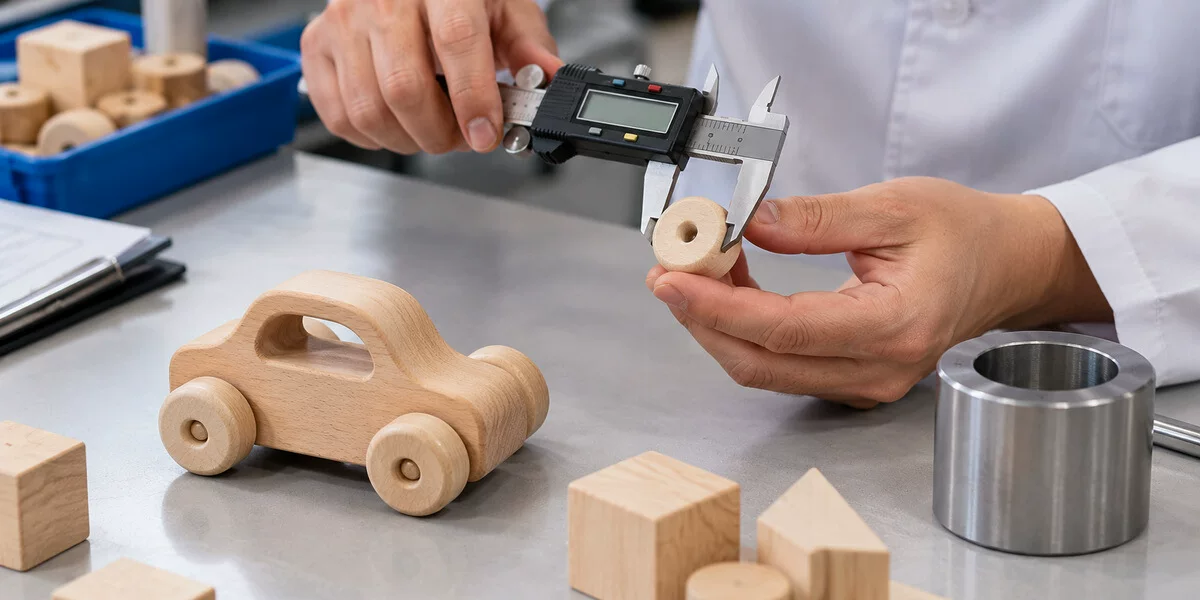
Three distinct audits expose three distinct failures. The initial factory audit checks systems, capacity, and labor practices across roughly one or two man-days. The during-production inspection catches material substitutions while the line runs. The pre-shipment inspection samples finished goods against an AQL plan before the container is ever sealed.
Inspection rates are easy to look up. Based on a published 2026 rate guide, a pre-shipment inspection runs $199 to $320 and a factory audit runs $220 to $458 per man-day. A frequently quoted benchmark hovers near $299. Independent bodies such as SGS, TUV Rheinland, Bureau Veritas, Intertek, and QIMA operate within those bands. You are comparing price ranges, not crowning a single vendor.
Now the trap that catches most buyers. A visual man-day is not a chemical test, so a $299 inspection verifies unit count and workmanship, but it never certifies CPSIA limits. Assays for lead and phthalates are billed per test, on top of the daily man-day fee. Never let a clean pre-shipment report tempt you to skip the laboratory work.
Verify a Certificate for Free
You do not always need a paid inspector to challenge a supplier's claim, because several authoritative databases are free, and each check takes about a minute. The CPSC publishes a searchable list of accepted laboratories, and the FDA maintains an establishment-registration database. The OEKO-TEX Label Check validates a textile certificate number, and BPI lists its certified compostable products. Enter the reference number and compare what comes back against the paper you were handed.
On the platform side, a Verified Supplier badge means only that an independent body inspected the facility on site. It does not mean a specific product cleared FDA or CPSIA rules. As the official Verified Suppliers page notes, buyers can still download that on-site inspection report at no cost. Read it for production capacity and quality-control process. Then independently pull the category certificates described earlier.
Budget What Verification Really Costs
Before booking a flight, weigh the options. Flying your own inspector to Guangdong or Yiwu is not an inexpensive shortcut. A three to seven day self-funded trip runs roughly $2,510 to $9,250 all in. International airfare, the hotel, a hired car, and a local interpreter all add cost. At the end of the trip, one inspector has still seen one factory on one day.
Compare that against eight to twelve professional inspection man-days for far less money. The question is not whether you can afford to verify one shipment. It is which check repeats across every order you place that year. Value shifts toward a current, entity-matched, finished-good certificate that an inspector can re-check cheaply. A golden sample that passes says nothing about the container you have not manufactured yet.
Then close the loop through your written contract. Trade Assurance is not an automatic regulatory-compliance guarantee. As Alibaba's money-back policy page states, it refunds orders that fail to ship on schedule or arrive defective. Claims are filed within 30 to 60 days of delivery. Non-compliance is protected only when you embed the exact standard and ppm limit into the agreed order terms. Put the certificate name, test standard, and numerical cap in the contract. Only then does the protection cover a compliance failure.
FAQ
Do Chinese toy suppliers need a Children's Product Certificate, and who signs it?
Yes, for any product intended for children aged twelve or younger. That certificate must be based on testing performed by a third-party laboratory accepted by the CPSC. The US importer or domestic manufacturer issues and signs the CPC, so a Chinese factory cannot produce a valid one on your behalf.
Can a China supplier be FDA approved for my cosmetics or food packaging?
Generally no, since the FDA does not approve most cosmetics or food-contact packaging. The agency instead maintains facility registration and reviews Food Contact Notifications under 21 CFR. A decorative FDA approved certificate is not a clearance document. For China suppliers FDA compliance, verify the registration number rather than trusting a printed logo.
How much does a third-party factory inspection cost in China in 2026?
Reported 2026 man-day rates run $199 to $320 for a pre-shipment inspection and $220 to $458 for a factory audit. A frequently cited benchmark sits near $299 per man-day. Chemical assays for lead and phthalates are quoted separately for each test. Those lab fees are billed on top of the daily rate.
Is it cheaper to fly my own inspector to Guangdong or Yiwu?
For a single factory, usually not. A three to seven day self-funded inspection trip costs roughly $2,510 to $9,250. That figure often exceeds eight to twelve professional man-days. A free Verified Supplier report lets you review an independent on-site inspection before committing any travel budget.
Does a CE mark or RoHS document prove my goods clear US rules?
No. CE marking is self-declared within the European Union and holds no legal standing with CBP or the CPSC. The American requirement stack is different. Expect FCC Part 15 for electronics, NRTL listing for commercial equipment, and CPSC rules for children's products.
Source: Alibaba.com ·Read original
Related Learning
Trust Without a Handshake: How Online Wholesale Marketplaces Replace In-Person Verification
Key takeaways You no longer need a factory visit to verify a supplier. Each in-person step now has a…
Best Import-Export Platforms for Cross-Border Trade
Table of Contents Why your import-export platform choice matters How we compared cross-border trade …